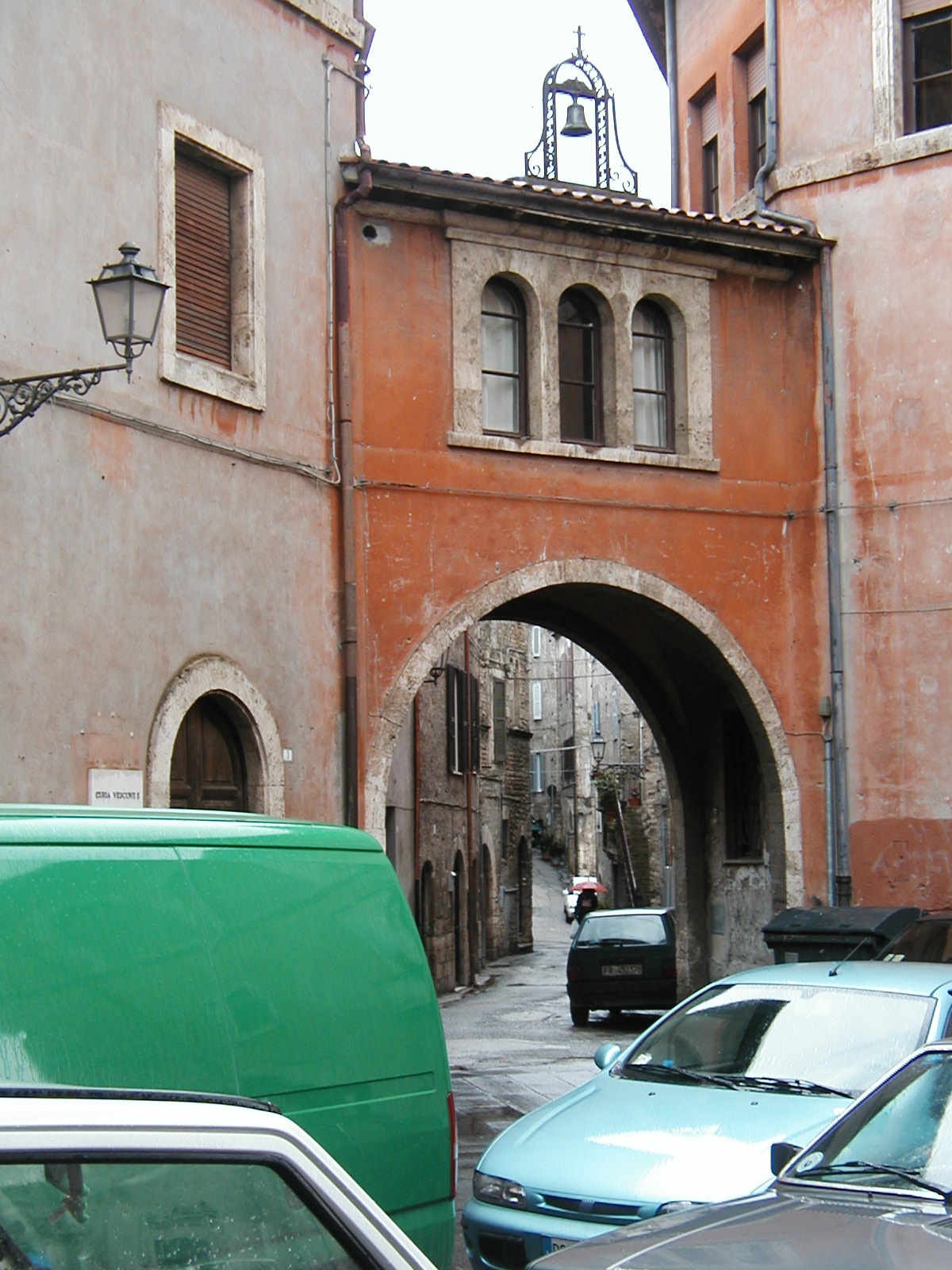
History denied me: Old stuff I can’t figure out.

Exploring Sorrento on foot, Vern and I followed a road that crossed a deep ravine. Looking down, among the thick undergrowth, I saw a ruin, a former mill or factory, it appeared, covered in creepers and moss.

That kind of thing just gets my head spinning. What was it? When was it built? Who worked there? Why was it abandoned? I’m sure that some research could turn up the answers to these questions, but I had higher priorities at the time. Still, that picture catches in my imagination now and then.

The trouble with Italy (and of course there are other places) is that it is filled with these bits of time gone by, wherever you go. Bits of ancient columns built in a new(er) stone wall. Arched “doorways” forty feet above the beach on a cliff face. Roman mosaic fragments dug up during remodeling.

Sometimes when I see such things, a story simply comes to me, and I wonder how close to the truth it might be.

Black wool stockings, or Winter travel in Italy

We arrived in Sorrento in mid-February to begin two weeks of Italian language school at Sorrento Lingue. We’d packed for a month in a mild winter climate.

Too mild, it turned out.

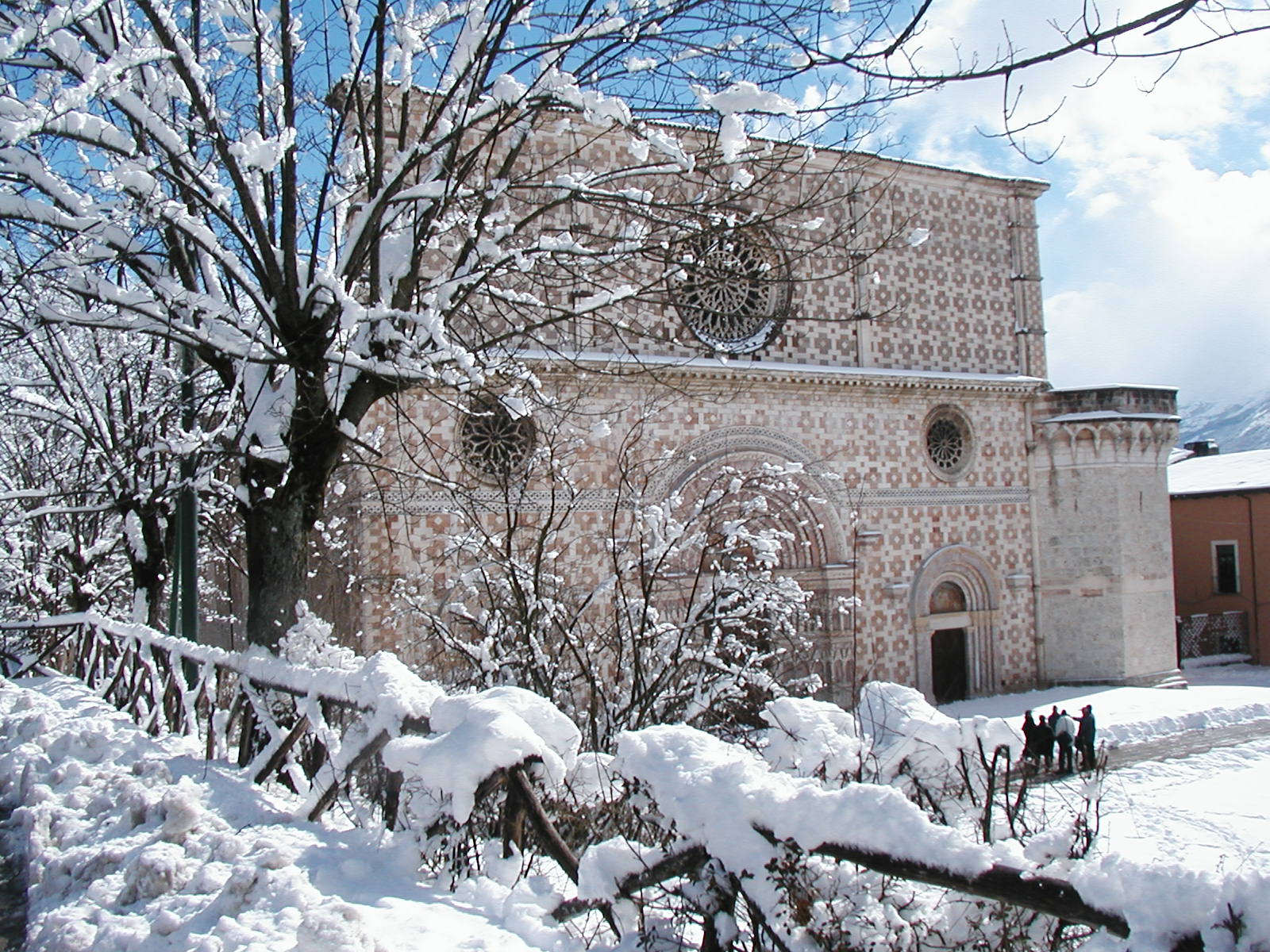
Basilica di Santa Maria di Collemaggio in the snow.

Our host family’s apartment, with its icy marble floors, was not heated to the level we Americans are accustomed to. My first purchase in Sorrento was a pair of black wool tights, which I wore almost every day, with my other clothes. With additional socks, and a sweater under my warm coat.

It’s one thing to bundle up when you go outside–after all, I grew up in Alaska, and I know what winter cold is like. But it seemed nearly as cold inside as out, and we were bundled up inside and out.

Granted, it was mid-winter. We had several very windy days in Sorrento, and a few with rain. We walked several blocks every day to our class, and on our free afternoons we walked all over the city. We walked a couple of miles each way to see the ruined villa at Capo di Sorrento, and took trips to Pompeii and Positano.

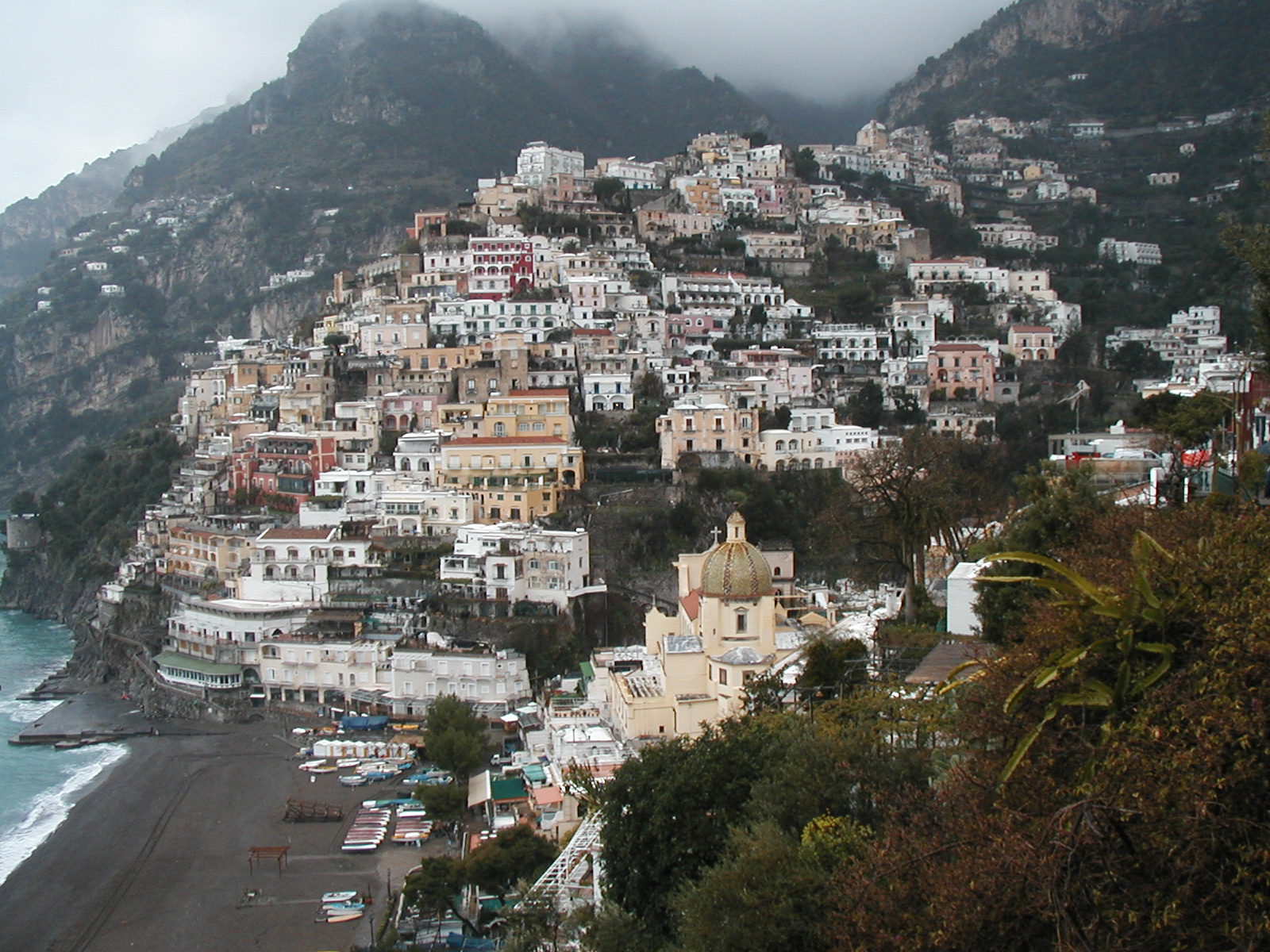
Clouds hanging low over Positano.

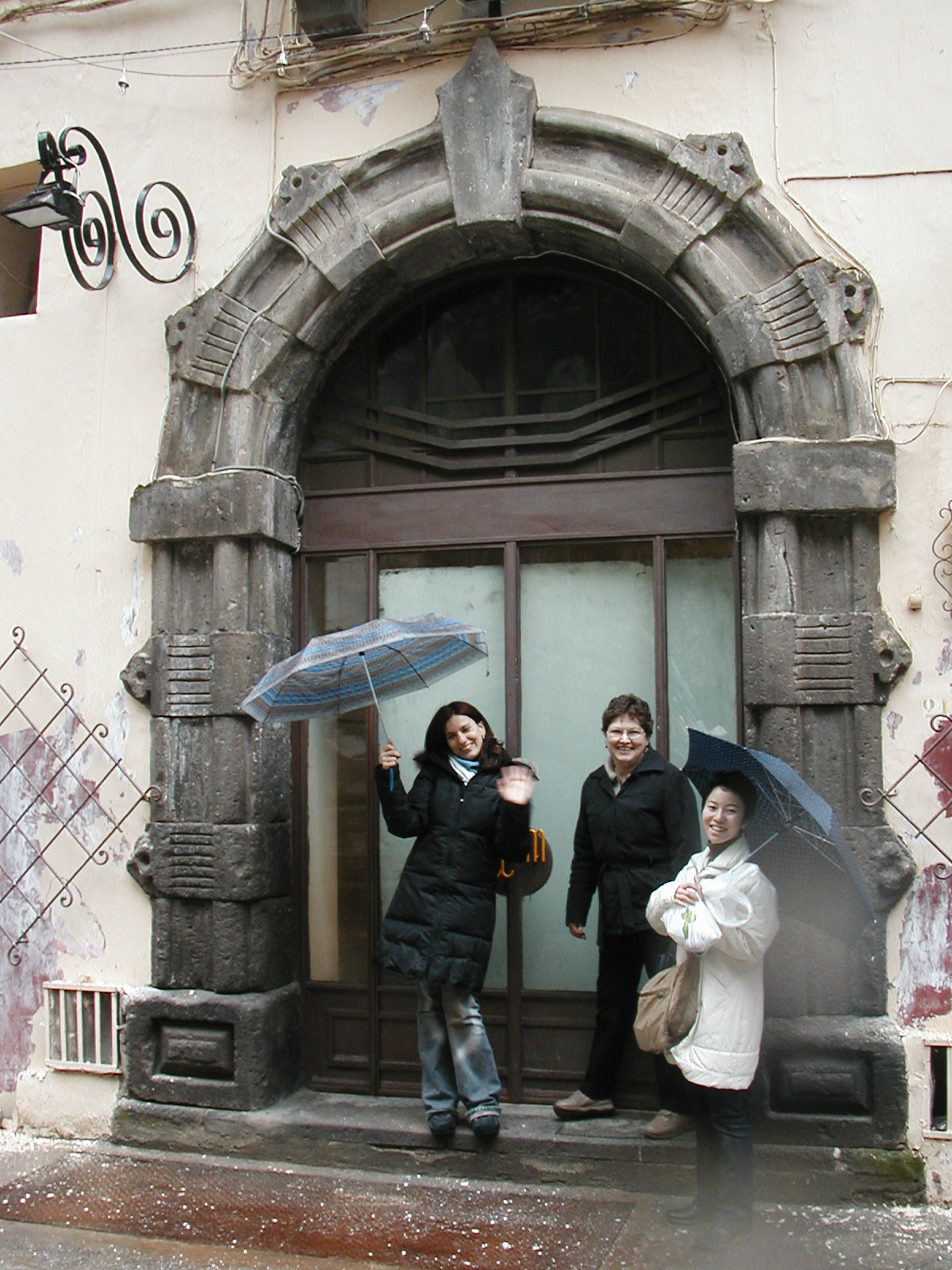
Umbrellas were the order of the day in Pompeii.

But I’m afraid in all my planning, in spite of knowing that we were traveling in winter, my brain retained the images of sunny Italy, warm Italy, cappuccino on the terrace Italy.

After two weeks in Sorrento–two weeks in those wool tights–we picked up a rental car and headed to L’Aquila. It’s farther north, yes, and a higher elevation, in the central Apennines. A beautiful, historic city (until April 6, 2009), one I was very eager to visit. Weathermen in military regalia on TV had forecast possible snow, so we insisted on getting chains with the rental car, and sure enough, snow began to fall by mid-afternoon as we climbed into the mountains.

But we Alaskans were not daunted by a little snow, and we carried on. As the snow accumulated to three, then four inches, with no sign of letting up, we pulled to the side of the road under an overpass to put on the chains while there was still some daylight.

The chains did not fit.

The thought of another couple of hours in failing light on curving mountain roads gave us pause. We had a lovely hotel room waiting in L’Aquila, and were eager to be in it. But how long would it take us if the snow continued?

As we pondered this question, the rumble of a large vehicle on the overpass caught our attention. It slowed, and then appeared on the ramp and pulled onto the highway in front of us. A snowplow! As we folded our maps and prepared to pull out behind him, another plow came down the ramp. And another!

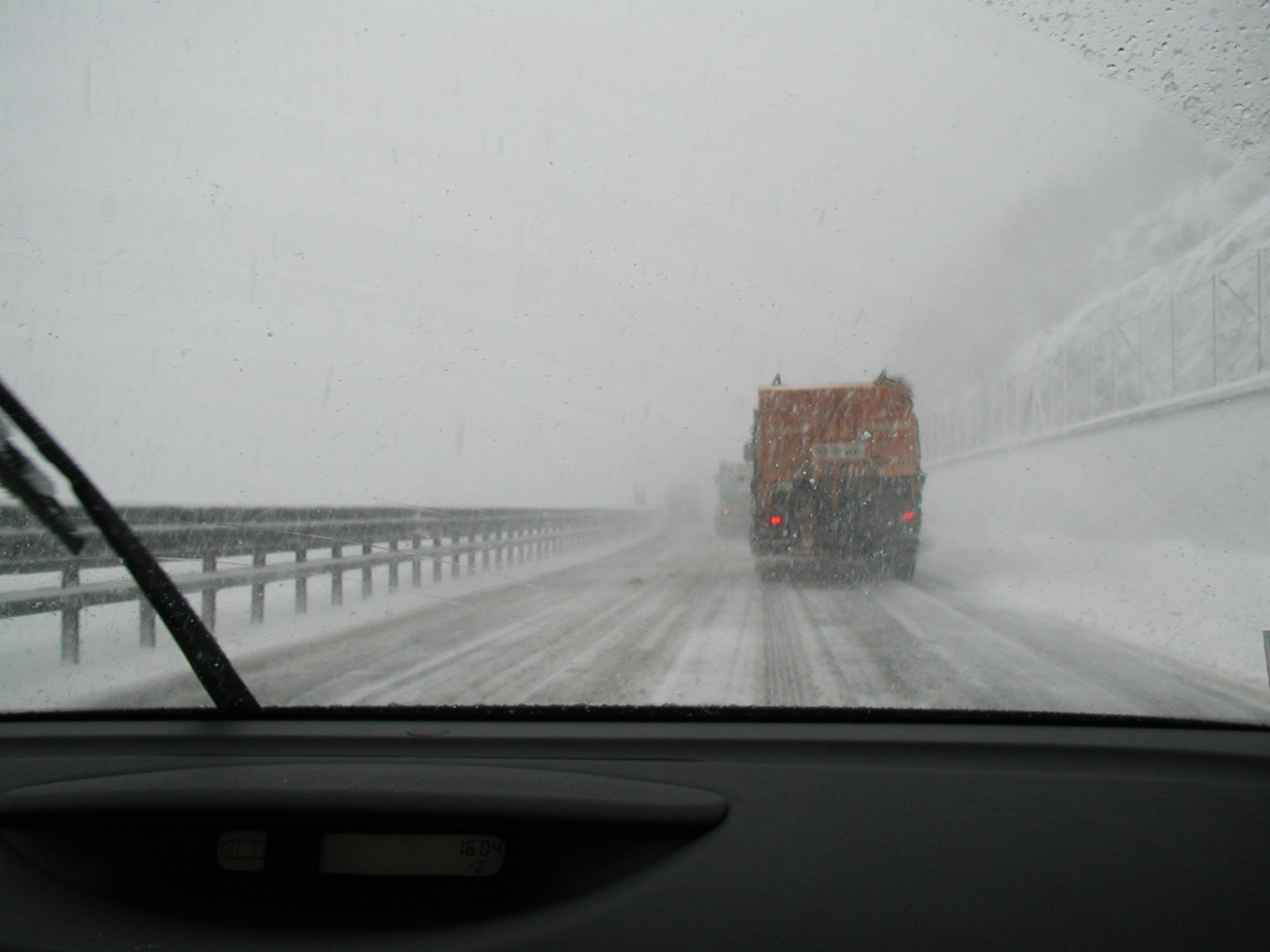
Following our caravan of snowplows.

With high hopes that one of them would go to L’Aquila, we pulled out into the thin slush in their wake, and followed them at about 40 mph all the way to our destination. Other cars passed us, but we simply followed. It was our first day of driving in Italy, and a memorable experience!

So for anyone planning a winter visit to Italy, I will say: By all means, go, see the sights, the pasta and wine are just as wonderful in winter, but take your black wool stockings! You are likely to need them.

Book Review: Stumbling Through Italy

Niall Allsop and his wife Kay of Bath, England, began vacationing in Italy after making friends with Vittorio and Ivano Capetti, owners of an Italian restaurant in Bath. Their initial forays took them to Tuscany, but they came to their senses soon enough, and began to explore the Italian south.

I like the way these people travel: Not rushing from monument to museum, but making friends, meeting people. Many of these people happen to own or work in restaurants, because like most of us headed for Italy, they love the food. But their secret to successful travel in Italy is not just making friends with the waiters. It is also adapting to the rhythm of Italian life–which means taking the early afternoon ‘siesta’ along with the rest of the country. It’s learning to speak a bit of the language, at least. It’s driving like an Italian when driving in Italy.

I enjoyed wandering through Sicily, Sardinia, Naples, Apulia, and Calabria with them, and previewing some travel experiences I’d like to have myself. They found the trulli houses of Alberobello trulli disappointing, and delighted in the performance of Euripides’ play Ecuba in the classical Greek theatre in Siracusa. They discovered, from one of their hosts, a recipe for orange-coffee liquor, which they kindly included in the book. They were willing to be sidetracked from the usual travel highlights by people and places not found in the tourist guidebooks.

Especially helpful–a chapter on Italian language tips for the novice, and a chapter on driving in Italy for the brave, though some might say foolhardy.

Niall Allsop’s writing is more serviceable than brilliant, but he leads us on an enjoyable stroll, a passeggiata through southern Italy, which you might enjoy, as I did.

Guest Post: A Friend in Every Corner of the World

This week, my Napolitana friend Laura Vinti writes about her passion for travel, and a new program to help travelers connect with people in the places they visit.

I see traveling as a sort of spiritual quest. This might sound pompous and self-important, but I’m unapologetic about it — when I visit a city, I’m after its soul.

Now, faced with this confrontational approach,  every city I visit tends to defend itself by doing what charming cities do best: dazzle the visitor by flaunting its beauty, throw at them magnificent palaces, glittering mosaics and frescoes, and daring towers (sometimes leaning too, for added measure), hoping thereby to make the visitor forget their Spiritual Quest and settle for aesthetic intoxication instead.

Well, I don’t fall for it. I take pleasure in all the beautiful sights, and then I aim for the heart – the forgotten alleys, the unexpected quirks, the intimate secrets, the stories you don’t find in travel guides, the places where the locals go for their morning coffee, the corners that offer shelter to star-crossed lovers. I want to uncover the city’s dark side, understand its personality, learn the inside jokes, really get to know the locals. But all too often I come up empty.

The church of Gesu Nuovo in the historic center of Naples.

However, I now have a new weapon in my urban soul-seeker arsenal. Thanks to a great initiative which is spreading its wings (pun intended) throughout the world, I’m enlisting angels in my quest: Angels for Travelers, no less, whose aim is to unite the globe-trotters of the world into a global community of friends.

Angels for Travelers is an exciting and ever-growing network which gives travelers free access to a trove of insider knowledge by providing them with local friends at any stage of their trip, even before they arrive at their destination.

As Stefano Consiglio, professor of Organization Theory at the University of Naples and founder of “Angels”, says, “Angels for Travelers is a web travel community focused around the assumption that someone who wants to visit a new city is looking for a social experience. And what is better than to be guided by people living there?”

This idea was sparked by an episode he witnessed on a city bus during a recent trash crisis in Naples. “Two Spanish travelers were asking some fellow passengers about the nearest bus stop to their hostel. Soon, more people joined in to help the tourists out. It seemed that the group was attempting to distract the tourists from the garbage piling up every
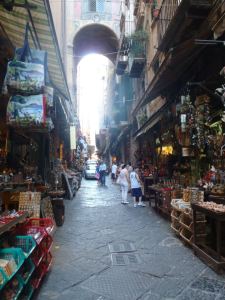
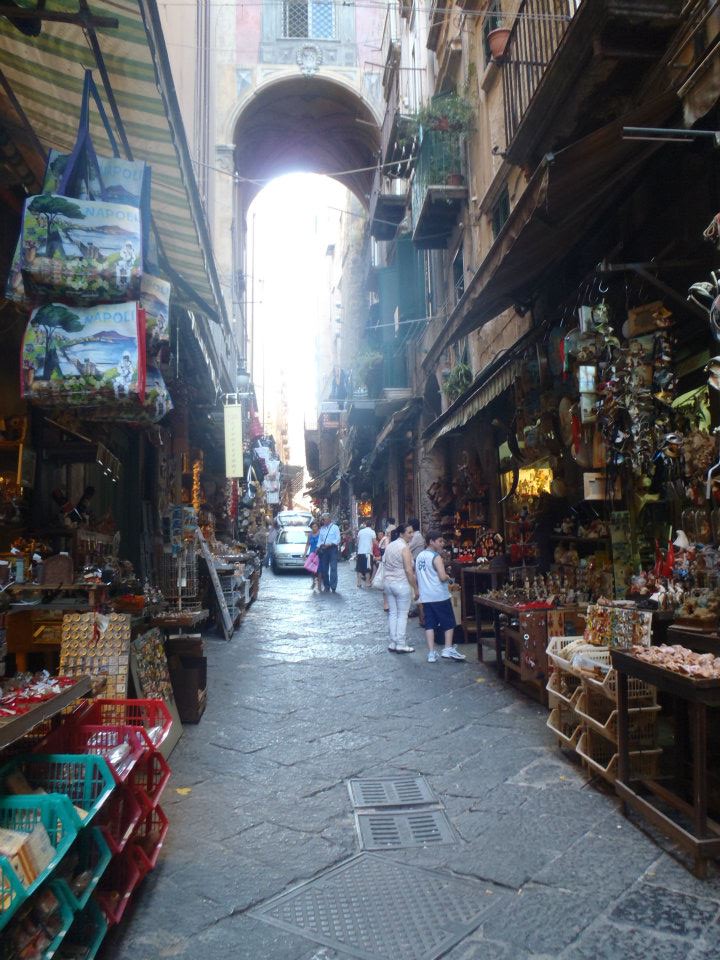
Via San Gregorio Armeno, famous for Christmas creches.

street corner, while at the same time redirecting their attention to the many treasures of our city.”  He found this so striking, because the common assumption is that Neapolitans lack civic pride. “I started to think about how people can contribute to the improvement of their community, especially in a situation of serious crisis.”

Seeing how the passengers were eager to assist the tourists, he wondered about ways to channel this positive energy and do something useful for his city and for the local community. The idea of the “Angels” was born.

However, when he illustrated his idea to friends, they were skeptical: who would be willing to invest their time in helping people they didn’t know?  As it turned out, many were more than willing: only two months after the launching of the platform, already 190 Neapolitan Angels were ready to give advice to travelers arriving in the city.

“People are happy to share and more generous than we might give them credit for,” says Stefano.

Palazzo Sangro di Sansevero, a Naples landmark.

Capitalizing on their Neapolitan success, in 2010 Stefano and his staff decided to update the web platform in order to allow people from everywhere in the world to become Angels for their own city. The idea spread and now there are more than 4,000 Angels in 350 cities in the world, including New York, Paris and London, ready to share tips and insights about their hometown with new friends.

Last June, I met with one of the Neapolitan Angels, Amedeo Colella, to try the Angels’ experience first-hand.  He turned out to be the author of “Manuale di Napoletanità”, a delightful collection of 365 half-serious, half-joking lessons on Naples and ‘being Neapolitan’.

I asked him what he would suggest to an American of Neapolitan descent who wishes to unveil the authentic city of his ancestors.

“They should get in touch with its desperation and its poverty: the shady alleys where families of six or more share two bedrooms in a basement apartment, the second-hand markets where you can buy clothes by the kilo; they should look for the sites where Raffaele Viviani, the 19th century actor and playwright of the poor and forgotten, set his plays, and get a sense of the suffering that pushed his or her forebears to leave their country in search of a better life.”

To move on to a lighter topic, I steered the conversation toward food. It always works, and in Naples more than anywhere else: we Neapolitans love to cook, love to eat, and love to talk about food.

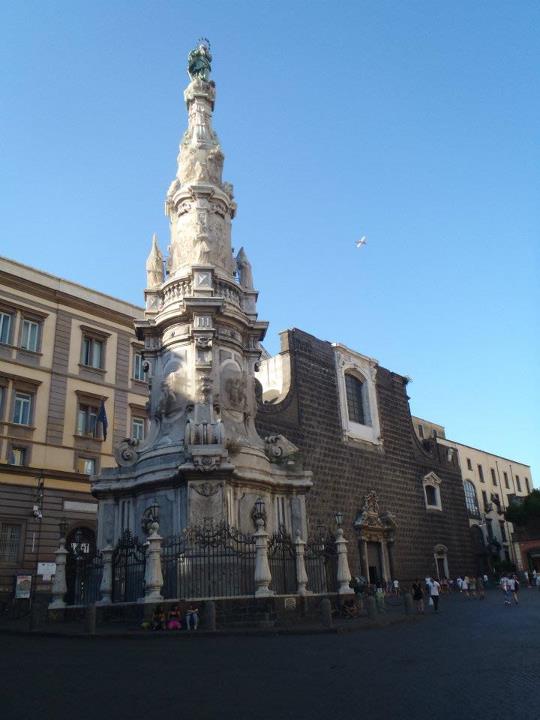
Immacolata obelisk in the Piazza del Gesu.

Since both Amedeo and I know that in our city true understanding passes through one’s stomach, we agreed that our ideal traveler will have to try a sfogliatella (a typical Neapolitan pastry made with ricotta) at Attanasio’s, near the main train station, or at least taste a babà (a yeast dough soaked with a rum and sugar syrup) at “Il capriccio” in Via Carbonara.

Mission accomplished, spiritual needs satisfied, we ended our conversation with an espresso shot at Caffè Mexico on Piazza Dante: a worthy way to mark my entry into the Angels for Travelers’ community.

To find out more about Angels for Travelers visit their website: http://www.angeliperviaggiatori.com

To listen to Stefano’s talk about Angels for Travelers at TED go to (http://tedxtalks.ted.com/video/TEDxNapoli-Stefano-Consiglio-An)

The photos depict some of the sights recommended by Amedeo, all situated in the narrow streets of the ancient Greek grid of Naples.

Laura Vinti is a native Neapolitan living in the greater Washington, DC area. An MFA student in Fiction, she’s writing a historical novel set in 1500s Naples.

Pacentro’s annual barefoot race

Not too many years ago, the annual “Irrigation Festival” where I live in Washington state celebrated its 100th year. It is touted as the longest running continuous community celebration in our state, and we celebrated along with our neighbors. And when I grew up in Alaska, my family made the annual trek to Seward for the July 4th Mount Marathon footrace, in the midst of Independence Day revelry. I like community celebrations with some history.

Pacentro towers at dusk

So when my friend Cesare invited us to Pacentro (a place whose castle towers would have been reason enough) for their annual celebration which included a footrace, we were happy to go.

Pacentro is perched on the east side of the wide valley wall south of Sulmona in the central Apennines. We drove up the stony ridge, already crowded with cars, and squeezed into one of his typical, impossible, parking spots. By this point in our travels, I had been immersed in Italian for about a month, and understood more and more of the conversation around me. Cesare and his wife led us to a street overlooking the valley to the south. On the opposite hillside, a large Italian flag appeared to be spray painted on a large rock, marking the start of the race course.

An alleyway in Pacentro, filled with flowers.

A public address system, strung up to a high eave, broadcast tinny announcements that could be heard for several blocks. As the racers climbed the hill to the starting line, Cesare told about the origins of the race, when gypsies camped outside the city saw an enemy approaching, and ran barefoot down the hill, across the valley, and up to the hilltop town of Pacentro to warn them, allowing the town to fend off the danger. In honor of the “Zingari”, or Gypsies, who saved Pacentro, the annual Corsa degli Zingari, (Race of the Gypsies), is celebrated every year. It has become a coming-of-age ritual for the young men of Pacentro. The prize seems odd–a bolt of cloth. But this was the fabric used to make his first suit of clothes as a man, and young men still compete vigorously for the title, running barefoot across the rough terrain.

A band greets the runners.

As the two or three dozen racers got in place, fireworks echoed in the valley, and the noisy crowd grew around us. I struggled to hear the announcements, and to understand them. But I was sure I had misunderstood when the announcer welcomed everyone to the 556th running of the Corso degli Zingari. Wait… 556th? That puts it back into the early 1400s. Really? Yes, Cesare assured me, I had heard him correctly.

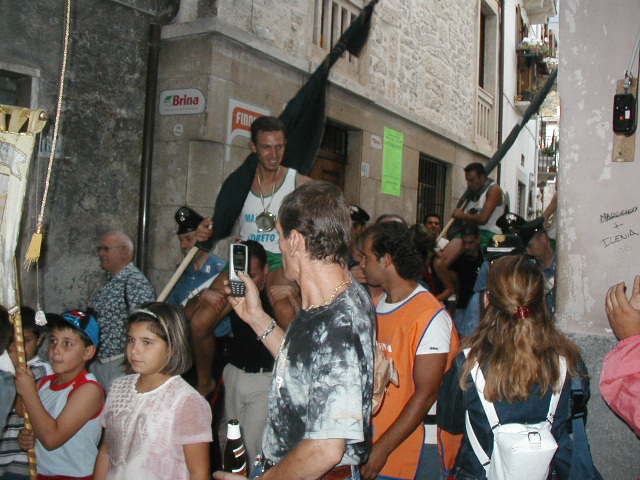
I was still absorbing the historical shock when the ringing of bells signaled the start of the race. We watched them run down the rocky, forested hillside, disappearing into the pines, and reappearing to the cheers of viewers around us. By the time they begin to arrive in the town, within fifteen or twenty minutes as I recall, they are blistered and sometimes bloody. From the finish line, racers are paraded through the narrow crowded streets on the shoulders of their friends.

The victors are paraded through the streets

We stayed for a while, walking through the narrow, medieval streets and admiring the towers before heading back to Sulmona as the sun set . My sense of history had been properly tweaked, a reset button in my brain changing just a little bit how I viewed the “longstanding” Irrigation Festival (only 117 years old this year) and the Mount Marathon race in Seward (where they wear shoes, for Pete’s sake!).

To see a glimpse of Pacentro and the race, here’s a video from 2009. If you plan to be in Italy in September, you might enjoy attending this very much off-the-beaten-track event.

Small world stories: My friend Wakana

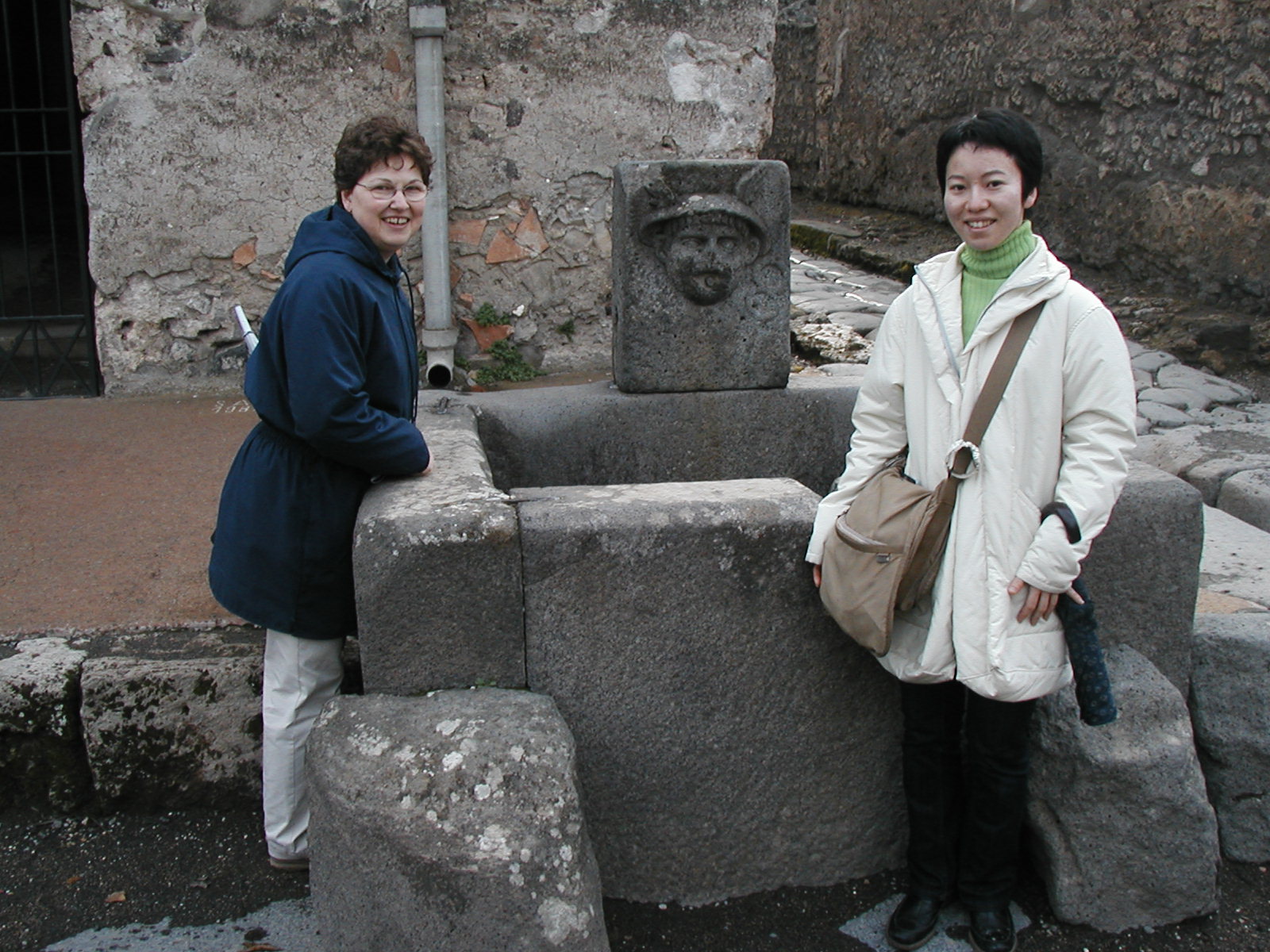
Wakana and I in Pompeii

During my first Italian class in Sorrento, I had one classmate, a Japanese woman my daughter’s age who spoke very little English. And because I spoke no Japanese, we communicated entirely in Italian for two weeks. Wakana was friendly and fun, and our teacher, Elena, guided us through conversations about topics I would not have thought possible to discuss considering our limited language skills.

But we did. I learned about the annual ceremony in her town in which the local god statue is taken from the temple and washed in the ocean. She learned about my town’s annual Irrigation Festival, and when she didn’t recognize the Italian word irrigazione, I explained with a combination of words and charades, about digging ditches from a river to make small rivers to water the farms. We talked about the men in our lives, our reasons for studying Italian, and personal goals. She was interested in architecture and design. I was writing a novel.

With Elena, left, and Wakana at Positano

Our classes met in the morning, and we had most afternoons free, so during our second week we launched out into some sightseeing together. The February rain didn’t hinder us from taking in Positano with our teacher, riding the public bus around the hair-raising cantilevered roadway hanging off the cliffs of the Amalfi coast. The next day, Wakana, Vern, and I went to Pompeii together on the train. With no teacher to provide language mediation, we did the best we could in Italian, and I provided English translations to Vern as needed.

Wandering Pompeii with Wakana

Then, as we wandered toward the Villa of the Mysteries, we passed near a Japanese tour group with a guide. We paused at a little distance as Wakana listened with interest. When they moved on, she turned to me and gave me what she could of the spiel, in Italian. I took that and shared it with Vern in English. We kept near enough to hear more about Pompeii for the next half-hour or so, in our own touristic version of the old parlor game of  “Gossip”.

A couple of days later, Vern and I headed off in a rented car, and we heard no more from Wakana–until about two years ago, when I received her ‘friend’ request on Facebook. We exchanged comments occasionally, and this spring, she contacted me. She was coming to the Seattle area to take some art glass classes, and asked for help finding a place to stay for six weeks between two classes. So this month, she is at my house. We are sightseeing together again–this time on the Olympic Peninsula in Washington. This time, we are speaking in English, and she is learning new verb forms and idioms, and seeing the irrigation ditches for herself.

With Wakana in July 2012

I love living in a time and place where these connections can be made in the first place, and kept alive with ease thanks to technology. Do you have a small world story to share? I’d love to hear about it in your comments!

Guest Blogger: Pro tips for Italian Genealogy

Jenny Tonks

I’m delighted to welcome Jenny Tonks as my guest blogger this week. Jenny is an Accredited Genealogist for Italian research. She works as an adjunct professor of Family History at BYU-Idaho and teaches high school biographical writing classes. She is also a memoir reviewer for a literary agent in New York. I ran across Jenny’s genealogy website when I was doing some of my own research, and found helpful ideas there for my family research. If your travel plans include searching for Italian roots, you’ll want to see what she has to share!

Today Jenny shares some of her early lessons in Italian genealogy:

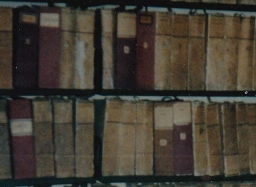
One of my most memorable trips to Italy involves not the food, the scenery, the fashion, or the people. It involved stacks and stacks of paper!

I’m talking about my first visit to a diocesan archive.

I was a college student and former resident of Italy at the time, finishing up my degree in Italian Family History at BYU. What I learned in that archive changed my career. It also helped me solve many Italian family mysteries over the years!

Why the Diocese?

When looking for Italian ancestors, there are two basic sources that I consult most often: Italian government records and Catholic church records. Most of these records are available in the United States as microfilms that can be rented through FamilySearch.org.

The government records are great, but they only go as far back as the early 1800’s for most towns in Italy. Church records, however, can go back as far as the 1500’s in Italy.

Getting at government records is easy—government offices are expected to make their data available to the public.

Jenny Tonks with ledger of 1800’s baptisms at the Diocesan Archive of Novara, Italy

But getting my hands on parish records? Not so easy!

I’ve been turned away by more than a few priests who either refused to grant me access to their church records, or who never responded to written, faxed, emailed, or telephoned requests for ancestral information.

But I don’t hold it against them—churches aren’t expected to turn over information the way government offices are. And why should they? Why should busy parish priests have to stop whatever they’re doing every time an American researcher or tourist comes to town, wanting something for the old scrapbook?

In many cases, I’ve found sparsely staffed parishes simply to busy/apathetic to admit me into their archives or respond to my written requests for ancestral information. They’re too busy tending to their flocks, and I understand that.

No problem—I can always go to the diocesan archive!

Generally speaking, I have found most of the clergy who work in these archives to be passionate historians that enjoy looking up ancestors and sharing historical information. They are also more tech-savvy than your typical small town priest, so more willing to photocopy, scan, or email me information.

About the Archives

Typically located at the curia vescovile (seat of a diocese), diocesan archives store:

  • § Copies of their parishes’ birth, death, and marriage records
  • § Diocese-level records not available in parishes—

Stato delle anime (church census records)

Visite pastorali (records of pastoral visits to families in the diocese)

–Ordinations (files on those who became priests or nuns)

–Land records (Italians often donated land to the Church at death)

–And much, much more!

So when I can’t get information about an Italian American client’s ancestor from a parish in Italy, I contact the curia vescovile or the archivio diocesano (diocesan archive).

How to Research a Diocesan Archive

FamilySearch.org has films of diocesan archives for the cities of Parma, Rome, Trento, and Catania that are available to researchers in the United States. They are updating their holdings daily, so to find out if diocesan records are available in the US for your ancestral town, ask the experts at the FamilySearch Italy Genealogy department, via their Facebook page or their research Wiki.

Researchers handling stacks of marriage files in the diocesan archive at Novara, Italy

The day I first visited a diocesan archive, I discovered a key to identifying one’s Italian ancestors that has helped unlock the secrets to many Italian pasts. If ever I can be of help to you, you can tweet me, friend me on Facebook, or send your questions to my Ask a Genealogist site, where I give free research advice.

In bocca al lupo! 

Book Review: The Espresso Break by Barbara Zaragoza

First off, I wish I’d had this book the first time I visited Naples! I will definitely be using it the next time. I’ve looked in at Barbara Zaragoza’s blogs now and then: The Espresso Break and Naples (Napoli) Guide, and I’m glad to have her info about Naples compiled in book form.

The subtitle promises “Tours and Nooks of Naples, Italy and Beyond”, and I would say the book delivers. The major highlights are covered, in greater detail than many books offer, and then come the hidden corners of Naples that you would never find on your own, like Mauro the glove-maker’s factory, and Japanese restaurant recommendations.

Barbara has also included some practical travel information about safety, driving, staying healthy, and using public transportation. Her advice on greeting Italians is spot on: A little Buon giorno will take you a long way in Italy!

The great detail and variety of information make up for the lack of color photos, as I always appreciate color in a guidebook.

After seeing nearly three pages devoted to the subject of trash in Naples, I laughed out loud at Barbara’s defense of the city’s dirtiness. Why is the city so dirty? “Neapolitans have preserved so much of their past that the buildings almost by necessity tend to blend into the natural look and feel of the ancient ruins.” Naples is just natural, and she suggests that other cities seem un-naturally clean. Well, my mom and I had a good chuckle over this, but I must say, please don’t let the city’s reputation for dirt and grittiness stop you from making a visit! I compare it to the gritty vibrancy of lower Manhattan–a sign of life!

The book includes lots of detail on the ancient sites around Naples and legends connected to them. She also includes a section called the “Odious Women Tour” which includes goddesses, queens, prostitutes, and revolutionaries.

Considering that many travel guides offer just a few pages to the entire south of Italy, this book is a treasure for visitors to the Naples region. If you have a day, or several, to spend in Naples, this book will help you fill your time well.

Anagni: Walk through the city with me..

This entry gate to the city of Anagni looks like a great portal for time travel to me. And it’s easy to feel you’ve been transported to the medieval era in Anagni, as so much of that period is preserved.

The city has very ancient origins, and was part of a confederation attacked and defeated by Rome in 306BC. Since that time, Anagni has been an ally of Rome, and a strong supporter of the Roman church. It became an important city during the Middle Ages, and in one 100-year span covering the 13th century, four men from Anagni were elected pope.

On an outer wall of the city’s cathedral hangs a statue of the most famous of those popes, Boniface VIII. You can see it in the upper right corner of this photo.

Boniface’s palace is open for tours, and as we walked through it I could imagine the lavish furnishings this wealthy, powerful man might have enjoyed there. Today the contents are quite sparse, but there are remnants of the thirteenth century paint on some of the walls, in a pattern that reminded me of wallpaper.

The city is open for auto traffic, with many one-way streets and tight spaces. I was glad we found a parking spot outside the walls, and walked through the narrow lanes. Walking also allowed us to take in more of the atmosphere, even though the chilly rain dampened us a bit.

The cathedral has beautiful Cosmati tile work on the floor, and the crypt is decorated with Romanesque/Byzantine frescoes in brilliant color and very well preserved.

The modern buildings surrounding it stand in stark contrast to the medieval center of Anagni. I recommend a visit for history lovers, and anyone interested in medieval buildings and design.