Food, glorious (Italian) food!

Tomato shopping in an Italian grocery store.

Tomato shopping in an Italian grocery store.

Food is a perennial favorite topic here–actually more than perennial. It’s a daily interest for most of us! I had hoped to visit a cooking school in Sicily last summer, but could not fit it into my trip. However I did spend several wonderful hours in the kitchen of my Italian cousin, Anna Maria, as she prepared a late supper for us. The tomatoes of August were at their prime, and she chopped a chunky bowl of them, added sliced white onions and freshly minced garlic. A sprinkling of salt started the tomato juices running, and then in went some fresh basil and oregano from plants on the terrace. A splash of vinegar? I think that went in, too. My mouth is watering as I sit at my desk six months later remembering it. Olive oil topped it off, mixing with the juices to make a wonderful “dressing” for the salad.

Later, at the table, we dipped rustic bread into the juices. The tomato salad was one of several dishes at that dinner, but sticks most firmly in my memory–the simplicity, the freshness, the mouth-watering beauty of it. I’ve made it that way several times since then, and imagined what I might have learned in a cooking class.

I don’t get to Italy often enough (Is such a thing even possible?) so I was delighted to run across some Italian cooking schools in the USA. Have any of you been to one of these?

Rustico Cooking in New York City:  They offer classes and team-building experiences for up to 150 people (or as few as 12). Their website alone presents a culinary tour of Italy, with lots of indexed recipes, and descriptions of Italy’s various regions along with the food specialties from each.

Al Boccalino in Seattle: Luigi DeNunzio offers classes nearly every day at Al Boccalino, his Pioneer Square restaurant in downtown Seattle. The link leads you to the website, with a video tour led by Luigi, and information on classes, menus, and a foodie tour of Italy.

Little Italy in San Diego: Cooking demonstrations and hands-on cooking classes fill up fast. Classes incorporate foods and wine from various regions of Italy, made with fresh ingredients. Students participate in every step, from the shopping to the eating.

Dave’s Fresh Pasta in Somerville, Massachusetts: In the Boston area, Dave’s classes specialize in specific elements of Italian food. There’s a class on risotto and gnocchi, another on ravioli and stuffed pastas, and a class teaching you to make mozzarella cheese at home. The basic pasta and sauce classes fill up fast.

If you know of classes in your area, add a link in the comments! We’ll all be cooking Italian soon.
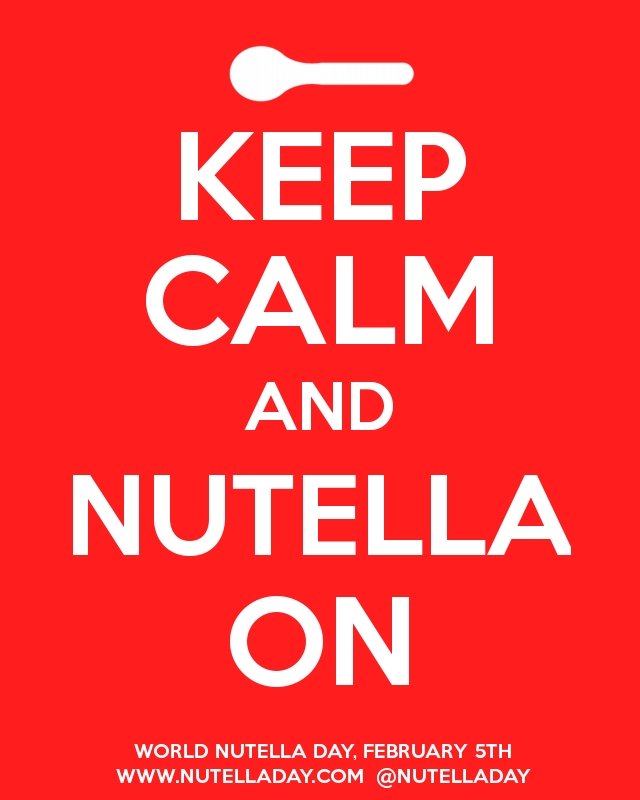
World Nutella Day coming soon!

Check out the free booklet you can get on Amazon for the next few days: The Unofficial Guide to Nutella. And here’s the website for World Nutella Day, hosted by a couple of American-turned-Italian bloggers, Sara Rosso and Michelle Fabio. KeepCalm_NutellaOn February 5 is the big day, so get your Nutella ready.

Book Review: La Bella Lingua by Dianne Hales

bella.comp.inddThe beautiful language. The Italian language is the subject whose story is beautifully told in Dianne Hales’ book, La Bella Lingua. Subtitled “My love affair with Italian, the world’s most enchanting language,” Hales’ book is very thorough in presenting the history and development of today’s Italian.

Most engaging for me were the stories of her  falling in love with Italian, and the research on the book. Her personal experiences transported me to Italy, and brought me into the room for her conversations with various language teachers and experts, historians, and writers.

I also enjoyed learning more about the origins of the Italian language. She definitely prompted me to consider a closer look at Dante, and introduced me to several significant contributors to today’s Italian. I didn’t expect to find Galileo, but there he was. Verdi, Garibaldi, and many others–the famous and infamous–are included.

Perhaps food-related Italian words are most widely known in America–and a chapter is devoted to eating Italian. Other chapters celebrate art, love, and cinema, the Italian way.

For people with an interest in languages and linguistics, this will be a fun read.  For students of Italian, it’s a must. The book includes an index, chapter by chapter bibliography, and a discussion guide with questions. I recommend it!

Can I also encourage you to visit Dianne Hales’ website? Many great features will draw you back to it–Italian food and travel ideas, a blog with language learning helps, resources for teachers and students of Italian language, and a nice introduction to Dianne herself.

The cover of this book really appealed to me because of a dream I had in 2004. I was in Sorrento, studying Italian for two weeks at SorrentoLingue. About ten days into my two weeks there, I had a dream. I was in a boat, one of the colorful fishing boats found in that area, just me and the boatman. I was fishing with pole and line, but instead of trying to catch fish, I was fishing for words. Ever done that? I would reel one in and look at it, the Italian word I had caught, but it wasn’t the one I wanted, so I threw it back. Over and over, I cast my hook into the water but kept bringing in the wrong word. And there on Dianne Hales’ book cover–aside from the Venetian gondola rather than the fishing boat–I saw my dream depicted. And in addition to the book’s contents, the cover is a delightful reminder of my wonderful experience in Sorrento.

This month in history: King Ferdinand and Napoleon

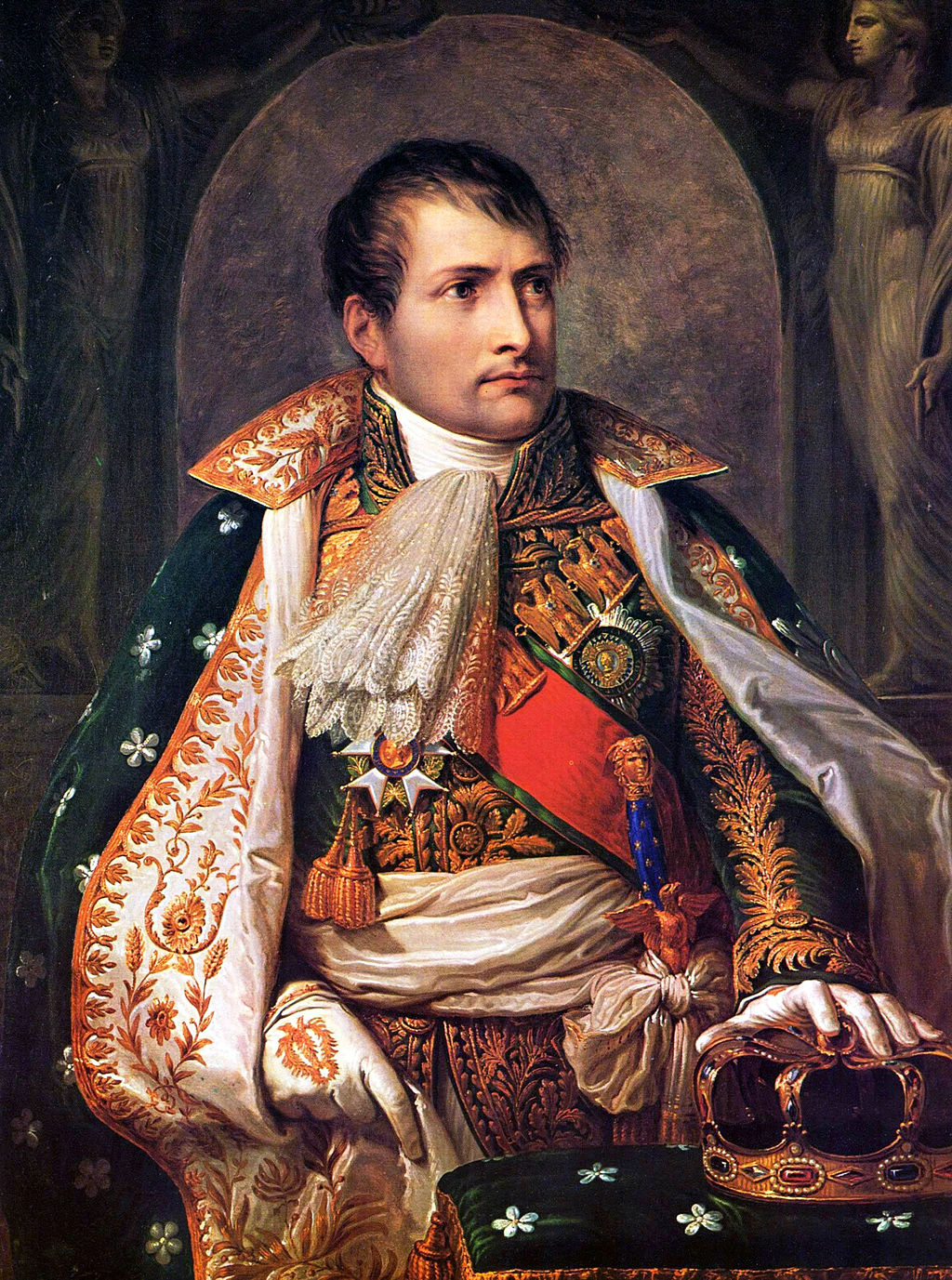
Napoleon as King of Italy,  by Andrea Appiani

Napoleon as King of Italy, by Andrea Appiani

Napoleon certainly made his way around Europe, and he didn’t pass up the Kingdom of Naples. The Napoleonic Wars began in 1789. Ferdinand’s wife, Maria Carolina, was a sister of Marie Antoinette, and Ferdinand himself was a first cousin of the French king, Louis the umpteenth. When the French monarchs were executed in 1793, Ferdinand joined the First Coalition, and alliance of European monarchies opposed to Napoleon and revolutionary France.  

Despite the efforts of the alliance, by 1798 the French were in control of the northern part of the Italian peninsula, including Venice and parts of the Balkan coast of the Adriatic. 

King Ferdinand I of the Two Sicilies, III of Sicily, and IV of Naples--as you wish.

King Ferdinand I of the Two Sicilies, III of Sicily, and IV of Naples–as you wish.

I am not a student of the Napoleonic era, and I’ll probably continue to find the chain of events confusing unless I really devote some time to it. Ferdinand, the King of Naples, is confusing enough on his own. His full Italian name is Ferdinando Antonio Pasquale Giovanni Nepomuceno Serafino Gennaro Benedetto. He is called Ferdinand IV as king of Naples, but Ferdinand III as King of Sicily, which he ruled at the same time. And after the defeat of Napoleon in 1816, he was known as Ferdinand I, King of the Two Sicilies (the island and the mainland, which had been called the Kingdom of Sicily in earlier times).

With the French troops occupying Rome, in late 1798 Ferdinand took an army north to oppose them. He was far outmatched, and his Roman foray is summed up in the saying, “He came, he saw, he fled.”  He went back to Naples, and shortly departed for Sicily (of which he was also king).

Out of the anarchy that followed his departure, on January 23, 1799 the Parthenopaean Republic was proclaimed. Supported by the nobles and the wealthy middle classes, the Republic was strongly opposed by the peasantry, who fought valiantly for their king.

Within a few weeks, the French military was recalled to northern Italy, and Ferdinand immediately began planning to retake his mainland kingdom. An army led by Cardinal Ruffo was formed in Calabria and marched north, reaching Naples on June 13. After eleven days of fighting, a tentative capitulation was being considered, when Admiral Nelson’s fleet arrived in support of the king. By the end of June the Republicans were routed, mostly arrested, and on July 8, King Ferdinand resumed his throne in Naples.

The Parthenopaean Republic’s demise was not the end of Napoleon. But that’s a story for next month’s history post.

THIS LINK will take you to a fantastic interactive map on the Napoleonic Wars.

Ski on an active volcano!

“Welcome to Sicily!” Here’s some eye-popping video of skiing on Mount Etna in Sicily (and some other local activities). Technically, yes, a ski company ad–but it will give the daredevil skiers among you an idea of winter sport opportunities in the far south. What would you think about skiing on a volcano while it is actively erupting?

Winter pasta: Pasta e fagioli

The pasta e fagioli I made while writing this blog post.

The pasta e fagioli I made while writing this blog post.

As I’m writing this, the weather is damp and chilly, and the mid-winter is a great time for pasta e fagioli, an Italian peasant dish that has as many versions as there are Italian kitchens, I think. It might be Italy’s best known meatless meal, although many recipes add meats like pancetta, diced ham, salt pork, or bacon.

Today I’m making a meatless version, but not truly vegetarian, since I’m using chicken broth. One thing I like about pasta e fagioli is the use of basics. I am rarely without onion, carrot, celery, and garlic, a can of chopped tomatoes (if I don’t have fresh ones to use), a can of beans, and some pasta.

Regarding the seasonings: Since it’s a wintertime dish, dried herbs are entirely appropriate–basil, oregano, thyme, rosemary, parsley. Where I live, I have parsley growing outdoors much of the winter too, so I’ll chop some fresh to add with the pasta. Some add some zip with red pepper flakes. I like ground black pepper, and am fairly generous with it.

Regarding the beans: Ideally I would use cannellini beans, however today a can of great northern beans was handy. Kidney or pinto beans will work. I haven’t tried it with garbanzos, but  wouldn’t rule them out if that’s what I had available.

Regarding the pasta: Most recipes suggest ditalini, the tiny rings I have always thought of as macaroni salad pasta. But any smallish pasta will work. Because I’m usually cooking for two, I rarely use a full box of pasta.  What I like to use in soup is the last little bit left over from a box–so today I’m throwing in a cup or so of whole grain rotini. 

A pot of pasta e fagioli will make a great light supper with nothing more than garlic bread or cheesy focaccia. Top each bowl with parmesan. If you have big eaters to feed, you can pair the soup with a grilled ham and cheese sandwich, and add a simple dessert.

Wherever you are, you can enjoy a little taste of Italy with an easy to make, yummy to eat, pot of pasta e fagioli!

An intro to genealogy

Some of you readers follow my genealogical adventures on this blog. You might be interested in a couple of posts I wrote as a guest blogger for my friend Gemini Sasson. She posted these in November but I was dilerious with the birth of my first grandchild at the time, and missed it until recently. http://ngeminisasson.blogspot.com/2013/11/genealogy-101-digging-roots-part-i.html
and here is the link to Part 2: http://ngeminisasson.blogspot.com/2013/11/genealogy-101-digging-roots-part-ii.html

Italian Christmas: Buon Natale!

Today I’m sharing a link to Walks of Italy’s blog, a great piece on Christmas traditions in Italy. Walks of Italy offers some interesting touring options, and custom walks for those with specific interests. I hope you enjoy this post, and wish you all a blessed holiday!

http://www.walksofitaly.com/blog/traditions-2/christmas-traditions-in-italy

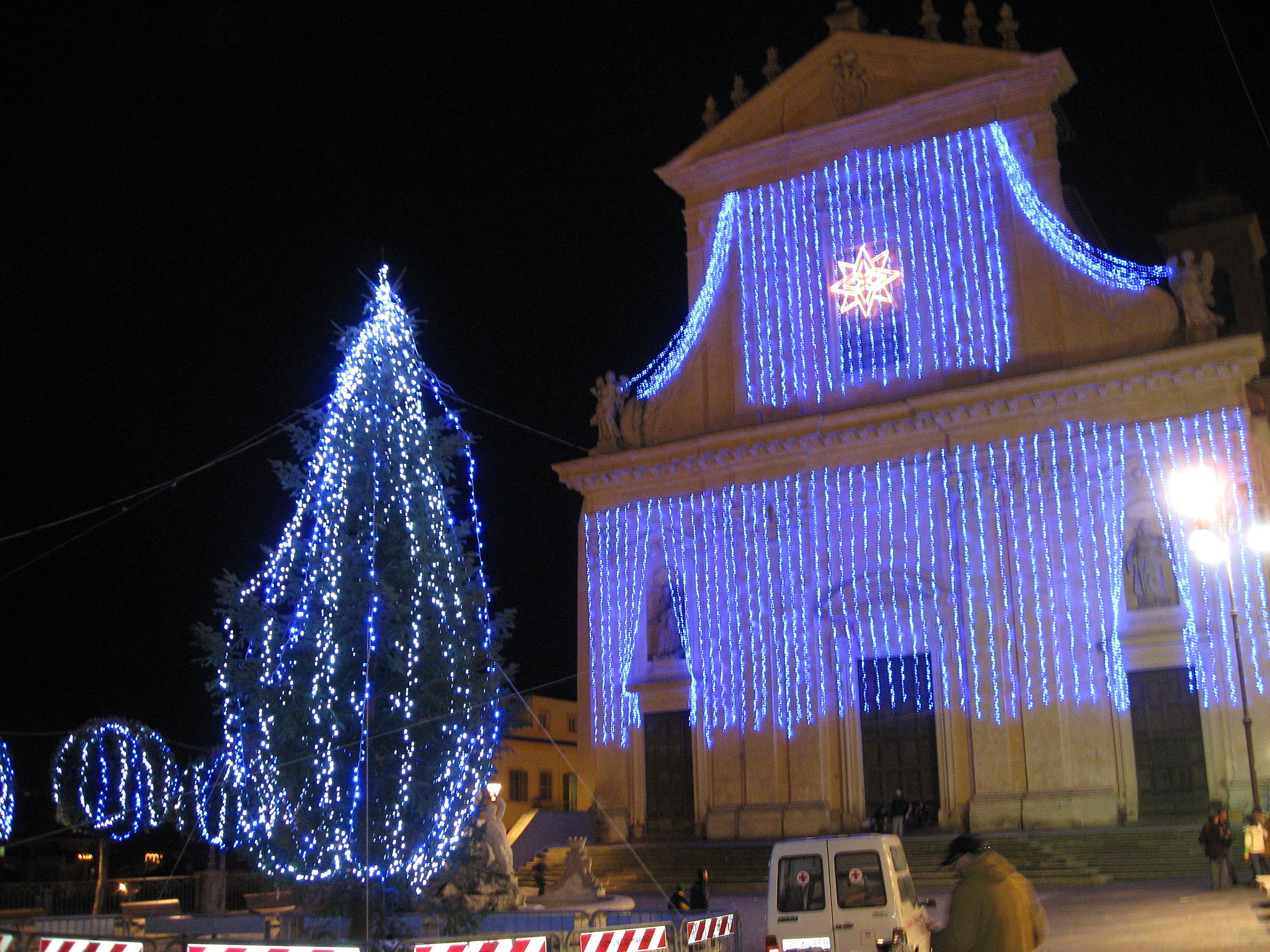
Photo by Gino il Pio via Wikimedia Commons.

Photo by Gino il Pio via Wikimedia Commons.

Another generation of Christmas torcetti

This year marks a very special milestone for my family–the birth of our first grandchild. And though she is too young to eat any, I look forward to making some torcetti while I am visiting my daughter and son-in-law, and introducing the baby to the family tradition.

So here’s a link to Grandma Mary’s torcetti recipe, and a photo of her great-great granddaughter, Cosette.

Grandbaby Cosette holding a photo of her mom wearing the same dress, both at age two weeks!

Grandbaby Cosette holding a photo of her mom wearing the same dress, both at age two weeks!