“The Viagra of the poor”? Here’s a fun blog post about Calabrian hot peppers and spicy food. Thanks, DUTCHgoesITALIAN!!

dutchgoesitalian's avatarDUTCH goes ITALIAN

The product that is loved the most in Calabria is the Peperoncino, the so called hot chili pepper. In every house you will see peperoncino hanging from the ceiling, and in every dish you will taste it. Oh yes, i calabresi like it hot!

You name it and they use peperoncino; chocolate liquor with peperoncino, gelato al peperoncino (oh yes you can have this type of ice cream in the coastal town Diamante), pasta dishes with peperoncino, sausages with peperoncino, grappa al peperoncino and so much more…

I just mentioned the coastal town Diamante which is located 27km south of Praia A Mare. At the entrance of this town a red statue of the capsicum will welcome you to let you know that Diamante’s true symbol is the peperoncino. To honor this hot jewel the Peperoncino Festival is held every September. This celebration includes concerts, dances, film reviews, street theater and a competition to find the person capable…

View original post 147 more words

San Bartolomeo in Legio: An Italian hermitage

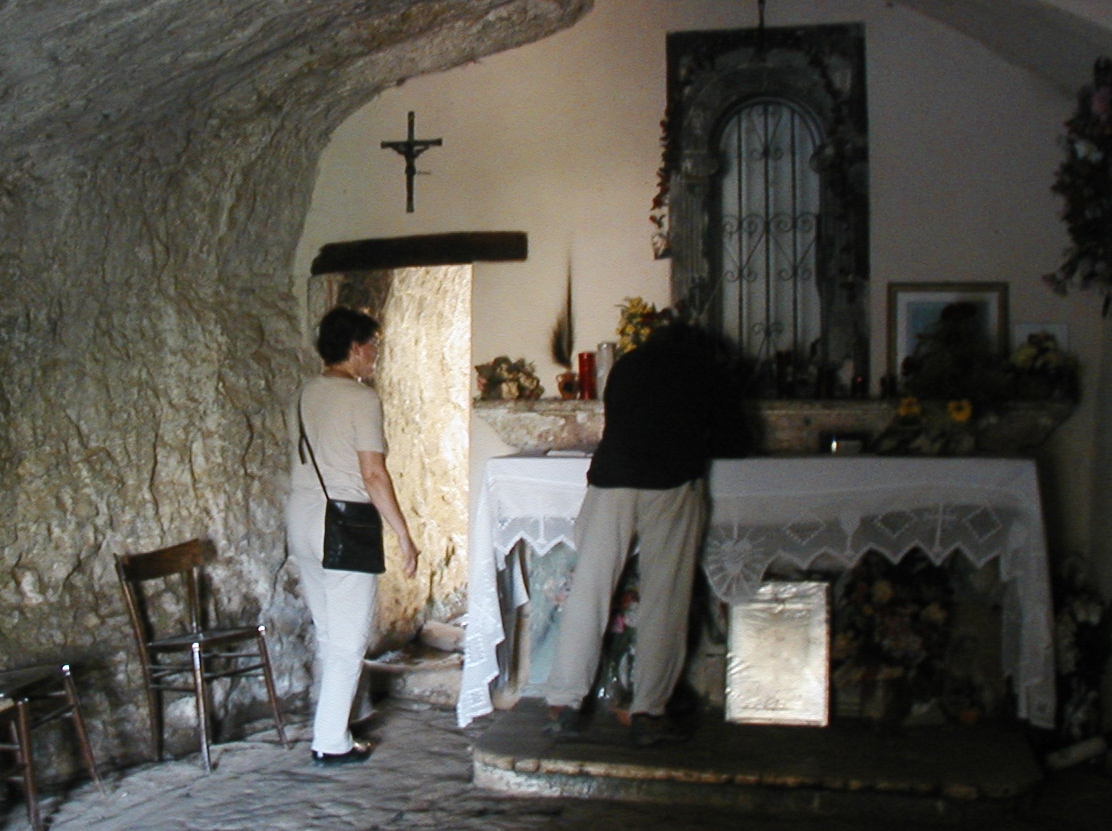
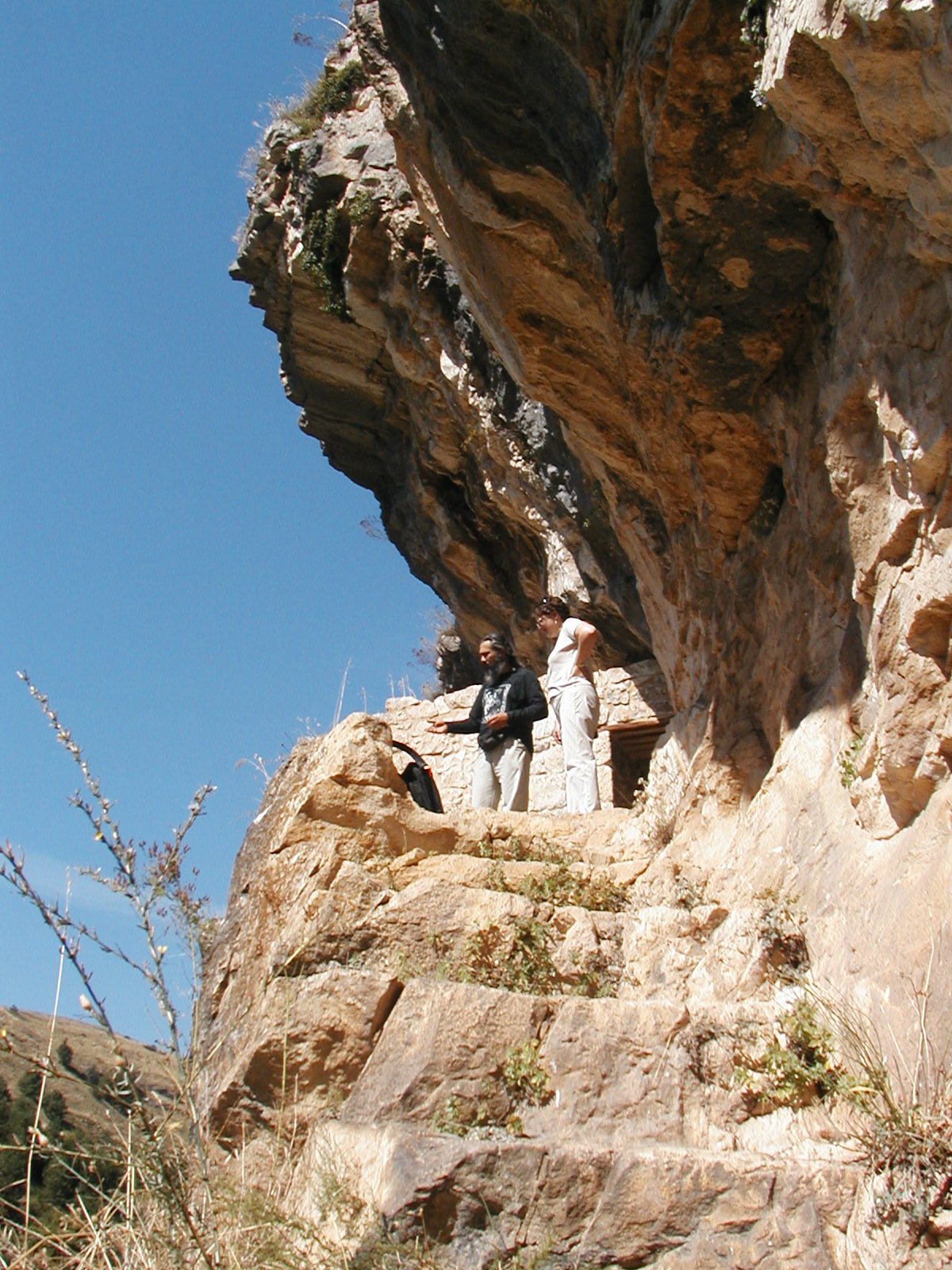
On a hot, clear September afternoon Vern and I followed our friend Cesare along a trail through dry grass on the slopes of Maiella. Our destination: one of the dozens of hermitages in the mountains of Abruzzo, San Bartolomeo in Legio. Pilgrims still visit the site, most commonly on August 25 each year. The narrow trail and ledge discourage crowds!

In the chapelChapel entry, and window on left

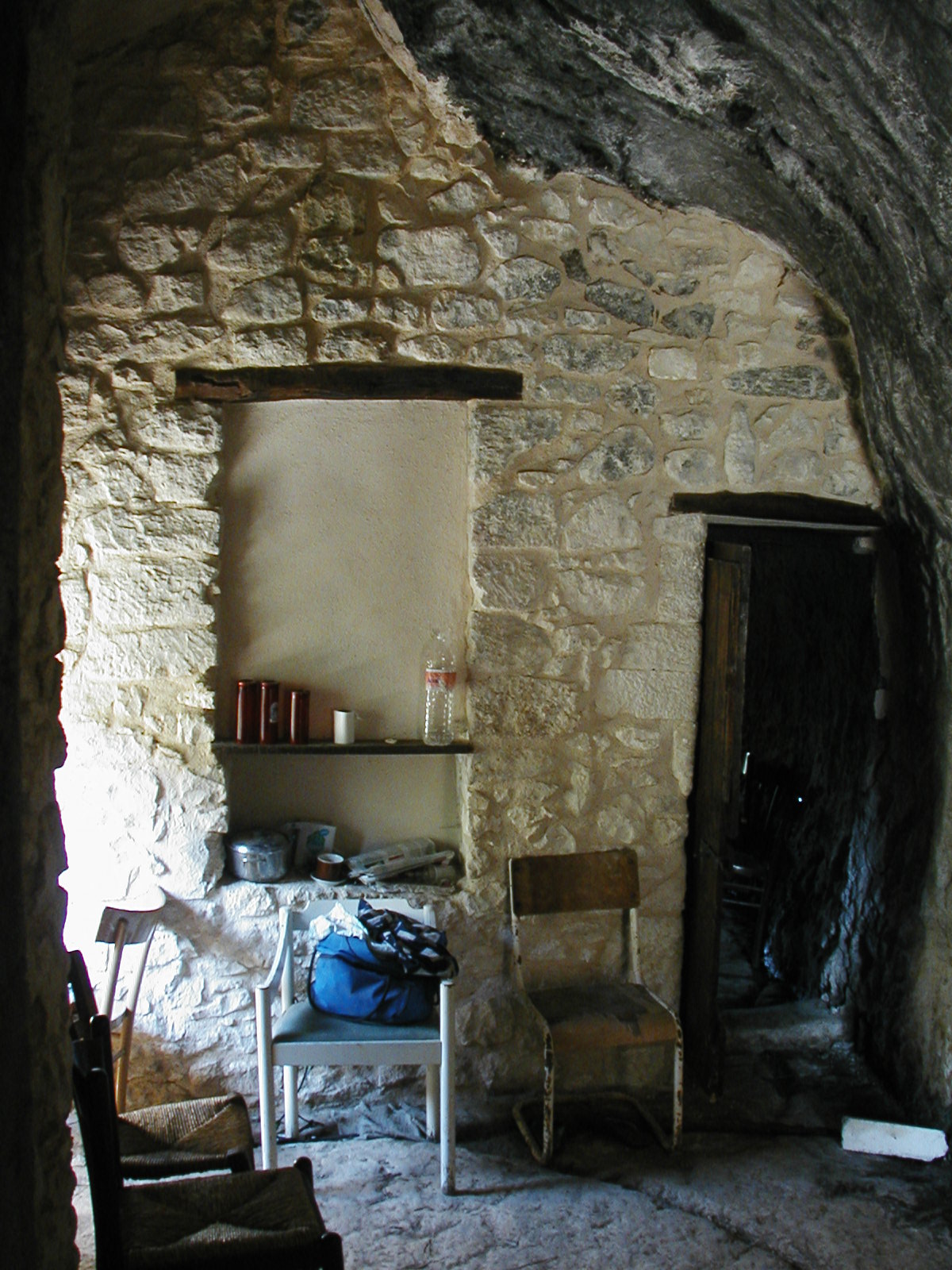
Little doorway to nowhere

No handrails on these stairs!

It is hard to imagine spending weeks or months in this isolated place, but there is a beauty in the surroundings, and it seems a good place to encounter God. Here you can read more about it.

Have you ever visited a hermitage? Where was it, and what did you think of it?

Book Review: Stumbling Through Italy

Niall Allsop and his wife Kay of Bath, England, began vacationing in Italy after making friends with Vittorio and Ivano Capetti, owners of an Italian restaurant in Bath. Their initial forays took them to Tuscany, but they came to their senses soon enough, and began to explore the Italian south.

I like the way these people travel: Not rushing from monument to museum, but making friends, meeting people. Many of these people happen to own or work in restaurants, because like most of us headed for Italy, they love the food. But their secret to successful travel in Italy is not just making friends with the waiters. It is also adapting to the rhythm of Italian life–which means taking the early afternoon ‘siesta’ along with the rest of the country. It’s learning to speak a bit of the language, at least. It’s driving like an Italian when driving in Italy.

I enjoyed wandering through Sicily, Sardinia, Naples, Apulia, and Calabria with them, and previewing some travel experiences I’d like to have myself. They found the trulli houses of Alberobello trulli disappointing, and delighted in the performance of Euripides’ play Ecuba in the classical Greek theatre in Siracusa. They discovered, from one of their hosts, a recipe for orange-coffee liquor, which they kindly included in the book. They were willing to be sidetracked from the usual travel highlights by people and places not found in the tourist guidebooks.

Especially helpful–a chapter on Italian language tips for the novice, and a chapter on driving in Italy for the brave, though some might say foolhardy.

Niall Allsop’s writing is more serviceable than brilliant, but he leads us on an enjoyable stroll, a passeggiata through southern Italy, which you might enjoy, as I did.

I love discovering new treasures of southern Italy through other blogs–Thanks, Marilyn and Alf!

dralfoldman's avatarTaking the slow road to Cyprus

One of the gems of our seven week trip will always be our unplanned visit to Palinuro, which is two hours by road South of the World famous resorts on the Amalfi Coast in Southern Italy. Palinuro is totally different to the sophisticated and highly commercialized resorts of Amalfi, Positano and Ravello, however, equally as beautiful in its own right. It does not have the expensive small shops, nor does it have the five-star hotels, instead it does have lots of shops selling affordable merchandise and some excellent four star hotels. The restaurants are catering for Italians and the menu in most of them is not translated, so if you don’t speak the language that’s tough but a lot of fun. English is not widely spoken here and it is so nice to spend time away from the hoards of Germans, Americans, Brits and in fact, tourists from all over the world. 

View original post 421 more words

The other Norman invasion: The Italian South!

Be careful who you ask for help. That might be the lesson from the story of the “other” Norman invasion, the Norman conquest of southern Italy and Sicily.

Early 19th century print by Lemercier

According to the chronicle of William of Apulia (written about 100 years later), Norman pilgrims returning from the Holy Land stopped in Salerno in 999, and during their stay the city was attacked by Saracen raiders. When the Lombards quickly capitulated, the Normans berated them, took matters in their own hands, and rallied to defeat the Saracens. The Lombard prince, Guaimar, offered them many incentives to stay in Salerno to provide protection, but the Normans returned home with promises that they would spread the word about Guaimar’s need.

About fifteen years later, a band of Normans visiting the Gargano Peninsula shrine to Archangel Michael joined forces with the Lombards to throw off Byzantine control. By 1020, various Norman mercenaries had joined forces with leaders of various principalities and duchies in the southern peninsula. By 1042, the Normans had gained enough power that a leader was selected from among their own: William Iron Arm, the eldest son of Tancred d’Hauteville, was given the title of Count of Apulia, and married the daughter of the Duke of Sorrento. William and several other Norman leaders were granted lands around Melfi.

The Norman castle in Melfi now houses a wonderful museum.

In 1043 William and his younger brother Drogo began campaigns to bring Apulia and Calabria under their control, and in time their younger brother Robert Guiscard joined in their efforts. Guiscard is not a surname–it is his nickname variously translated the Fox, the Wily, the Resourceful, and the Weasel. He was initially, in 1048, granted a castle in Calabria by his brother, but soon became restless for greater conquests.

By the 1050s, the Lombards regretted inviting the Normans to their lands, and with the help of Pope Leo IX, launched an alliance against them, with Swabian and Byzantine support. On June 18, 1053, Humphrey, Count of Apulia, led the Normans to victory in the Battle of Civitate, which cemented their power in the Italian south. Gradually, by the end of the century, the Normans gained control of the entire southern mainland and the island of Sicily.

The Norman kingdom lasted another 100 years, until it went to the Hohenstaufens by marriage in 1194. The Norman presence is still marked by many castles and churches built during their reign.


I love the photos, and Tatiana’s description of the festivals in Abruzzo! Look at those huge hawks in the right photo–or are they eagles?

Santatatiana's avatarItalian Slow Walks

Today is Ferragosto in Italy, or the peak of summer folk festivals. Almost every town or village arranges its own “festa” or “sagra”. The difference between them lies in the fact that in the first case the highlight of the program is a costume show, and in the second one – tasting of local specialties. Newsstands sell a special guide on these holidays, which is called “Borgi and sagre”.

I love the Italian Middle Ages and so I seek to visit as many folk festivals as possible. Although, each year it is getting harder and harder. The fact is that I have visited almost all the festivals, which are available without car. Last Friday, my friends and I took part in a very picturesque festival “Notte nell’Ilex” in a charming medieval town Elice (Province of Pescara). The tiny borough is situated in the middle of nowhere and moreover the festivity…

View original post 1,138 more words

Guest Post: A Friend in Every Corner of the World

This week, my Napolitana friend Laura Vinti writes about her passion for travel, and a new program to help travelers connect with people in the places they visit.

I see traveling as a sort of spiritual quest. This might sound pompous and self-important, but I’m unapologetic about it — when I visit a city, I’m after its soul.

Now, faced with this confrontational approach,  every city I visit tends to defend itself by doing what charming cities do best: dazzle the visitor by flaunting its beauty, throw at them magnificent palaces, glittering mosaics and frescoes, and daring towers (sometimes leaning too, for added measure), hoping thereby to make the visitor forget their Spiritual Quest and settle for aesthetic intoxication instead.

Well, I don’t fall for it. I take pleasure in all the beautiful sights, and then I aim for the heart – the forgotten alleys, the unexpected quirks, the intimate secrets, the stories you don’t find in travel guides, the places where the locals go for their morning coffee, the corners that offer shelter to star-crossed lovers. I want to uncover the city’s dark side, understand its personality, learn the inside jokes, really get to know the locals. But all too often I come up empty.

The church of Gesu Nuovo in the historic center of Naples.

However, I now have a new weapon in my urban soul-seeker arsenal. Thanks to a great initiative which is spreading its wings (pun intended) throughout the world, I’m enlisting angels in my quest: Angels for Travelers, no less, whose aim is to unite the globe-trotters of the world into a global community of friends.

Angels for Travelers is an exciting and ever-growing network which gives travelers free access to a trove of insider knowledge by providing them with local friends at any stage of their trip, even before they arrive at their destination.

As Stefano Consiglio, professor of Organization Theory at the University of Naples and founder of “Angels”, says, “Angels for Travelers is a web travel community focused around the assumption that someone who wants to visit a new city is looking for a social experience. And what is better than to be guided by people living there?”

This idea was sparked by an episode he witnessed on a city bus during a recent trash crisis in Naples. “Two Spanish travelers were asking some fellow passengers about the nearest bus stop to their hostel. Soon, more people joined in to help the tourists out. It seemed that the group was attempting to distract the tourists from the garbage piling up every
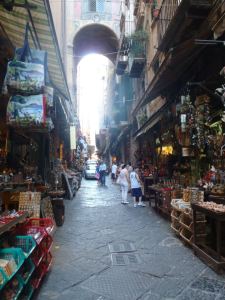
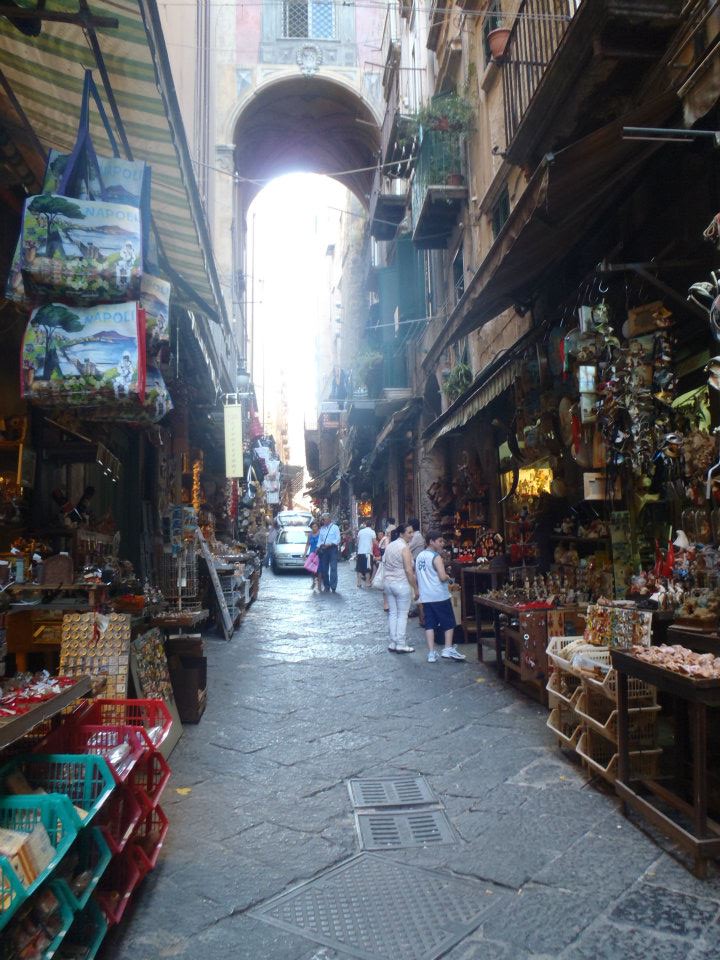
Via San Gregorio Armeno, famous for Christmas creches.

street corner, while at the same time redirecting their attention to the many treasures of our city.”  He found this so striking, because the common assumption is that Neapolitans lack civic pride. “I started to think about how people can contribute to the improvement of their community, especially in a situation of serious crisis.”

Seeing how the passengers were eager to assist the tourists, he wondered about ways to channel this positive energy and do something useful for his city and for the local community. The idea of the “Angels” was born.

However, when he illustrated his idea to friends, they were skeptical: who would be willing to invest their time in helping people they didn’t know?  As it turned out, many were more than willing: only two months after the launching of the platform, already 190 Neapolitan Angels were ready to give advice to travelers arriving in the city.

“People are happy to share and more generous than we might give them credit for,” says Stefano.

Palazzo Sangro di Sansevero, a Naples landmark.

Capitalizing on their Neapolitan success, in 2010 Stefano and his staff decided to update the web platform in order to allow people from everywhere in the world to become Angels for their own city. The idea spread and now there are more than 4,000 Angels in 350 cities in the world, including New York, Paris and London, ready to share tips and insights about their hometown with new friends.

Last June, I met with one of the Neapolitan Angels, Amedeo Colella, to try the Angels’ experience first-hand.  He turned out to be the author of “Manuale di Napoletanità”, a delightful collection of 365 half-serious, half-joking lessons on Naples and ‘being Neapolitan’.

I asked him what he would suggest to an American of Neapolitan descent who wishes to unveil the authentic city of his ancestors.

“They should get in touch with its desperation and its poverty: the shady alleys where families of six or more share two bedrooms in a basement apartment, the second-hand markets where you can buy clothes by the kilo; they should look for the sites where Raffaele Viviani, the 19th century actor and playwright of the poor and forgotten, set his plays, and get a sense of the suffering that pushed his or her forebears to leave their country in search of a better life.”

To move on to a lighter topic, I steered the conversation toward food. It always works, and in Naples more than anywhere else: we Neapolitans love to cook, love to eat, and love to talk about food.

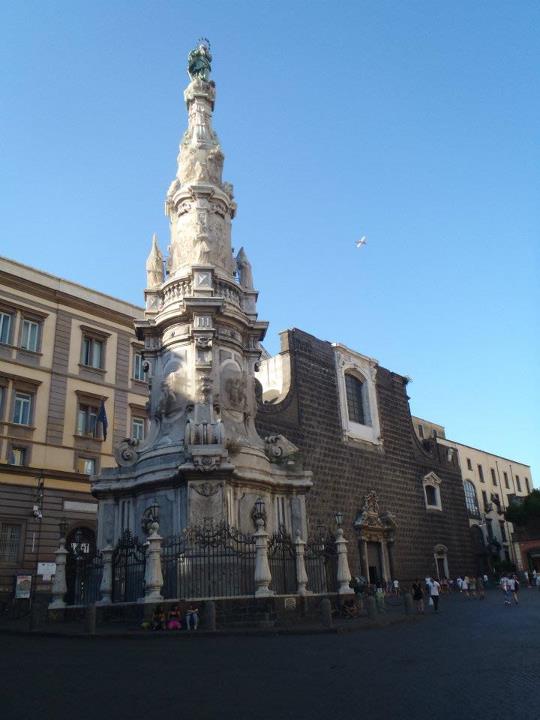
Immacolata obelisk in the Piazza del Gesu.

Since both Amedeo and I know that in our city true understanding passes through one’s stomach, we agreed that our ideal traveler will have to try a sfogliatella (a typical Neapolitan pastry made with ricotta) at Attanasio’s, near the main train station, or at least taste a babà (a yeast dough soaked with a rum and sugar syrup) at “Il capriccio” in Via Carbonara.

Mission accomplished, spiritual needs satisfied, we ended our conversation with an espresso shot at Caffè Mexico on Piazza Dante: a worthy way to mark my entry into the Angels for Travelers’ community.

To find out more about Angels for Travelers visit their website: http://www.angeliperviaggiatori.com

To listen to Stefano’s talk about Angels for Travelers at TED go to (http://tedxtalks.ted.com/video/TEDxNapoli-Stefano-Consiglio-An)

The photos depict some of the sights recommended by Amedeo, all situated in the narrow streets of the ancient Greek grid of Naples.

Laura Vinti is a native Neapolitan living in the greater Washington, DC area. An MFA student in Fiction, she’s writing a historical novel set in 1500s Naples.

Wow! This post has a little history, a little food, a dash of culinary tourism!! I would love to take the cooking class that’s mentioned. Wouldn’t you?

Tasting & Living's avatarTasting & Living 2016

Palermo is a great place. It’s partly falling down, with rats running around and for the other part it’s stunning and full of hidden treasures. It’s a city full of contrasts.

Obviously the summer is rather hot and sweltering but even in a 35° degree heat, you can’t be disappointed with this great Sicilian city.

For foodies, Palermo is also an exciting destination. The gastronomical heritage of Moorish and Arabian influences are very much present in the cooking traditions. They make the food here very exciting and exotic. One of the oddly interesting stops on any foodie tour of the city has to be the Antica Focacceria S. Francesco. It’s speciality is the spleen sandwich. So not for the faint hearted! If you are looking for good pizza or other ‘classics’ then you are better off somewhere else. However the spleen sandwich is a rite of passage for any lover…

View original post 554 more words

Food for thought: Is arugula too bitter for you?

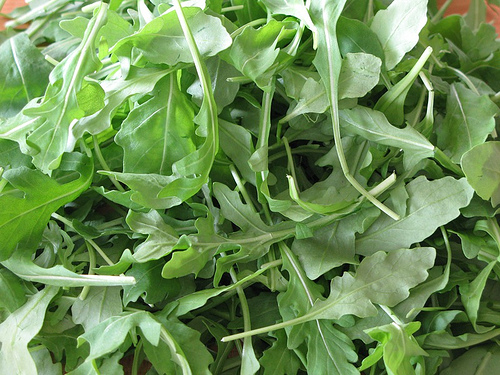
Arugula is also known as rocket or roquette.

I started picking up my weekly “farm box” from Nash’s Organic Produce last month, and have already received a couple of bunches of arugula. I *love* arugula!! But I have friends who find it too bitter, just as some people find broccoli or Brussels sprouts too bitter.

Guess what? It’s genetic!


Some people have more sensitive taste receptors than other people, and this includes sweet and salty tastes as well as bitterness. These people are sometimes called supertasters. Supertasters perceive a greater bitterness in foods from the Brassica family (kale, broccoli, cabbage… arugula) although some studies have shown that the sensitivity does not correlate directly with avoidance of them.

Though the phenomenon of varying sensitivity was observed in laboratories many decades ago, only in the last ten years have scientists nailed down the genetic details. A science article in The Guardian newspaper (UK) summarizes the details nicely.

Personally, I find arugula slightly bitter, peppery, and a great base or addition to salads. I love it steamed in pasta with a light sauce (a couple of chopped fresh tomatoes sauteed with onion and garlic, and add chopped arugula for the last couple of minutes, then pour over and toss with steaming hot pasta). I also had arugula in Italy cooked in a light gravy with beef or veal, a delicious combination.

So how about you–yes or no to arugula? And if you like it, what’s your favorite way to prepare it?