The other Norman invasion: The Italian South!

Be careful who you ask for help. That might be the lesson from the story of the “other” Norman invasion, the Norman conquest of southern Italy and Sicily.

Early 19th century print by Lemercier

According to the chronicle of William of Apulia (written about 100 years later), Norman pilgrims returning from the Holy Land stopped in Salerno in 999, and during their stay the city was attacked by Saracen raiders. When the Lombards quickly capitulated, the Normans berated them, took matters in their own hands, and rallied to defeat the Saracens. The Lombard prince, Guaimar, offered them many incentives to stay in Salerno to provide protection, but the Normans returned home with promises that they would spread the word about Guaimar’s need.

About fifteen years later, a band of Normans visiting the Gargano Peninsula shrine to Archangel Michael joined forces with the Lombards to throw off Byzantine control. By 1020, various Norman mercenaries had joined forces with leaders of various principalities and duchies in the southern peninsula. By 1042, the Normans had gained enough power that a leader was selected from among their own: William Iron Arm, the eldest son of Tancred d’Hauteville, was given the title of Count of Apulia, and married the daughter of the Duke of Sorrento. William and several other Norman leaders were granted lands around Melfi.

The Norman castle in Melfi now houses a wonderful museum.

In 1043 William and his younger brother Drogo began campaigns to bring Apulia and Calabria under their control, and in time their younger brother Robert Guiscard joined in their efforts. Guiscard is not a surname–it is his nickname variously translated the Fox, the Wily, the Resourceful, and the Weasel. He was initially, in 1048, granted a castle in Calabria by his brother, but soon became restless for greater conquests.

By the 1050s, the Lombards regretted inviting the Normans to their lands, and with the help of Pope Leo IX, launched an alliance against them, with Swabian and Byzantine support. On June 18, 1053, Humphrey, Count of Apulia, led the Normans to victory in the Battle of Civitate, which cemented their power in the Italian south. Gradually, by the end of the century, the Normans gained control of the entire southern mainland and the island of Sicily.

The Norman kingdom lasted another 100 years, until it went to the Hohenstaufens by marriage in 1194. The Norman presence is still marked by many castles and churches built during their reign.


Guest Post: A Friend in Every Corner of the World

This week, my Napolitana friend Laura Vinti writes about her passion for travel, and a new program to help travelers connect with people in the places they visit.

I see traveling as a sort of spiritual quest. This might sound pompous and self-important, but I’m unapologetic about it — when I visit a city, I’m after its soul.

Now, faced with this confrontational approach,  every city I visit tends to defend itself by doing what charming cities do best: dazzle the visitor by flaunting its beauty, throw at them magnificent palaces, glittering mosaics and frescoes, and daring towers (sometimes leaning too, for added measure), hoping thereby to make the visitor forget their Spiritual Quest and settle for aesthetic intoxication instead.

Well, I don’t fall for it. I take pleasure in all the beautiful sights, and then I aim for the heart – the forgotten alleys, the unexpected quirks, the intimate secrets, the stories you don’t find in travel guides, the places where the locals go for their morning coffee, the corners that offer shelter to star-crossed lovers. I want to uncover the city’s dark side, understand its personality, learn the inside jokes, really get to know the locals. But all too often I come up empty.

The church of Gesu Nuovo in the historic center of Naples.

However, I now have a new weapon in my urban soul-seeker arsenal. Thanks to a great initiative which is spreading its wings (pun intended) throughout the world, I’m enlisting angels in my quest: Angels for Travelers, no less, whose aim is to unite the globe-trotters of the world into a global community of friends.

Angels for Travelers is an exciting and ever-growing network which gives travelers free access to a trove of insider knowledge by providing them with local friends at any stage of their trip, even before they arrive at their destination.

As Stefano Consiglio, professor of Organization Theory at the University of Naples and founder of “Angels”, says, “Angels for Travelers is a web travel community focused around the assumption that someone who wants to visit a new city is looking for a social experience. And what is better than to be guided by people living there?”

This idea was sparked by an episode he witnessed on a city bus during a recent trash crisis in Naples. “Two Spanish travelers were asking some fellow passengers about the nearest bus stop to their hostel. Soon, more people joined in to help the tourists out. It seemed that the group was attempting to distract the tourists from the garbage piling up every
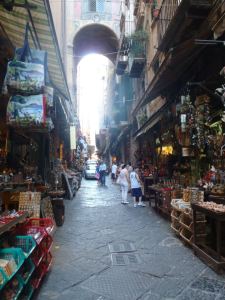
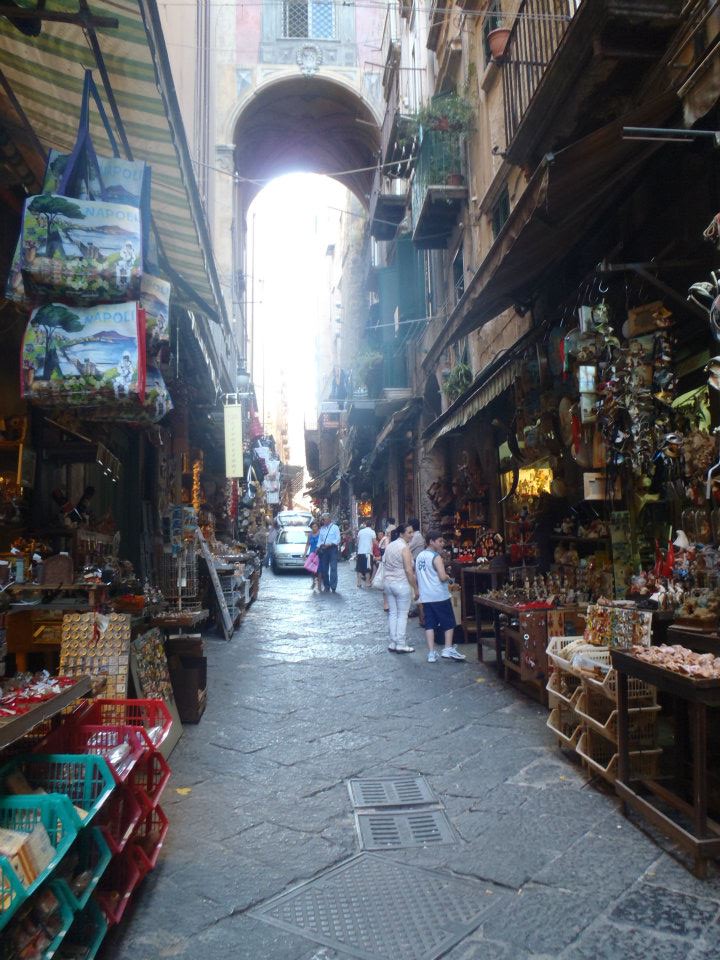
Via San Gregorio Armeno, famous for Christmas creches.

street corner, while at the same time redirecting their attention to the many treasures of our city.”  He found this so striking, because the common assumption is that Neapolitans lack civic pride. “I started to think about how people can contribute to the improvement of their community, especially in a situation of serious crisis.”

Seeing how the passengers were eager to assist the tourists, he wondered about ways to channel this positive energy and do something useful for his city and for the local community. The idea of the “Angels” was born.

However, when he illustrated his idea to friends, they were skeptical: who would be willing to invest their time in helping people they didn’t know?  As it turned out, many were more than willing: only two months after the launching of the platform, already 190 Neapolitan Angels were ready to give advice to travelers arriving in the city.

“People are happy to share and more generous than we might give them credit for,” says Stefano.

Palazzo Sangro di Sansevero, a Naples landmark.

Capitalizing on their Neapolitan success, in 2010 Stefano and his staff decided to update the web platform in order to allow people from everywhere in the world to become Angels for their own city. The idea spread and now there are more than 4,000 Angels in 350 cities in the world, including New York, Paris and London, ready to share tips and insights about their hometown with new friends.

Last June, I met with one of the Neapolitan Angels, Amedeo Colella, to try the Angels’ experience first-hand.  He turned out to be the author of “Manuale di Napoletanità”, a delightful collection of 365 half-serious, half-joking lessons on Naples and ‘being Neapolitan’.

I asked him what he would suggest to an American of Neapolitan descent who wishes to unveil the authentic city of his ancestors.

“They should get in touch with its desperation and its poverty: the shady alleys where families of six or more share two bedrooms in a basement apartment, the second-hand markets where you can buy clothes by the kilo; they should look for the sites where Raffaele Viviani, the 19th century actor and playwright of the poor and forgotten, set his plays, and get a sense of the suffering that pushed his or her forebears to leave their country in search of a better life.”

To move on to a lighter topic, I steered the conversation toward food. It always works, and in Naples more than anywhere else: we Neapolitans love to cook, love to eat, and love to talk about food.

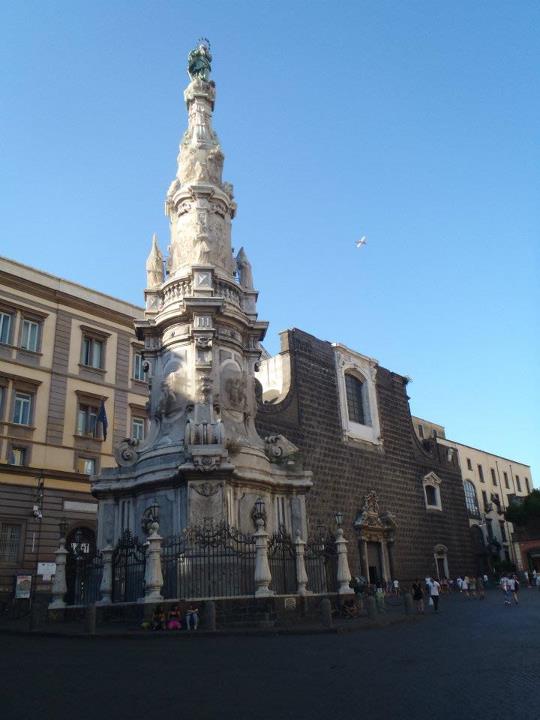
Immacolata obelisk in the Piazza del Gesu.

Since both Amedeo and I know that in our city true understanding passes through one’s stomach, we agreed that our ideal traveler will have to try a sfogliatella (a typical Neapolitan pastry made with ricotta) at Attanasio’s, near the main train station, or at least taste a babà (a yeast dough soaked with a rum and sugar syrup) at “Il capriccio” in Via Carbonara.

Mission accomplished, spiritual needs satisfied, we ended our conversation with an espresso shot at Caffè Mexico on Piazza Dante: a worthy way to mark my entry into the Angels for Travelers’ community.

To find out more about Angels for Travelers visit their website: http://www.angeliperviaggiatori.com

To listen to Stefano’s talk about Angels for Travelers at TED go to (http://tedxtalks.ted.com/video/TEDxNapoli-Stefano-Consiglio-An)

The photos depict some of the sights recommended by Amedeo, all situated in the narrow streets of the ancient Greek grid of Naples.

Laura Vinti is a native Neapolitan living in the greater Washington, DC area. An MFA student in Fiction, she’s writing a historical novel set in 1500s Naples.

Food for thought: Is arugula too bitter for you?

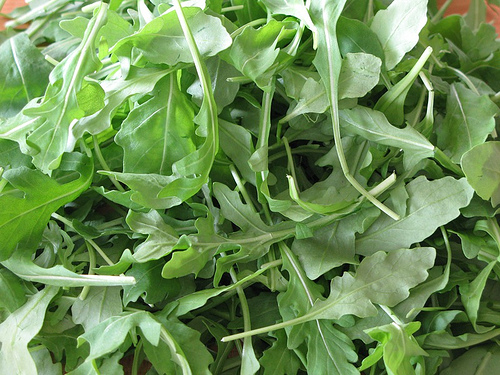
Arugula is also known as rocket or roquette.

I started picking up my weekly “farm box” from Nash’s Organic Produce last month, and have already received a couple of bunches of arugula. I *love* arugula!! But I have friends who find it too bitter, just as some people find broccoli or Brussels sprouts too bitter.

Guess what? It’s genetic!


Some people have more sensitive taste receptors than other people, and this includes sweet and salty tastes as well as bitterness. These people are sometimes called supertasters. Supertasters perceive a greater bitterness in foods from the Brassica family (kale, broccoli, cabbage… arugula) although some studies have shown that the sensitivity does not correlate directly with avoidance of them.

Though the phenomenon of varying sensitivity was observed in laboratories many decades ago, only in the last ten years have scientists nailed down the genetic details. A science article in The Guardian newspaper (UK) summarizes the details nicely.

Personally, I find arugula slightly bitter, peppery, and a great base or addition to salads. I love it steamed in pasta with a light sauce (a couple of chopped fresh tomatoes sauteed with onion and garlic, and add chopped arugula for the last couple of minutes, then pour over and toss with steaming hot pasta). I also had arugula in Italy cooked in a light gravy with beef or veal, a delicious combination.

So how about you–yes or no to arugula? And if you like it, what’s your favorite way to prepare it?


Book Review? It’s your turn!

The fourth Friday each month is when I usually post a book review of something related to southern Italy. But this week, it’s your turn!

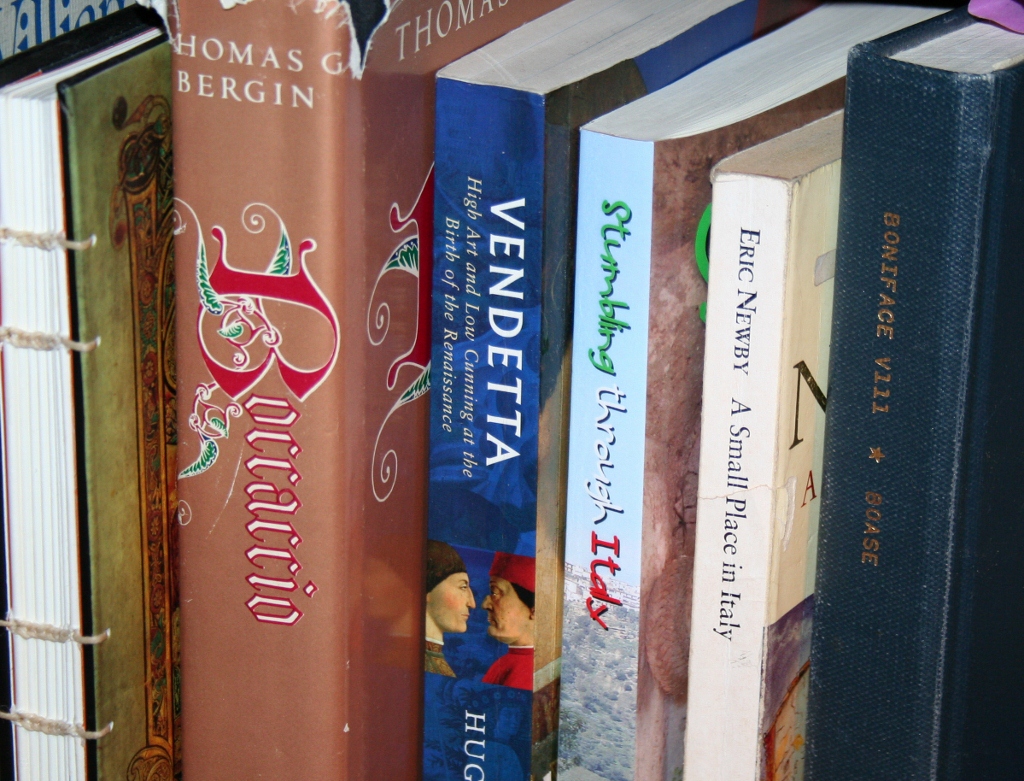
What has been your favorite book dealing with or set in southern Italy? Please share in the comments section. Any genre is welcome–fact or fiction, memoir, children’s books, poetry…. do tell!

I’d love your recommendations for books I might review. And after you’ve shared, enjoy the summer weekend with a good book.

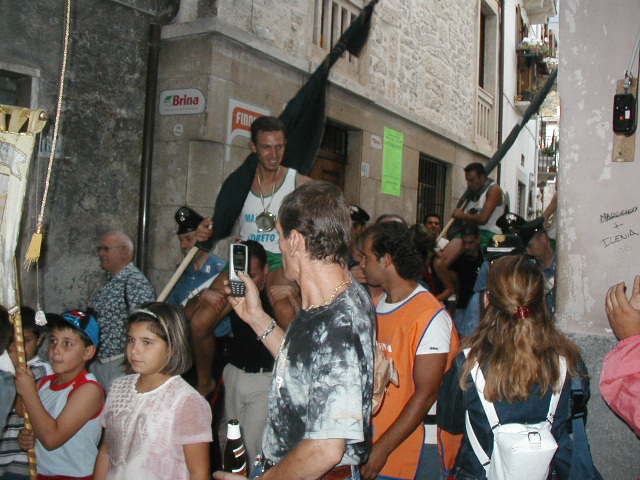
Pacentro’s annual barefoot race

Not too many years ago, the annual “Irrigation Festival” where I live in Washington state celebrated its 100th year. It is touted as the longest running continuous community celebration in our state, and we celebrated along with our neighbors. And when I grew up in Alaska, my family made the annual trek to Seward for the July 4th Mount Marathon footrace, in the midst of Independence Day revelry. I like community celebrations with some history.

Pacentro towers at dusk

So when my friend Cesare invited us to Pacentro (a place whose castle towers would have been reason enough) for their annual celebration which included a footrace, we were happy to go.

Pacentro is perched on the east side of the wide valley wall south of Sulmona in the central Apennines. We drove up the stony ridge, already crowded with cars, and squeezed into one of his typical, impossible, parking spots. By this point in our travels, I had been immersed in Italian for about a month, and understood more and more of the conversation around me. Cesare and his wife led us to a street overlooking the valley to the south. On the opposite hillside, a large Italian flag appeared to be spray painted on a large rock, marking the start of the race course.

An alleyway in Pacentro, filled with flowers.

A public address system, strung up to a high eave, broadcast tinny announcements that could be heard for several blocks. As the racers climbed the hill to the starting line, Cesare told about the origins of the race, when gypsies camped outside the city saw an enemy approaching, and ran barefoot down the hill, across the valley, and up to the hilltop town of Pacentro to warn them, allowing the town to fend off the danger. In honor of the “Zingari”, or Gypsies, who saved Pacentro, the annual Corsa degli Zingari, (Race of the Gypsies), is celebrated every year. It has become a coming-of-age ritual for the young men of Pacentro. The prize seems odd–a bolt of cloth. But this was the fabric used to make his first suit of clothes as a man, and young men still compete vigorously for the title, running barefoot across the rough terrain.

A band greets the runners.

As the two or three dozen racers got in place, fireworks echoed in the valley, and the noisy crowd grew around us. I struggled to hear the announcements, and to understand them. But I was sure I had misunderstood when the announcer welcomed everyone to the 556th running of the Corso degli Zingari. Wait… 556th? That puts it back into the early 1400s. Really? Yes, Cesare assured me, I had heard him correctly.

I was still absorbing the historical shock when the ringing of bells signaled the start of the race. We watched them run down the rocky, forested hillside, disappearing into the pines, and reappearing to the cheers of viewers around us. By the time they begin to arrive in the town, within fifteen or twenty minutes as I recall, they are blistered and sometimes bloody. From the finish line, racers are paraded through the narrow crowded streets on the shoulders of their friends.

The victors are paraded through the streets

We stayed for a while, walking through the narrow, medieval streets and admiring the towers before heading back to Sulmona as the sun set . My sense of history had been properly tweaked, a reset button in my brain changing just a little bit how I viewed the “longstanding” Irrigation Festival (only 117 years old this year) and the Mount Marathon race in Seward (where they wear shoes, for Pete’s sake!).

To see a glimpse of Pacentro and the race, here’s a video from 2009. If you plan to be in Italy in September, you might enjoy attending this very much off-the-beaten-track event.

Small world stories: My friend Wakana

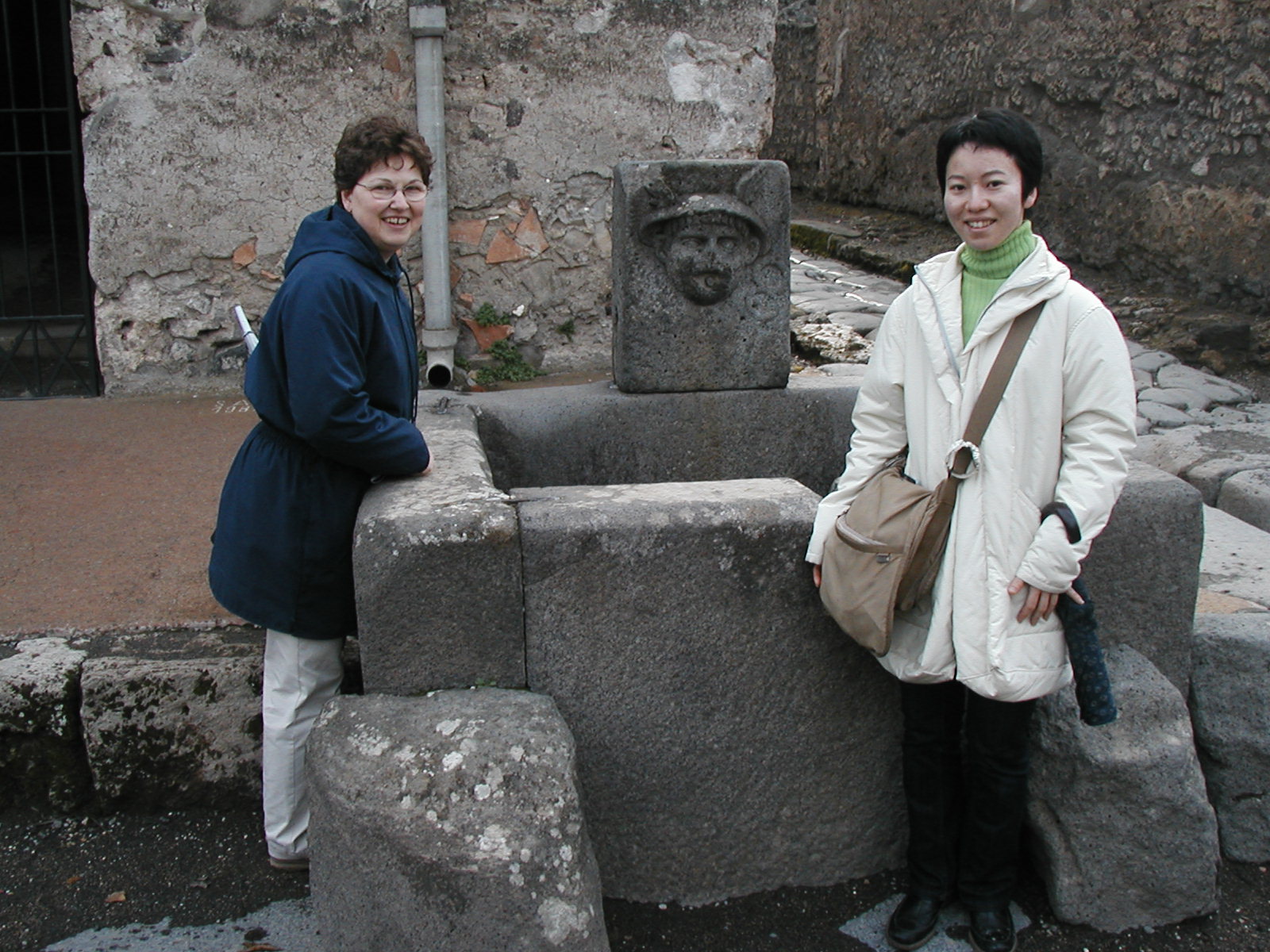
Wakana and I in Pompeii

During my first Italian class in Sorrento, I had one classmate, a Japanese woman my daughter’s age who spoke very little English. And because I spoke no Japanese, we communicated entirely in Italian for two weeks. Wakana was friendly and fun, and our teacher, Elena, guided us through conversations about topics I would not have thought possible to discuss considering our limited language skills.

But we did. I learned about the annual ceremony in her town in which the local god statue is taken from the temple and washed in the ocean. She learned about my town’s annual Irrigation Festival, and when she didn’t recognize the Italian word irrigazione, I explained with a combination of words and charades, about digging ditches from a river to make small rivers to water the farms. We talked about the men in our lives, our reasons for studying Italian, and personal goals. She was interested in architecture and design. I was writing a novel.

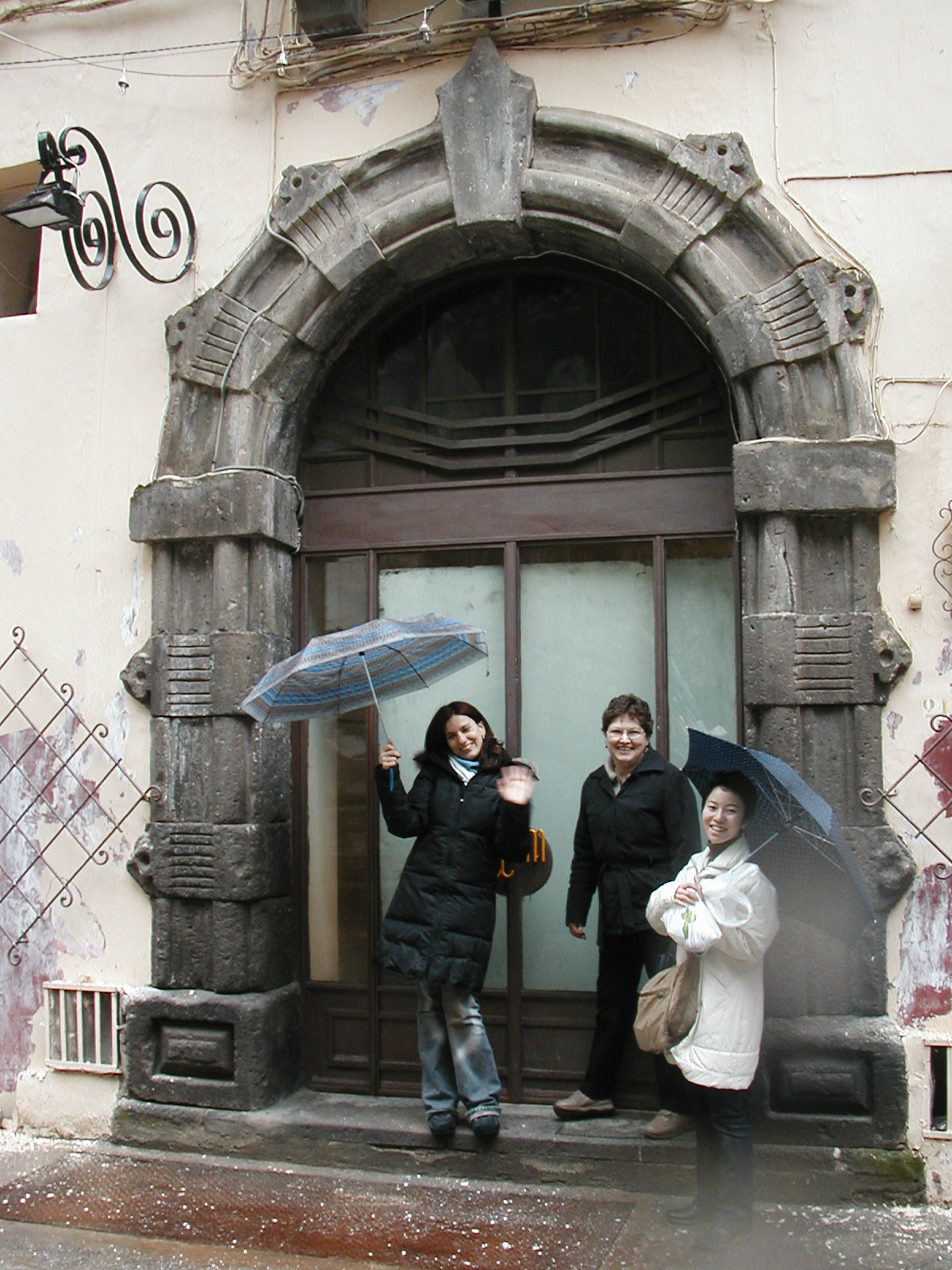
With Elena, left, and Wakana at Positano

Our classes met in the morning, and we had most afternoons free, so during our second week we launched out into some sightseeing together. The February rain didn’t hinder us from taking in Positano with our teacher, riding the public bus around the hair-raising cantilevered roadway hanging off the cliffs of the Amalfi coast. The next day, Wakana, Vern, and I went to Pompeii together on the train. With no teacher to provide language mediation, we did the best we could in Italian, and I provided English translations to Vern as needed.

Wandering Pompeii with Wakana

Then, as we wandered toward the Villa of the Mysteries, we passed near a Japanese tour group with a guide. We paused at a little distance as Wakana listened with interest. When they moved on, she turned to me and gave me what she could of the spiel, in Italian. I took that and shared it with Vern in English. We kept near enough to hear more about Pompeii for the next half-hour or so, in our own touristic version of the old parlor game of  “Gossip”.

A couple of days later, Vern and I headed off in a rented car, and we heard no more from Wakana–until about two years ago, when I received her ‘friend’ request on Facebook. We exchanged comments occasionally, and this spring, she contacted me. She was coming to the Seattle area to take some art glass classes, and asked for help finding a place to stay for six weeks between two classes. So this month, she is at my house. We are sightseeing together again–this time on the Olympic Peninsula in Washington. This time, we are speaking in English, and she is learning new verb forms and idioms, and seeing the irrigation ditches for herself.

With Wakana in July 2012

I love living in a time and place where these connections can be made in the first place, and kept alive with ease thanks to technology. Do you have a small world story to share? I’d love to hear about it in your comments!

The search for bad wine

Our experimental procedure.

During a two month stay in Italy, my husband and I enjoyed a glass of wine with many of our meals. We rented ‘self-catering’, or kitchenette apartments in some places, and bought our own groceries, so had the opportunity to buy bottles of wine from local shops and markets in many parts of southern Italy. And it was so inexpensive!! We were very happy with the $4 and $5 bottles, and pleased we were getting such nice wine at that price.

But what was the $3 wine like? We didn’t want to drink the Italian equivalent of Annie Green Springs or the vinegary Chianti I recalled from my youth in Alaska. We decided to give it a try.

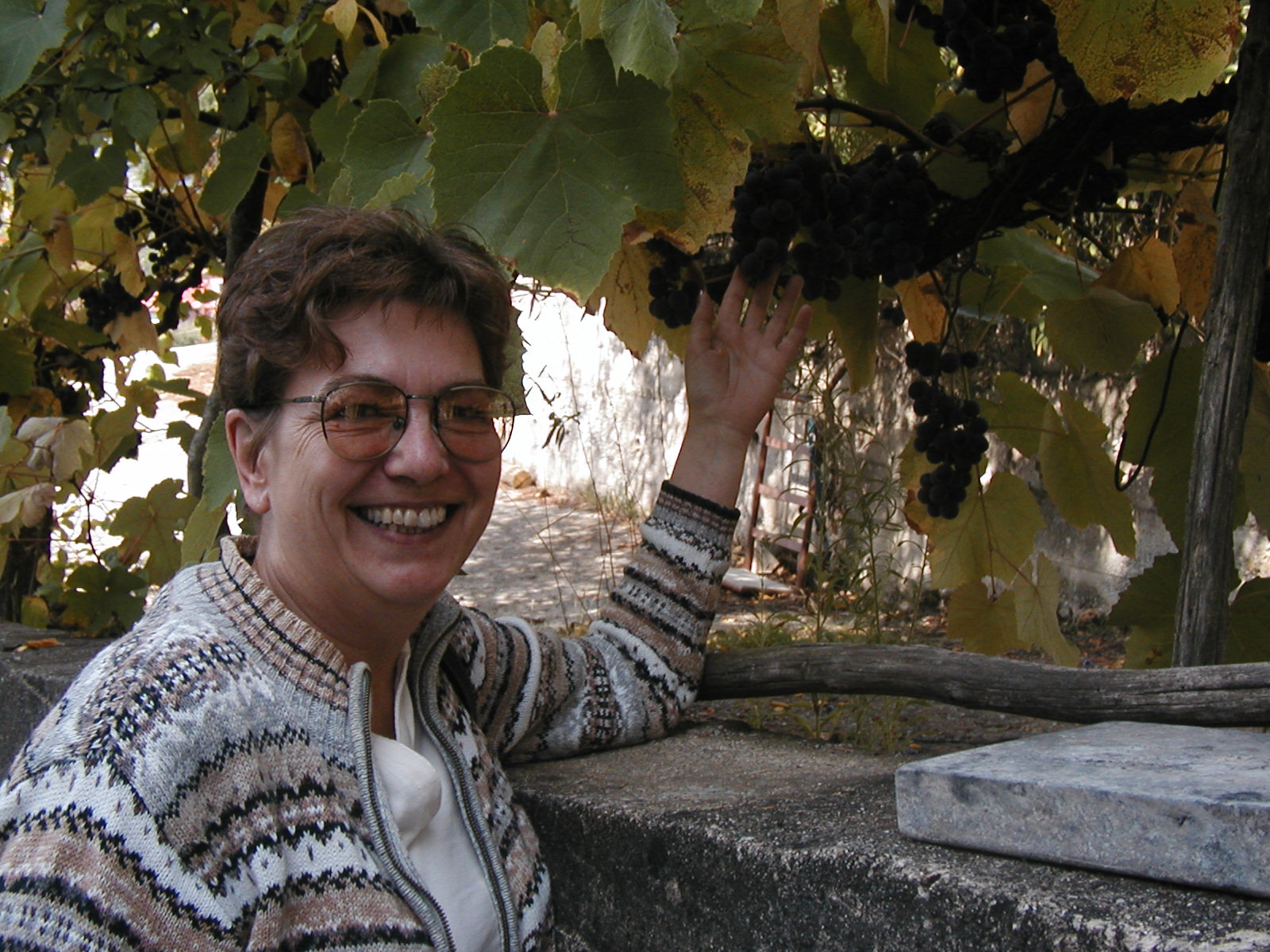
My sister, Marlie Johnson, checks out some Calabrian grapes on the vine.

The $3 wine was perfectly acceptable, so, hey, why not try the next one down?

We carried on with our experiment, right on down to the$1.50 bottles and found every one to be at worst tolerable, and sometimes surprisingly good.

The brand, you ask? They year? Sorry, I’m not talking about brand name wines. In little shops we found locally made wines not produced for export. I imagined them being made in the ‘cantina’ in the walk-out basement of a farmhouse at the edge of town, whatever

The cantina in a private home in Sinalunga, Tuscany.

town we were in, put up in giant casks. Maybe they grew the grapes in a local vigna, or maybe they bought them at the market or a roadside stand, where crates of grapes were stacked for sale in the fall.

We concluded, after many happy hours of experimentation, that Italians do not tolerate bad wine.

Poetry: “Italian Reasons”

It’s the fifth Friday, time for a surprise, a different topic, a break from the usual routine. I wrote this poem in 2002. I’d love to hear your thoughts on it.


Italian Reasons


InL’Aquila, in a square near the university

The students gather, drink caffe corretto,

And deal endless hands of scopa.

Late at night they stumble home in clusters,

One by one left here and there, until the mountain night claims silence

Briefly, then the morning traffic starts to rumble here and there.


Zio Guido’s dark wine leaves me dizzy,

With a morning headache, and I know no more

Than I did about why one brother went toArgentina

And the other toNew York.  Italian reasons,

Like a rain out of season, flowing through the dusty streets

And out of sight between the ancient stones.


My uncle shows me how to play the kings and take the sevens. 

Between supper of pizzetta and the strategy of scopa,

He tells me how he brought the sheep

Down the backside of the Maiella in the fall

When he was twelve.


That year sticks in his memory,

Because in the end, at the bottom of the mountain,

He found his mother weeping.  The brothers

Who had seen him off in April

Were gone.  Zio Guido shares the truth

As he knew it.  I tell him my father’s truth

As I know it.  They aren’t the same, like two sides

Of a coin, whose value we don’t yet know.


In his car we speed through valleys and tunnels

To the near-abandoned village of his youth

As if showing me the very house will prove him right.

Parked outside the crumbling walls, Zio Guido stares hard,

Reliving a scene like a silent movie. “You see?” he asks. 

I see his pain, a pain that masked

The hopes and dreams for which his brothers left him

With their bewildered mother, angry father.


Driving home he grips my arm,

And reclaims, in some small measure, the brother of his youth.

A tear runs to his mustache for shelter.  I pat his hairy hand.

My father told me stories of little brother Guido, the shepherd boy. 

He had his reasons.


Rain has wet the dusty road toL’Aquila.

The city lights shine in clearer air.


by Sandy Frykholm, 2002.

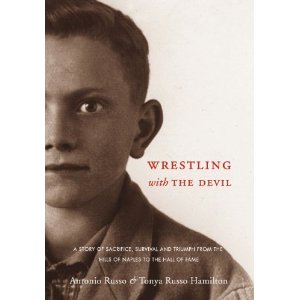
Book Review: Wrestling with the Devil

Tony Russo was ten when his family put him on a boat in Naples, Italy with a suitcase full of salami and cheese, headed to America. Leaving behind his parents, brother and sister, grandparents, and the village that was his world, he arrived in New York to stay with relatives–strangers to him, mostly–who didn’t have the means to take him in.

Russo’s struggle to survive in this alien world, his longing for his family, and his determination to be reunited with them, all draw the reader into his story. As Russo fought his way through his junior high years, a coach saw his potential as a wrestler, and changed the direction of his life. How did this boy go from the hills near Naples to a Hall of Fame? Read his story!

Russo’s memoir, capably co-written with his daughter, Tonya Russo Hamilton, will engage those who love stories of overcoming adversity, as well as those who value athletics and the character-building influence of good coaching. You might enjoy the publisher’s story about the book signing at the book release party in Russo’s hometown of Newberg, Oregon.

I’ve written in previous blog posts about Italian-Americans and their contributions to American life. This book continues that theme, and I recommend it to you!

Stupor Mundi, Wonder of the World

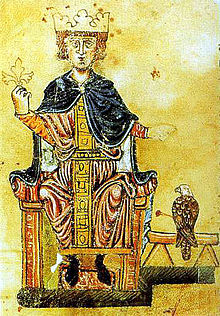
One of the most fascinating people in the history of the Italian south, Frederick II, is a figure of contradictions. An orphan, emperor, crusader, excommunicate, expert in falconry and author of an innovative legal code. Born in 1194, Frederick’s father was Holy Roman Emperor Henry VI, and his mother, Constance, was heir to Sicily, a kingdom which at that time included the southern half of the Italian peninsula.

Here are a few things Frederick is best known for:

His birth:Frederick was born in a public square near Ancona, Italy as his mother traveled south from Germany. She chose this public birth to forestall any doubts about her son’s origin. His father died when Frederick was two years old, and his mother died when he was four; Pope Innocent III became his guardian, overseeing his education and his kingdom during his childhood.

The birth of Frederick II

Crusading: In 1228, after several delays which resulted in his excommunication, Frederick went on crusade. Because he was excommunicated, the local authorities and military orders refused to help him, but Frederick opened negotiations with the sultan Al-Kamil. The two agreed to a truce, and to Frederick’s coronation as King of Jerusalem in March of 1229. Though he never established an effective rule over Jerusalem, his success was admired by some leaders in Europe, though the church was further antagonized by his actions taken without church support.

Legal reforms: The Liber Augustalis, also known as the Constitutions of Melfi, which Frederick promulgated in 1231, set in place a great reform from the feudal system previously used in his kingdom and much of Europe. The reforms made the king’s rule sovereign, required royal permission to carry a weapon, restored Roman “equality before the law” for all citizens, forbade independent city-states which were common in the north of Italy, and set up provincial governments answerable to the king. Although the new laws also made heresy illegal, at the request of the pope, the church frowned on the statute putting the clergy under civil authority.

Castel del Monte, Apulia

Castle design: In 1229, Frederick commenced the construction of a castle of his own octagonal design. Castel del Monte was completed shortly before his death in 1250, and remains the source of some debate as to its intended purpose. Many say it was built as a hunting lodge. It remains today a beautiful landmark in the Apulian countryside.

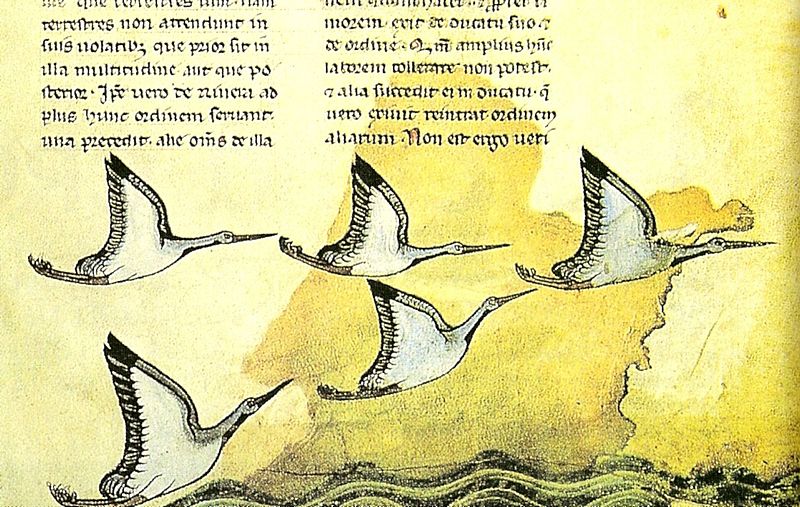
Writer: During the 1240s Frederick wrote a treatise on falconry, a scientific book with detailed illustrations, dedicated to his son Manfred. Titled (in Latin) “The Art of Hunting with Birds”, the book includes Frederick’s own observations and experiments, and is organized with scientific precision. 

Frederick loved Sicily and spent little time in his German realms. He is known as a patron of the arts and sciences, and a man ahead of his time. If all this has whetted your appetite, there’s plenty written about him. For a historian’s view of his life, I recommend David Abulafia’s biography, Frederick II: A Medieval Emperor. If you prefer fiction, you might try Cecelia Holland’s book Antichrist: A novel of the Emperor Frederick II.