Festive travels in Italy

Travelers to Italy often plan most of their visits around those “must see” tourist attractions like the Coliseum in Rome, the leaning tower in Pisa, and the ruins of Pompeii. Italy has enough of these to occupy many months of vacation time.

Italian Landscape with a Country Festival by Francesco Zuccarelli (18th c.) Image from Wikimedia Commons

Italian Landscape with a Country Festival by Francesco Zuccarelli (18th c.) Image from Wikimedia Commons

But there’s more to Italy than the typical tour itinerary includes. And one consideration might be local festivals. Just like local festivals here in the U.S. (and probably wherever you live), the festivals in Italy usually include booths with food vendors, special entertainment, and an atmosphere of excitement.

An internet search for “festivals Italy 2013” ended in frustration. The information was too general, and often too limited to a particular area. So I began a search including the name of a region, and found much more of interest. For example, through this link for Abruzzo:

http://www.craftsmenofabruzzo.com/index.php?option=com_content&view=article&id=53&Itemid=62

I found festivals throughout the year in towns large and small–ranging from a Trout and Shrimp Festival to a Bonfire Festival, to a snake-handling event with Roman origins. You might notice that this is the business website of a construction company in Abruzzo, but what a great service they have added for the English speaking traveler! Even a referral for an English speaking auto mechanic. Bravi, Craftsmen!

There are festivals for all kinds of interests: food (of course!!), religious holidays, history, music, and many more. You many belong to an organization with members in Italy you can connect with through a local festival in their town. And just as visitors to my town learn a little more about it if they attend our annual Irrigation Festival (going on this week, by the way), you can absorb some more Italian culture by enjoying a festival there.

So tell me, readers, have you attended a festival in Italy? Share about it in the comments, please!


RE-Blog: Three weeks in Calabria… by Dr. Kayt Armstrong

Here’s an interesting way to spend some time in southern Italy! Shared under the Creative Commons agreement: http://creativecommons.org/licenses/by-nc-sa/3.0/

Kayt's avatarGirl with Trowel

This is a really quick post to put up my #project52 pictures before I run off to Italy again tomorrow, this time for a short holiday with my beloved, who has never been before. I am almost unreasonably excited about showing him around Rome for the first time and watching him have all of these amazing ‘firsts’… On the MUST DO list: The Pantheon, The Forum, The Crypto Balba Museum, Castel San Angelo and Gelato from San Crispinos… have you got any quirky/unusual suggestions to add to our list?

As you know, I went to Calabria for fieldwork. The weather was better than we were hoping, we got all of the work done, but one of my bits of kit died fairly early on in the trip, and we didn’t find a lot of archaeological anomalies. The landscape, the company and wonderful local friends more than made up for…

View original post 266 more words

Italian Food: I’m growing some now!

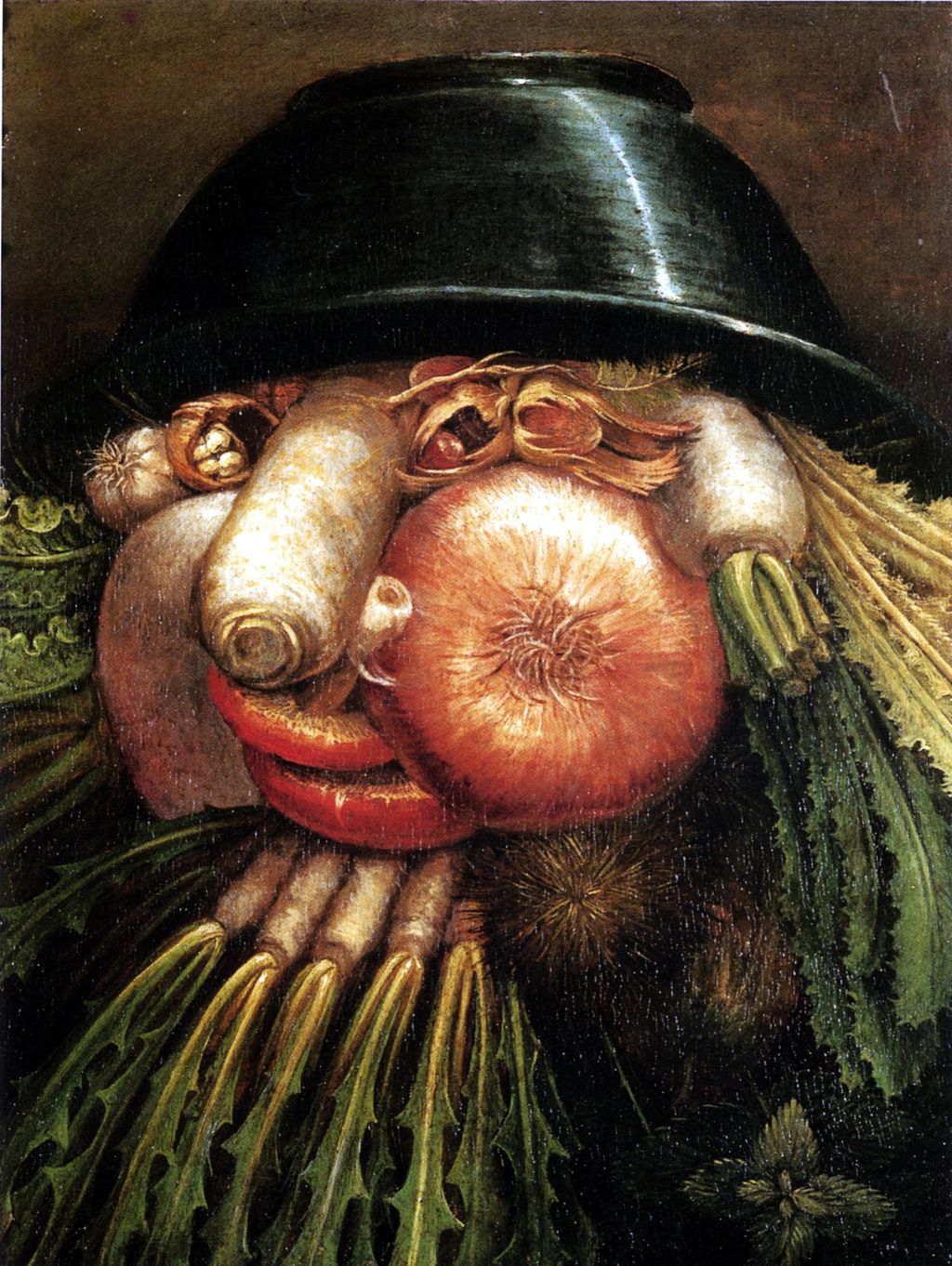
The Greengrocer by Giuseppe Arcimboldo (16th century). Image from Wikimedia Commons.

The Greengrocer by Giuseppe Arcimboldo (16th century). Image from Wikimedia Commons.

Today I finished planting my garden, and I was just imagining what I’ll be doing in a couple of months with my crops. Some of them don’t have particularly Italian applications that I know of. For example, rhubarb. It’s ready for pie-making now.

Asparagus hasn’t started peeking up yet, but I’m hoping to eat some in the next few weeks.

I have a patio pot with arugula planted in it this week. It’s too bitter for some people but I love the spicy bite of it in a salad, or even mixed into a sausage & potato Zuppa Toscana.  And I’m growing the potatoes too.

Green beans in two varieties–one is the typical American string bean, the other the wide, creamy Romano. Looking forward to some of those sauteed with a bit of bacon!

I know I’ll be overrun with zucchini, because I planted FOUR of them. Aren’t they grand producers? And besides using them in minestrone, or sauteed with some tomato and basil, I’ll have plenty for zucchini bread. And for gifts.

In other garden beds I have some mixed salad greens, sweet onions, peas, beets, carrots, and red Swiss chard. I’ll plant a few tomatoes in another week or so. And scour my Italian cookbooks (and the web) for ways to use all of it.

Are you gardening? What’s your favorite thing to grow and eat Italian style?

Book Week: The Pope Who Quit by Jon M. Sweeney

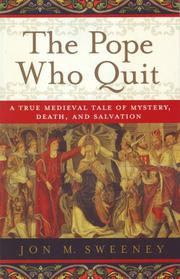
PopeWhoQuitThose of you who know my interests in history won’t be surprised at all that I was eager to read a book about Pope Celestine V, elected in 1294. And with the recent resignation of Pope Benedict, Celestine’s abdication has been mentioned in news stories, editorials, and blogs around the world.

From the time I first heard of this book, a year or more before its 2012 publication, I felt an affinity with Sweeney. I spent years researching the events surrounding Celestine’s election and resignation, as I’m sure Sweeney did. And considering the wide-ranging sources and research on the subject, it’s not too surprising that we came to slightly different conclusions about some of the characters involved.

The book is essentially a biography of Peter of Morrone, who took the name Celestine as pope. Thorough, well-written, and not too densely academic, I enjoyed reading it very much–burning my Nook late into a few nights to finish it. Little is known about Celestine’s early life, and even up to middle age he was a man of obscurity, seeking a life of isolation. Sweeney presents this unusual life in a well-0rganized yet lively way.

My disappointments came with his presentation of corollary characters: namely, the succeeding pope, Boniface VIII, and the King most directly involved with Celestine, King Charles II of Naples. I admit, I have a bias against Boniface. (I am certainly not alone in this.)

My fists went up in the prologue when Sweeney describes Boniface (Cardinal Benedict Gaetani, prior to becoming pope) as Celestine’s “trusted adviser”. I suppose, technically, this is true. Celestine trusted his advice on various things, and depended on his help in carrying out his desire to resign. But in light of the subsequent betrayal–imprisoning Celestine for the rest of his life–the term “trusted adviser” stuck in my craw.

Then there is the negative portrayal of the king of Naples, Charles II. Here is a weak king, and a man at the mercy of the papacy. An earlier pope had established Charles’ father as “King of Naples” in exchange for fighting some of the papacy’s worldly battles, and his kingdom (which initially included the island of Sicily) was subject to the pope as overlord. Charles II himself spent years as a prisoner of war in those battles. While Sweeney presents Charles as manipulating Celestine, he omits entirely the fact that Charles’s three sons, including his heir, were prisoners in Aragon for the previous five years. Only the pope could confirm a treaty to free them, and by the time Celestine was elected, there had been a vacancy for more than two years in the papacy. The previous pope flatly refused to approve the treaty that both kings involved had agreed to. I view Charles as a man desperate to free his sons, and doing all he can to gain influence with the one man who can help him.

Yes, I know. I’ve slipped from book review to historical rant. As you can see, what happened in history is far from settled, even though the events are long past. The true motivations of those involved are rarely known with certainty, and always subject to nuances of interpretation.

The end notes are thorough and interesting, mentioning numerous of Sweeney’s sources. There is no bibliography or index, but that’s not unusual in a book presented for public rather than scholarly interest. I most appreciate Sweeney bringing Celestine into the public view, more than he has been in a while. And I suppose I should thank the former Pope, Benedict, for his recent resignation which revived the interest in Celestine even more.

The Pope Who Quit is a worthwhile read for anyone with an interest in the thirteenth century, church history, or the medieval Kingdom of Sicily/Kingdom of Naples.

The Baroness will see you now: Family history

Just looking at this Italian birth record should convince you to hire a professional for Italian genealogy! Image from Wikimedia Commons.

Just looking at this Italian birth record should convince you to hire a professional for Italian genealogy! Image from Wikimedia Commons.

I’m getting revved up for my trip to Italy in a few months, and one of my preparations this time will be to have some genealogical research done for me before I get there. My Italian language skills aren’t adequate to do it myself, and my knowledge of the systems of records in Italy is even worse. Some relatives are pooling resources with me to hire the help, and I’ll share the results when I get home.

I was preparing for an earlier trip to Italy when Anna Maria responded to a post I made online, seeking my Italian relatives. She is one!

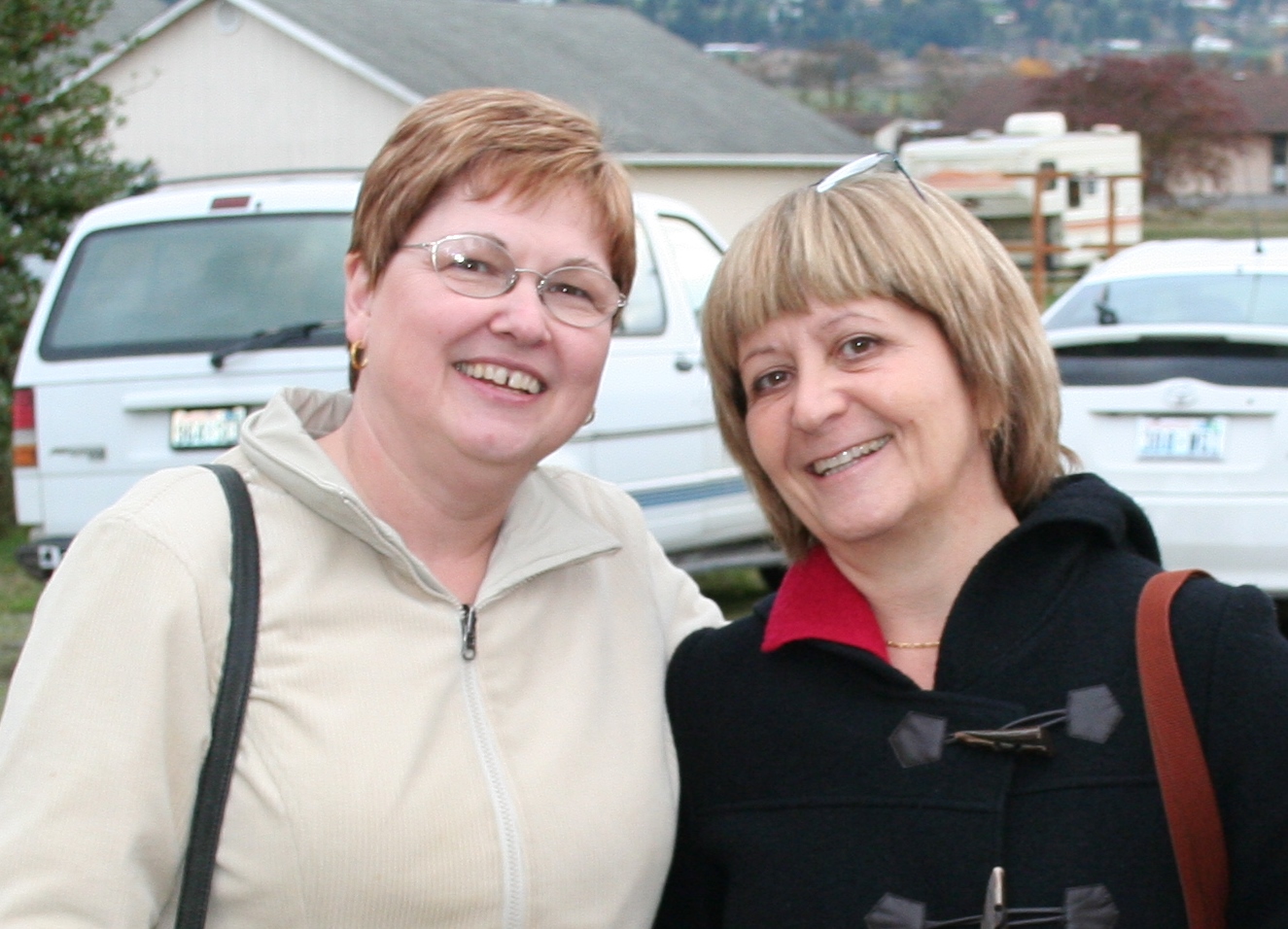
The last time I saw cousin Anna Maria (right) was 2009. I'm looking forward to seeing her again this summer!

The last time I saw cousin Anna Maria (right) was 2009. I’m looking forward to seeing her again this summer!

We met in person in Italy, and she came to my home a few years later, but I have not been able to document our family relationship. For now, we are just “cugini”, cousins. One of my goals is to discover the family lines that connect us. This year, I’m looking forward to spending Ferragosto, that ancient Italian holiday, with Anna Maria and other family members in our ancestral village.

We have learned a few things about our Italian roots as my sister and I have researched over the years. Some are in the category of family legends.

1.  Josephine Gualtieri was an old maid at 21 when she determined she would marry any man who asked her. The man who asked was Francesco Arcuri,

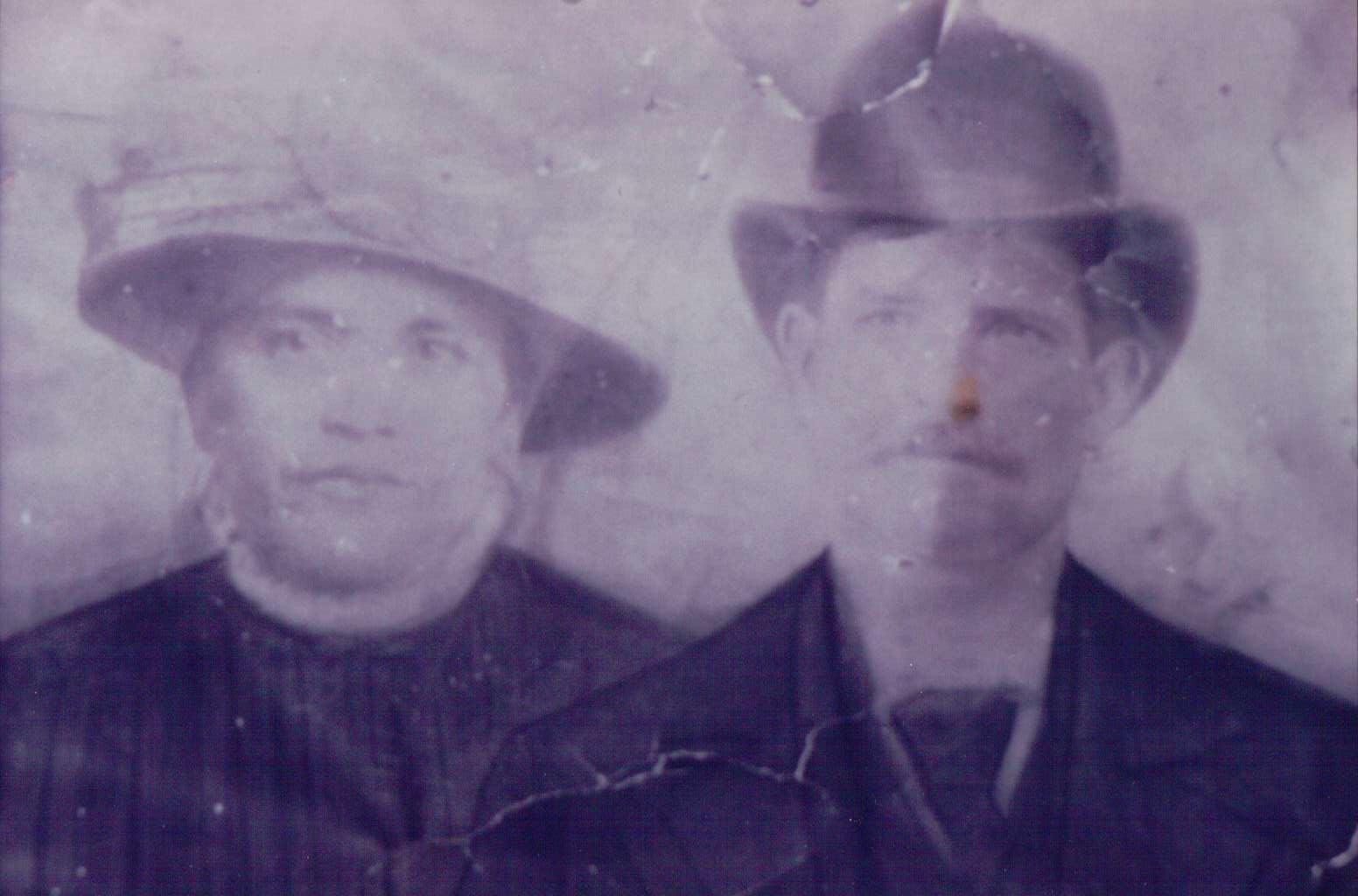
Josephine and Francesco, about 1910 in New York

Josephine and Francesco, about 1910 in New York

a man already 50 years old, and three years older than Josephine’s father. We learned that Josephine’s mother had died and her father remarried. Did she not get along with her stepmother? What other factors shaped her life?

2.  There is a Palazzo Gualtieri in Josephine’s home town, which (we were told) was gambled away by an ancestor. While “Palace” is somewhat of an overstatement in describing the derelict building, I’d be interested to learn more of that story!

My mom, Win Perman, at the door to the Palazzo Gualtieri in Scigliano.

My mom, Win Perman, at the door to the Palazzo Gualtieri in Scigliano.

3.  Raffaele of the B&B Calabria in Scigliano gave me a book about the history of Scigliano–in Italian, of course! However, I have been able to determine that at one time there was a “Baron Gualtieri” in Scigliano. I’d really love to know who he was and how he might be connected to my family line. And can I now start calling myself a Baroness? Please??

Looking for Italian roots?

I discovered an Italian genealogy research outfit today, and thought I’d share a link. Initially I emailed Cherrye at My Bella Vita about some research interests because I know she does Heritage Tours in southern Italy. She referred me to Roots in the Boot, and I was very excited to find their website and the services they offer.

You can find suggestions for research compiled on websites like Italiamia.com’s page about genealogy, and there’s a lot to learn at ItalianGenealogy.com.

Have you found useful websites for Italian family history? Please do share in the comments!

Cross-cultural adventure: Regional railways in Italy

My sister Marlie boards the regional train to Scigliano--JUST KIDDING! We saw this 'retired' rail car in the station at Cosenza.

My sister Marlie boards the regional train to Scigliano–JUST KIDDING! We saw this ‘retired’ rail car in the station at Cosenza.

Vern and I watched Italy stream by through the train windows on our way from Rome to Sorrento. We were excited to begin our Italian language classes, and just plain delighted to be in Italy. Sure, it was February and cold and damp, but I’d lived most of my life in Alaska, where June is liable to be colder than February in Italy.

In Naples, we needed to change trains. At Garibaldi station, we were directed to a long corridor, more like a tunnel, which led to a platform for the Circumvesuviana railway, much smaller than the main station. Having rarely traveled by train, the large timetable posted on the wall mystified us. I asked for help from a woman nearby, another traveler, but wasn’t sure she understood me. She waved in the direction of a train, and we boarded it.
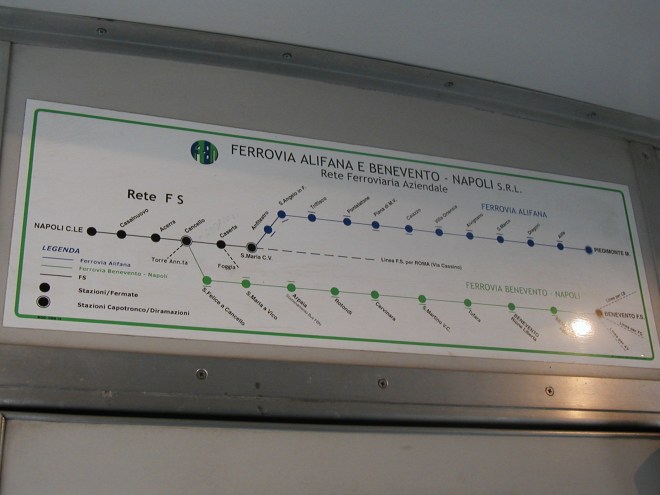
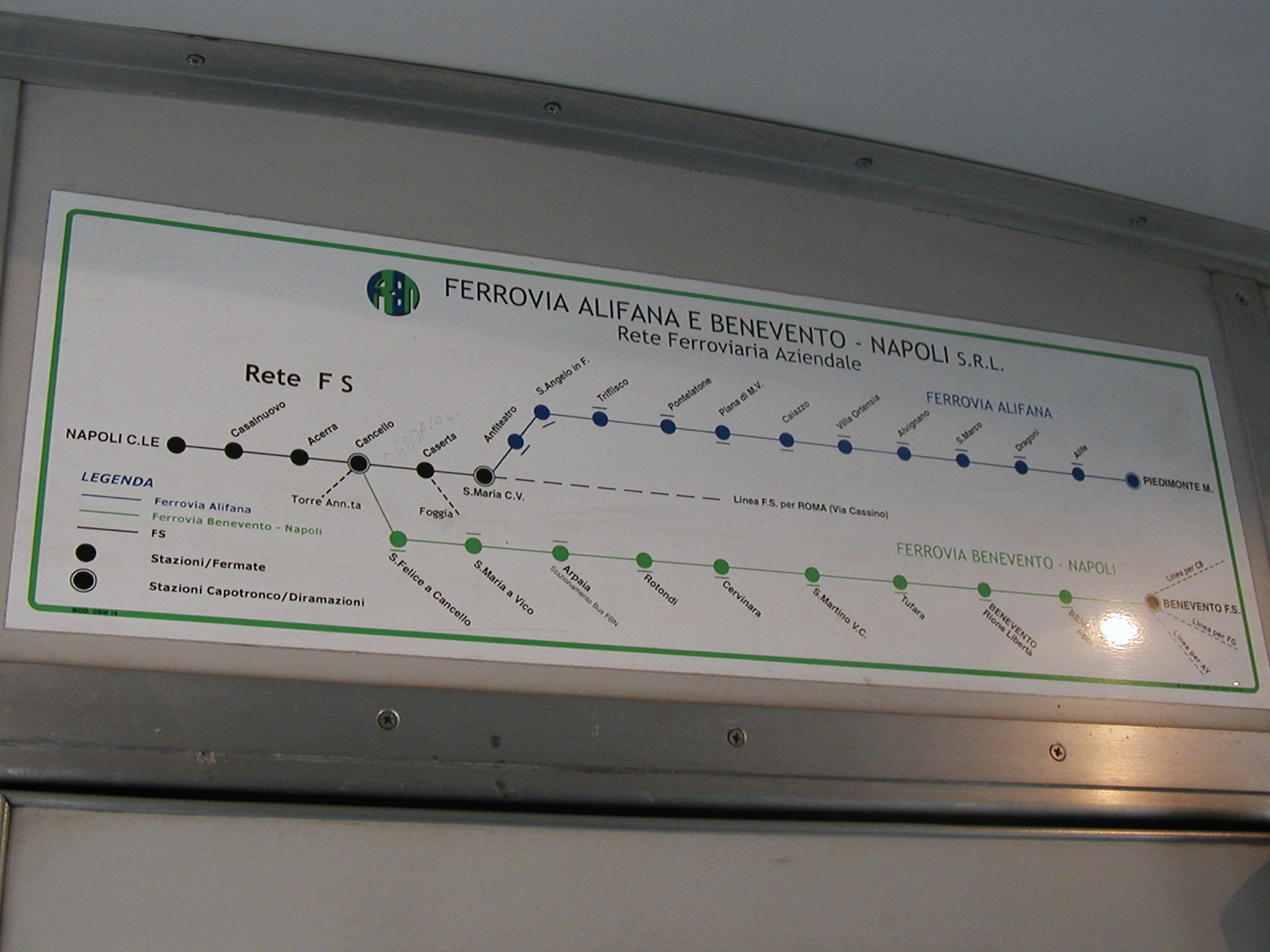
The schedule fro another regional train system. We went for a Saturday evening event , and discovered that the train did not operate on Sundays, so spent an extra day exploring before we could get back to our plans.

The schedule for another regional train system. We rode to Piedimonte for a Saturday evening event , and discovered that the train did not operate on Sundays. We had an extra day at the end of the line.

With standing room only, I sat on a suitcase as the train chugged out of Naples. We were the only passengers with luggage–somewhat surprising since Sorrento is such a tourist destination. The little train stopped at a couple of stations, and a man nearby overheard us talking about Sorrento. He didn’t speak English, but assaulted us with a barrage of Italian dialect of which I understood nothing. Nothing of the words, anyway. But he was clearly urging us to go back and take a different train.

We declined. Our conversation was attracting the attention of several other passengers, but none offered any help. This seemed to be a commuter train, and a few people got off at each station. Eventually, after failing to persuade us, the man who wanted us to go back also left the train, shaking his head in frustration.

It was clear to us by this time that the train had left to coast and headed inland. The cone of Mt. Vesuvius rose up on our right, and small farms and vineyards fell away to the left. This was not the route to Sorrento. We asked a couple of other people if they spoke English–no one did, except for a few words. But one man took pity on us, and struggled along with my poor Italian.

Yes, we were on the wrong train. Ma, non ti preoccupare. Don’t worry. We could get off at his stop, and another train from there went back to the coast, where we could resume our journey to Sorrento. What about our tickets? Don’t worry.
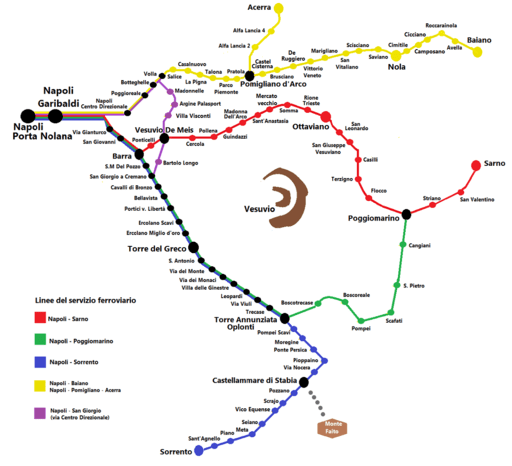
Map of the Circumvesuviana rail lines showing our circle tour of Mt. Vesuvius on the way to Sorrento.

Map of the Circumvesuviana rail lines showing our circle tour of Mt. Vesuvius on the way to Sorrento. This is the same train line that goes to Pompeii.

And he was right. Nobody asked about our tickets. We were soon on the train to the coast, and then on to Sorrento–an hour or two later than we expected, but laughing at our mis-adventure already.

That was our first experience with the regional railways of Italy. The Circumvesuviana line operates in an area that attracts many tourists, and has an English language option on its website. This is not true of all the regional railways. A few months later, we traveled from Cosenza to Scigliano on the Ferrovie della Calabria (Their website has some great photos of their vintage passenger cars.) for a delightful hour surrounded by high school students on their way home from school and fascinated to see American tourists on their train. By this time my Italian was much improved, but most of them wanted to practice English phrases on us.

What can you expect on the regional trains? Far fewer English speaking employees, so be prepared. Generally inexpensive fares–but then the trips are shorter too. The train cars are quaint, rustic, still in service after many years. No sleek, high speed modern trains, no dining car. But a great place for cross-cultural adventure, so don’t be afraid to try one!