Book Review: The Espresso Break by Barbara Zaragoza

First off, I wish I’d had this book the first time I visited Naples! I will definitely be using it the next time. I’ve looked in at Barbara Zaragoza’s blogs now and then: The Espresso Break and Naples (Napoli) Guide, and I’m glad to have her info about Naples compiled in book form.

The subtitle promises “Tours and Nooks of Naples, Italy and Beyond”, and I would say the book delivers. The major highlights are covered, in greater detail than many books offer, and then come the hidden corners of Naples that you would never find on your own, like Mauro the glove-maker’s factory, and Japanese restaurant recommendations.

Barbara has also included some practical travel information about safety, driving, staying healthy, and using public transportation. Her advice on greeting Italians is spot on: A little Buon giorno will take you a long way in Italy!

The great detail and variety of information make up for the lack of color photos, as I always appreciate color in a guidebook.

After seeing nearly three pages devoted to the subject of trash in Naples, I laughed out loud at Barbara’s defense of the city’s dirtiness. Why is the city so dirty? “Neapolitans have preserved so much of their past that the buildings almost by necessity tend to blend into the natural look and feel of the ancient ruins.” Naples is just natural, and she suggests that other cities seem un-naturally clean. Well, my mom and I had a good chuckle over this, but I must say, please don’t let the city’s reputation for dirt and grittiness stop you from making a visit! I compare it to the gritty vibrancy of lower Manhattan–a sign of life!

The book includes lots of detail on the ancient sites around Naples and legends connected to them. She also includes a section called the “Odious Women Tour” which includes goddesses, queens, prostitutes, and revolutionaries.

Considering that many travel guides offer just a few pages to the entire south of Italy, this book is a treasure for visitors to the Naples region. If you have a day, or several, to spend in Naples, this book will help you fill your time well.

Anagni: Walk through the city with me..

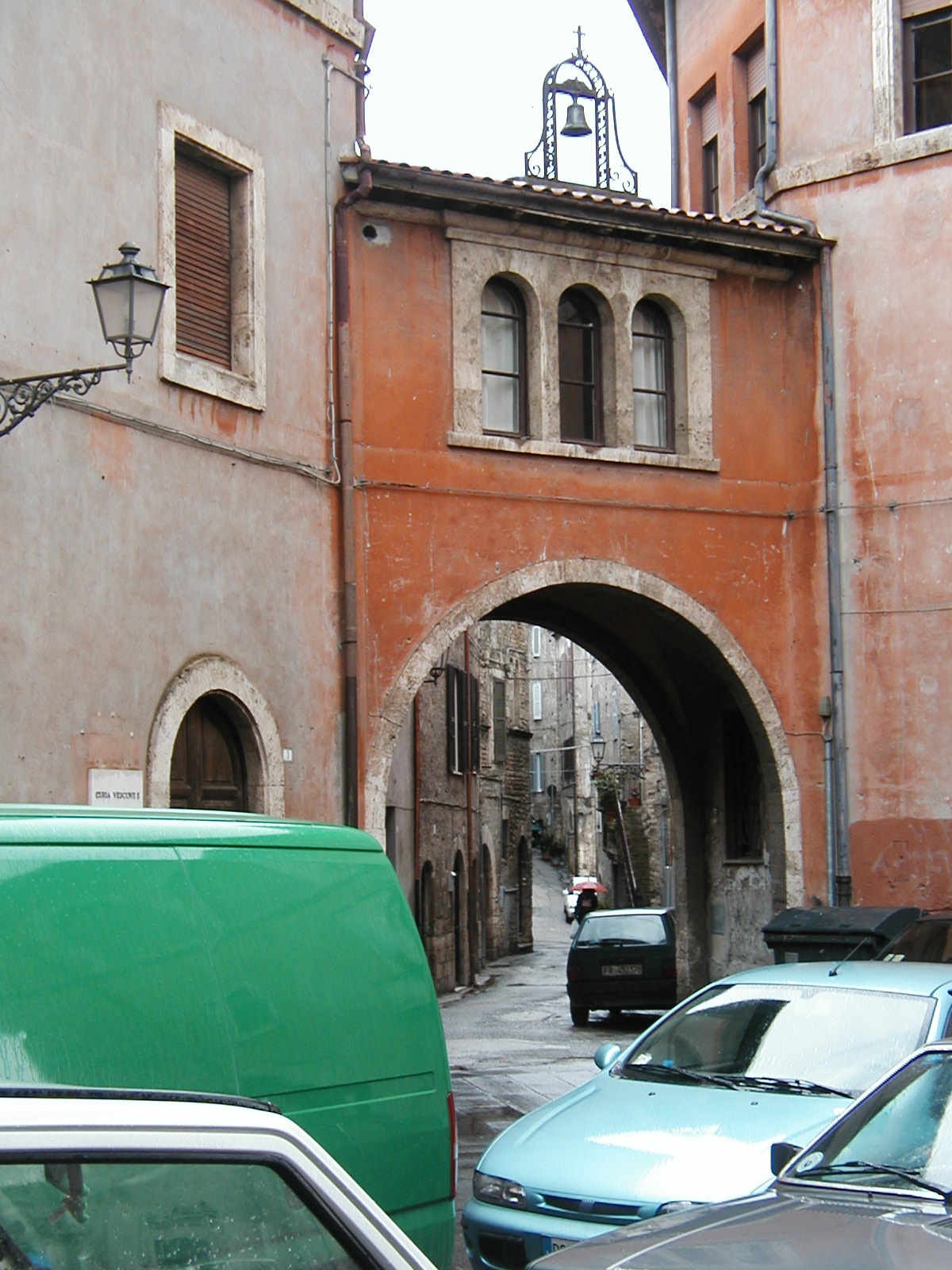
This entry gate to the city of Anagni looks like a great portal for time travel to me. And it’s easy to feel you’ve been transported to the medieval era in Anagni, as so much of that period is preserved.

The city has very ancient origins, and was part of a confederation attacked and defeated by Rome in 306BC. Since that time, Anagni has been an ally of Rome, and a strong supporter of the Roman church. It became an important city during the Middle Ages, and in one 100-year span covering the 13th century, four men from Anagni were elected pope.

On an outer wall of the city’s cathedral hangs a statue of the most famous of those popes, Boniface VIII. You can see it in the upper right corner of this photo.

Boniface’s palace is open for tours, and as we walked through it I could imagine the lavish furnishings this wealthy, powerful man might have enjoyed there. Today the contents are quite sparse, but there are remnants of the thirteenth century paint on some of the walls, in a pattern that reminded me of wallpaper.

The city is open for auto traffic, with many one-way streets and tight spaces. I was glad we found a parking spot outside the walls, and walked through the narrow lanes. Walking also allowed us to take in more of the atmosphere, even though the chilly rain dampened us a bit.

The cathedral has beautiful Cosmati tile work on the floor, and the crypt is decorated with Romanesque/Byzantine frescoes in brilliant color and very well preserved.

The modern buildings surrounding it stand in stark contrast to the medieval center of Anagni. I recommend a visit for history lovers, and anyone interested in medieval buildings and design.

The Grand Tour: An Italy of the past

File:South west prospet of mount Vesuvius - September 1747 issue of The Gentleman's Magazine.jpg

[Illustration from the September 1747 issue of “The Gentleman’s Magazine]

“A man who has not been to Italy is always conscious of an inferiority, from not having seen what it is expected a man should see.”  Samuel Johnson said it, and Joseph Spence, at the age of 31 in 1730, set off from Oxford to see what a man should see. Spence was a commoner with little money, but through the connections of friends, arranged to travel with Lord Middlesex, the 19-year-old son of a duke. The rakish lord drank his way through Europe for a couple of years, while the Oxford don spent his time developing a passion for Italian opera.

In 1737, Spence accompanied John Morley Trevor to the continent, eager to return to Italy. However, Trevor turned out to be a dull companion, and they did not make it to Italy, because Trevor was recalled to England before the end of the year.

In 1740, Spence was asked to accompany another young nobleman, Lord Lincoln, to Italy, where Lincoln was to attend the Royal Academy at Turin. As his governor, Spence oversaw the improvement of Lincoln’s fragile health and guided him out of an affair with an unsuitable partner, returning him to England better prepared for his future.

Spence kept a journal, and wrote numerous letters to his mother while traveling. Here are excerpts from letters to his mother describing his first visit to Naples:

In going to Naples we often passed old Roman roads, in many places all laid with large smooth stone and as entire still as the pavement of a great hall, though near two thousand years old. ‘Tis to me the most surprising thing of art which we have seen abroad. This noble pavement, sometimes for miles together, is bordered with myrtles and a hundred other evergreens, and on each side of it you see perpetually the ruins of old tombs and monuments, for the Romans always buried by great roads (perhaps to put people in mind that this life is but a journey, and that in this world we are not properly at home).

There are sometimes orange-trees in the road, and at Mola, a little seaport on the way to Naples, all the orchards were full of them just like apple-trees with us. Within about thirty miles of Naples we came into a vast plain, the richest soil and the best cultivated in Italy: whence the Italians call it ‘Campagna Felice’ or ‘the happy country’. It was soon after that we discerned the top of the famous Mount Vesuvius, and the smoke which it perpetually flings out looked at that distance like a cloud gilded with the sun.

Naples is one of the most delicious sea-ports in the world: it lies down a sloping ground, all in a large half moon to the sea. The shore on for a great way humours the same shape of a half moon. In one side of it, about six miles on the left hand from Naples, is Vesuvius, and on the right the grotto of Pausilippo and the tomb of Virgil…

It was with a great deal of impatience that I waited for the morning when we were to go up Mount Vesuvius, which was heightened by my seeing it every morning. The tops of the houses are all flat at Naples and as smooth as a floor; they often set them out with flower-pots and orange-trees, and ’tis their usual place for diversion on summer evenings. From the top of our house we had a most distinct view of Vesuvius, and I used to run up there every morning the first thing I did, to see whether he increased in his smoking or not.

At last the morning came: four mile we went along the beautiful shore of Naples in chaises, which were then quit from the rising and badness of the way, for horses. These carried us two mile more, and then the way is so steep and bad that you are forced to quit even them and be dragged up the two last mile by men who make a trade of it…. Two of these honest men get just before you, with strong girdles on; you take hold of the girdles, and then they draw, and you climb up as fast as you can. Both they and we are forced to rest very often, and then tug and trudge again…. In some of the resting places here we felt the earth hot under us as we sat down…. The last stage is infinitely the worst. ‘Tis all loose crumbling earth in which your two draggers and you sink every step almost up to the knees, beside which it often yields under you, and ’tis often impossible not to slip back half a yard…but eagerness to get to the top when so near makes it the less troublesome. When there, you have a ragged rocky edge all round a vast cauldron of perhaps half a mile deep and a mile round, all full of smoke. The wind every three or four minutes clears away the smoke, and then you have a view of it. It sinks irregularly and raggedly all down on the inside. There are several places in it that look of a fire-colour, blueish, greenish and principally yellow…

One of my guides was an extraordinary honest fellow; I was got very intimately acquainted with him in our journey uup. He told me that ‘to be sure the devil lived in that hill’, and wished very heartily that all the Frenchmen were in there with him. Upon my telling him that we are all Frenchmen, he said he was sorry for it, but it could not be helped….

When the wind blew away the smoke from between the crags of the opposite side of the cauldron, we had a veiw of a beautiful piece of country, green fields, meadow-grounds, etc. thick set with houses; on the right hand appeared a part of the delicious bay of Naples: ’twas but turning the head, and we had a full view of all the city and bay.

Spence’s writings are collected in a book edited by Slava Klima entitled Joseph Spence: Letters from the Grand Tour published in 1975.

Watch for a BONUS re-blog of a modern day view of Vesuvius.

A walk in the woods, near Scigliano, Calabria

We walked east on Via Roma toward the hairpin turn that leads to the Roman bridge, and at the turn, headed up the rough track that leads to the Church of the Madonna delle Timpe. Beyond the church, the track narrows to a footpath, and hopscotches a stream humming down the valley. Walk along with me…

All this beauty on a warm fall afternoon! Don’t be afraid to get off the beaten path and enjoy a walk in the woods in Italy.

An Italian in old Seattle: Joe Desimone

From vegetable farm to international airport!

You never know where the Italian South will crop up! I made my first visit to Seattle’s Museum of Flight last weekend, with some friends from out of town. It’s a beautiful facility directly adjacent to Boeing Field, Seattle’s first international airport. In the photo, the museum buildings are nearest to the airfield, and some of Boeing’s buildings are in the foreground.

Turns out, in the late 1920s when the Boeing company was in its early stages, William Boeing was looking around the country for another location because Seattle did not have a suitable airport to meet the company’s needs. When news of the search got around, immigrant farmer Giuseppe “Joe” Desimone made Boeing an offer he couldn’t refuse–a big tract of land south of downtown Seattle, for one dollar, to keep the company in Seattle. Today the airport is bordered by dozens of Boeing facilities, and both the company and the airport continue to play significant roles in the life of Seattle.

Very cool!I thought, and made note of his name to learn more about him for a blog post. We finished our tour, and continued sightseeing, including lunch and a wander through Pike Place Market. And guess what!? Joe Desimone was one of the earliest participants in the Market, gradually buying shares until he owned the place. His family remained in ownership after Joe’s death in 1946, until the Market became publicly owned in the 1970s.

Joe Desimone taking vegetables to market.

Joe immigrated from the Naples area at the age of 18 in 1898, and by 1910 was a thriving farmer in King County. His stall features prominently in this historic video footage of Pike Place Market–you can see his name on the sign at about the one-minute point, and again at three minutes into it, but I don’t know which of the men in the movie is him.

Little Italy in the Midwest: The Hill, St. Louis, MO

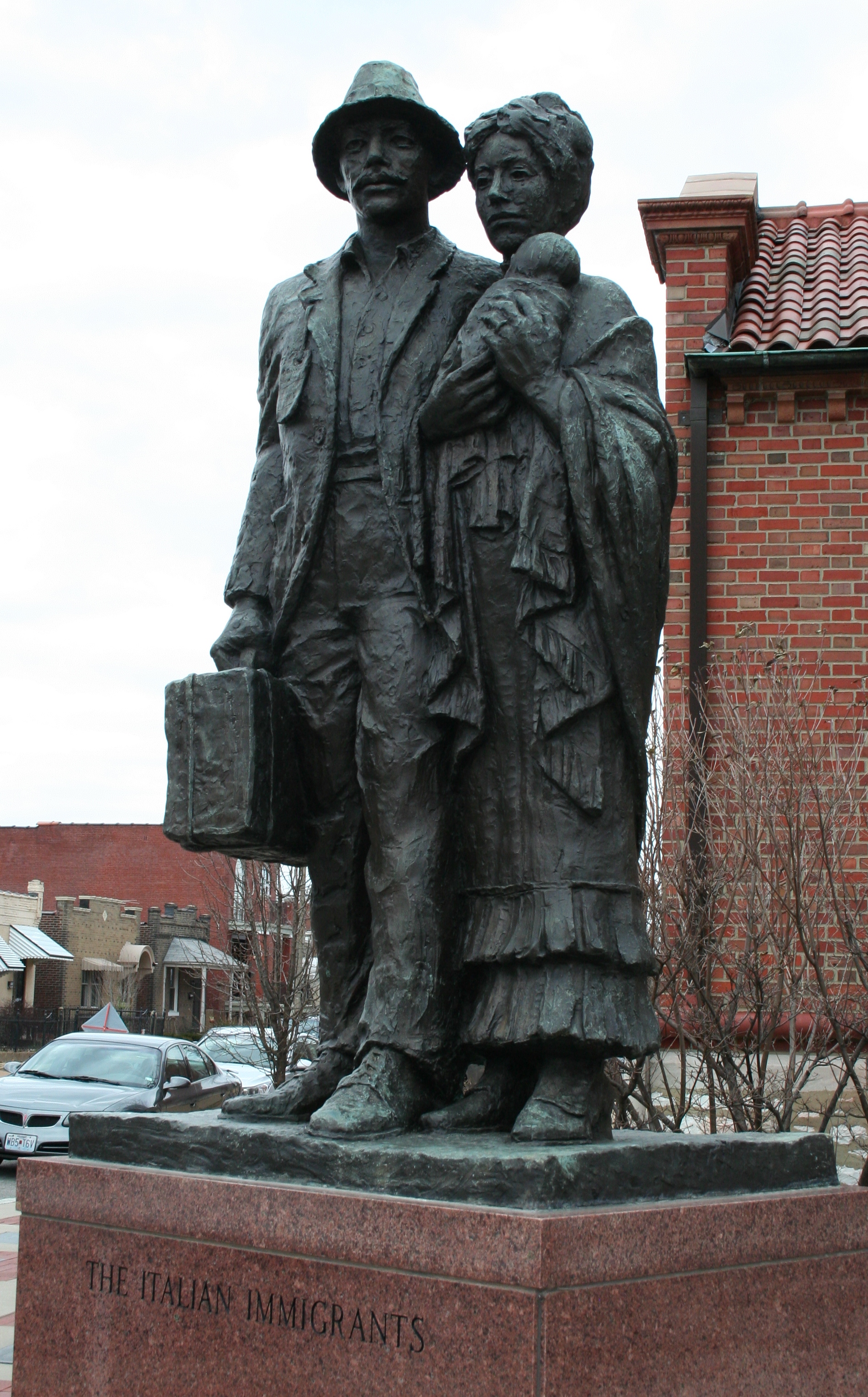
A statue honoring the Italian immigrants who settled in St. Louis.

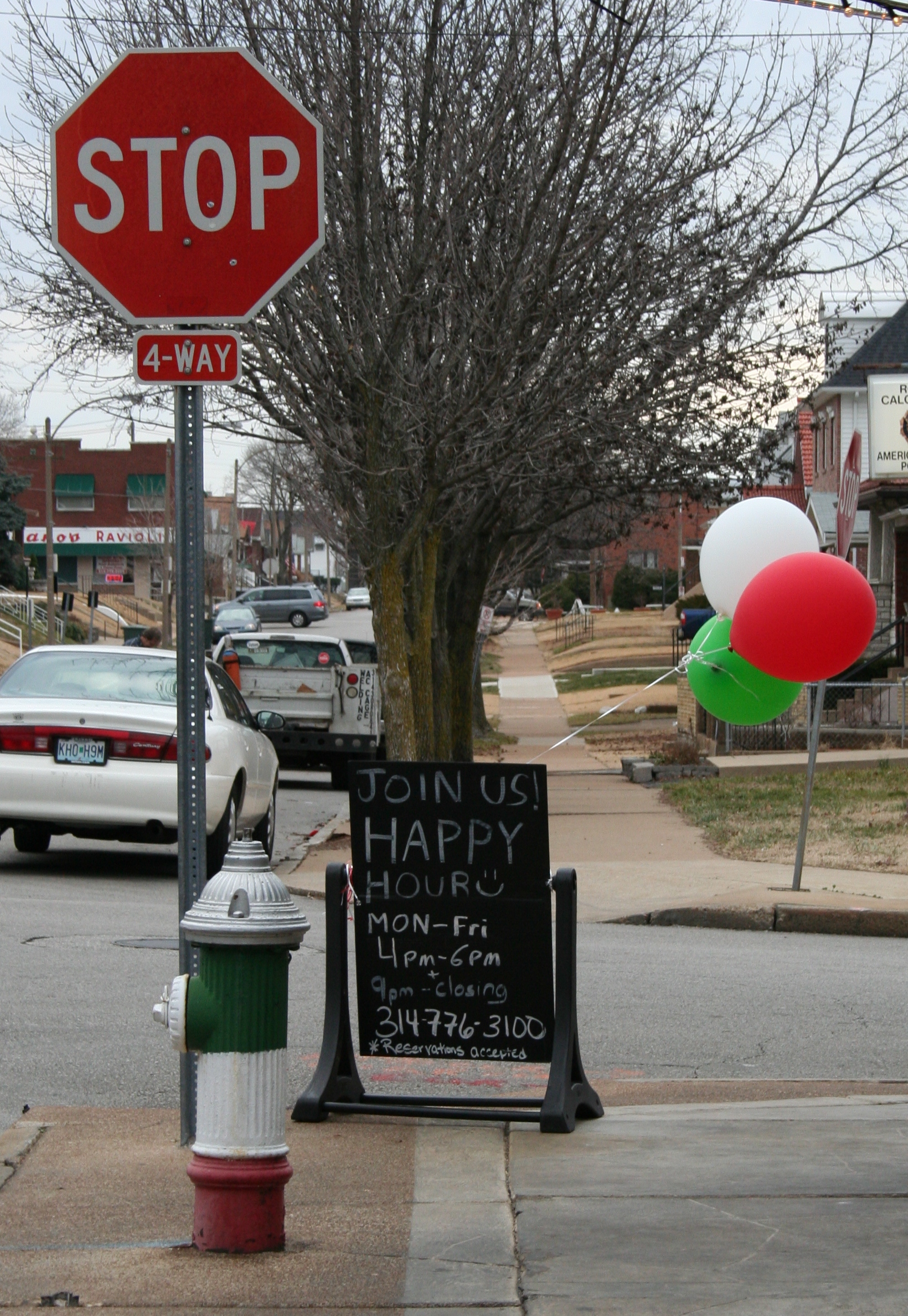
Four million Italians immigrated to America between 1880 and 1920, creating little pockets of Italian culture, neighborhoods all over the USA known as “Little Italy”. I visited one such neighborhood in January, and here are some photos from “The Hill” in St. Louis.

The Italian colors are popular, from fire hydrants to eye-catching balloons.

You can learn Italian in the neighborhood:

Real estate is sold with an Italian flair, a red-white-green sign:

If you are longing for a blast of Italian culture, food, and style in the midwest, check out The Hill.

Agriturismo: Farmstays in southern Italy

Olives awaiting harvest in Abruzzo

To enjoy the atmosphere of a working farm, the rural setting and fresh foods, try a farm stay. WARNING: There are many listings at www.agriturismo.net but not all are working farms. They have a wide variety of amenities, so read carefully and search for the kind of place you want to visit. Some have spa facilities, some are country bed and breakfast properties with limited agricultural production. Others offer cooking classes, boating excursions, swimming pools, or children’s programs.

As I browse the various listings, a question comes to mind: How difficult is it to find a native (or at least fluent) English speaker to review the content of a website? The market appears to be wide open for this kind of service. It’s easy to find listings like these:

(Various kinds of spas therapies) “are the ingredients of our relax.” “It is possibile to have breakfast, lunch, or supposer in the farmhouse.” “As of 1754, the owner’s family give birth to the ancient farm building where oil and wine have been produced with their own traditional tools.”

Of course, I did appreciate the full disclosure of this description: “This place is not recommended to those who want to enjoy only the ocean or only the mountain, or are unable to live without the new technolgies, or are scared of farm bugs, or are unable to handle the fireplace or the wood-burning stove.”

Here are links to a couple of olive farms that appealed to me: First, the Agriturismo Madonna Incoronata, named for a 17th century church on the property. Located on the south side of the Gargano peninsula, they offer cooking classes, boat trips to private beaches, and an ancient olive mill and museum highlighting the history of olive production–which continues on the property today.

Near Matera, L’Orto di Lucania offers a varied farm stay. They grow and process organic wheat, olives, artichokes, eggplant, and tomatoes. They also have a beautiful swimming pool, as well as cooking classes, and bicycles for rent. Guests can take part in farm activities, or simply observe. And unique historical sites like the city of Matera (an ancient cave dwelling site), Castel del Monte built by Emperor Frederick II, and the trulli houses of Alberobello, are all easy day trips from the farm.

Have you stayed on a farm in southern Italy? Share your experience in the comments!

Culinary Tourism: Taste the olive oil.

In my part of the world, wine tasting is popular, and when I lived in Texas, I participated in a chili cook-off. And chocolate tasting? I’m nibbling some right now.

But in the south of Italy, you find tours dedicated to tasting olive oils. I never gave much thought to variations in olive oil until I visited Italy in 2004. Then, it seemed quite a curiosity to me, the interest people took in their oils. Now, I’m eager to explore olive oils myself, and where better but Puglia?

According to The Olive Oil Times, about 40% of Italy’s olive oil grows on roughly 60 million trees in Puglia. You can read descriptions of different types of oil, and a great deal of olive knowledge.

How do you taste it? At Olive Oil Source, you can learn from professional olive oil taster Nancy Ash, owner of Strictly Olive Oil. You can learn the lingo and see what the pros are looking for in their oils.

For the more visual learners among us, here’s a video of Bill Sanders (called the evangelist of olive oil and wine) showing us all how to taste olive oil:

If you can’t make it to Italy, how about olive oil tasting in California? Yes, it’s available there too, so go out there and try a little EVOO! That’s Extra Virgin Olive Oil–soon you will be a pro in the tasting room.

Travels in Calabria: My top picks

History figures large in my travels, so you won’t be surprised that my top tourist picks are mostly historical–and pretty famous!

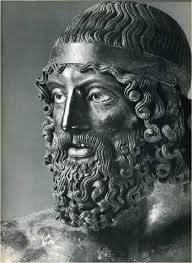
#1: The Riace Bronzes: Two 2,500 year old classical Greek statues, found by a scuba diver off the coast near Riace in 1972, and now housed in the Museo Nazionale della Magna Grecia in Reggo Calabria. The full collection on the Magna Grecia occupies two floors of the museum.

#2: The Roman bridge at Scigliano: Part of the ancient Via Popilia, the Roman road from Capua to Reggio Calabria, during the Punic Wars Hannibal is said to have crossed this bridge with his armies. Not sure if that included the elephants, which Hannibal brought up through Iberia and across the Alps. The bridge is a wonderful Roman era structure. Bed and Breakfast Calabria in Scigliano is a great place to stay nearby, and I found this photo on their website.

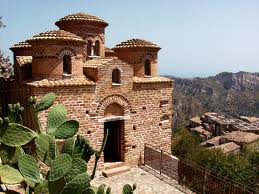
#3: The Cattolica di Stilo: Built in the 9th century, this church is considered one of the most important Byzantine structures, and is a national monument. I love to visit churches. Along with the frescoes and Christian interior, there are Arabic inscriptions in the church–the thought of it sends my mind spinning into all kinds of historical speculations!

#4: Le Castella: I couldn’t go to Italy without visiting a castle, and the history of this one is fascinating. And the Ionian beaches couldn’t be closer! I found this interior cutaway describing life in the castle–in Italian, but it gives some good additional detail.

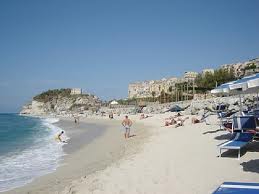
#5: Down time at some hot springs! There are several thermal bath options, and after visiting one in Tuscany a few years ago, I am eager to try one in Calabria. This or this should do–and then a couple of days at the beach in Tropea!

Christmas year-round: Nativities of Naples

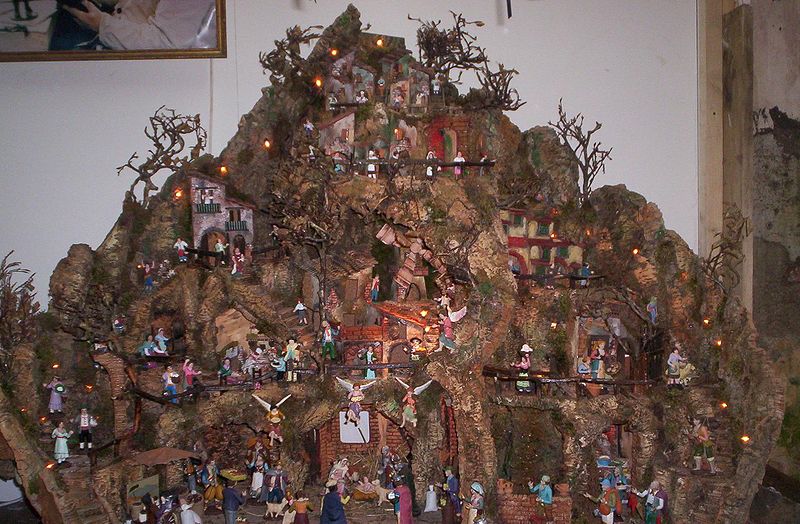
Nativity scenes are part of the Christmas tradition for many of us, and they range from gilt-trimmed masterpieces to naked trolls. In the historic center of Naples, Via San Gregorio Armeno is home to workshops and storefronts selling an array of elaborate creches, or presepi in Italian.

The narrow pedestrian street is Nativity Central in Italy, carrying on a tradition established some four hundred years ago, in the Baroque era. From individual figurines and furnishings to elaborate full-village scenes, from finely crafted and expensive pieces to the very inexpensive–the array is fascinating. They go far beyond the typical scene of the holy family with wise men and shepherds. These scenes include the whole town–the innkeeper, the greengrocer, the mayor, homemakers and housekeepers, in lively scenes where you can imagine them sharing the story they’ve heard from the shepherds. “Did you hear about the baby? Did you hear about the angels? Can you believe it? Let’s go take a look!”

Christmas is a year-round affair on Via San Gregorio Armeno, so enjoy it whenever your visit to Naples comes along. At the end of the street is San Lorenzo Maggiore, a historic church that contains a museum focusing on the historic center of Naples. This neighborhood oozes history from every seam, so plan to spend some time exploring.

A selection of nativity scene characters for sale.

And whether you call it a creche, crib, presepi, or nativity, browse the workshops and enjoy the tradition of Christmas, celebrating the birth of Christ in a thousand variations on the theme.

(Remember those naked trolls I mentioned? Check out Nativity Scenes Gone Horribly Awry at a blog called “List of the Day”.)