Off the beaten path: Discover Scontrone

The beautiful mountains of central Italy.

Italy has its share of tourist attractions, but don’t be fooled. Out in the countryside, in villages and hamlets, many unsung gems await discovery. Scontrone offered us such a discovery.

During one week of a two-month stay in Italy, my husband and I connected with my brother and his daughter in Abruzzo.

A trusting place–keys in the door!

And on one brilliant August day, we drove south from Sulmona in a loop that took us through Castel di Sangro, Scontrone, Barrea and a bit of the National Park of Abruzzo, then through Scanno and back to Sulmona.

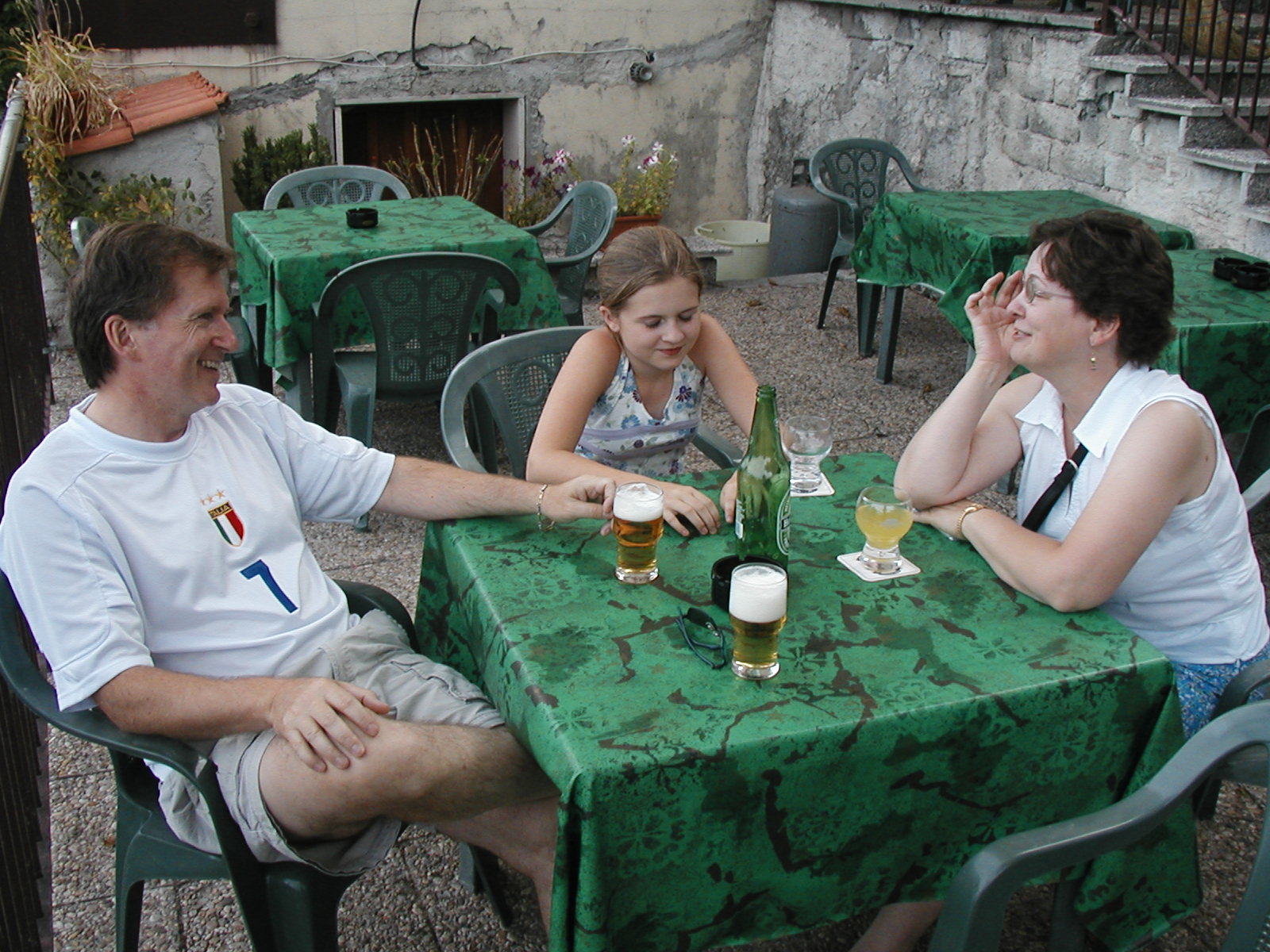
Another reason to stop: to have a cool one.

We stopped at Scontrone to have a look around, attracted mainly because of its connection with Pope Celestine V, who lived there briefly in his early twenties, seeking a place of solitude, and found it in a cave. We did not find the cave, but wandered around the quiet (nearly deserted) village, taking photos, which I share with you today.

We admired the “public art”.

And along with these, I encourage you, when you visit Italy, to leave the line to get into the museum, the stiff neck from staring at grand ceilings, leave all that behind at least for a while, and get off the beaten path, practice your “Buon giorno” in a village piazza or bar, and enjoy what you find there.

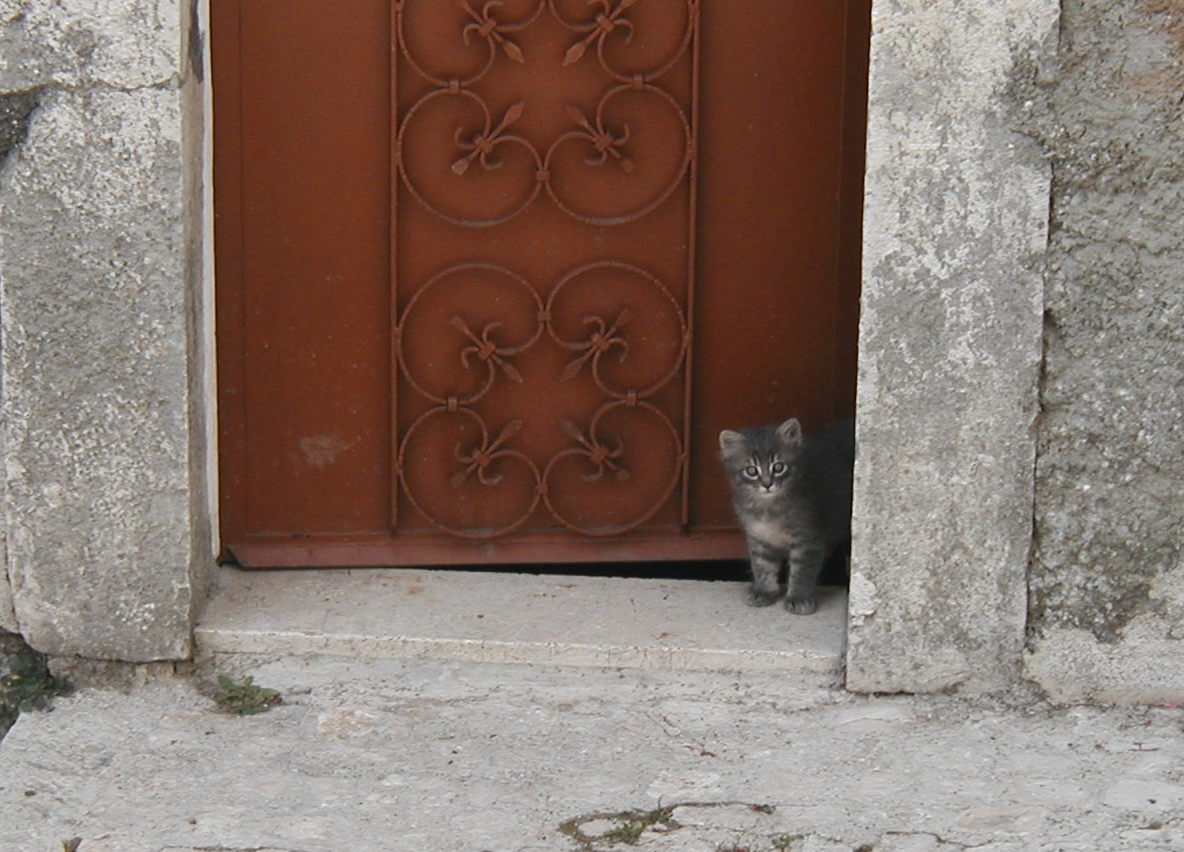
A member of the welcoming committee.

Halloween–a newcomer to Italy

Italian Jack-o-LanternHappy Halloween, readers! The celebration of Halloween has morphed from its origins in religious history — All Hallow’s Eve, or the night before All Saints Day — to something generally irreligious with no spiritual connotations to most who participate. In Italy, All Saints Day has been a religious festival for centuries, and Halloween is a newcomer. Here’s a link to an article about Halloween in Italy on a website I recently found, and will be visiting regularly, called ItalyMONDO. They also have an excellent post about Wines of Abruzzo which you might enjoy!

Enjoy the day!

Italian news this week: Two high-profile court decisions

Italian court decisions have been in the news this week, the first generating mostly disbelief, and the second perhaps more “What took you so long?” comments.

Scientists were convicted of manslaughter for not predicting more certainly a deadly earthquake. http://news.blogs.cnn.com/2012/10/23/italian-court-sentences-scientists-to-6-years-in-prison-over-laquila-earthquake/?iref=allsearch

The former prime minister received a prison term of four years for tax fraud. http://www.cnn.com/2012/10/26/world/europe/italy-berlusconi-convicted/index.html?hpt=ieu_c1

Readers, what do you think of these decisions? Do they change or confirm your view of Italy?

RE-blog: About Abruzzo

I recently discovered this great blog ‘About Abruzzo’ which is one of my favorite regions of the Italian south. Written by an Irishman who’s been truly bitten by the bug, the blog is full of great insights about the region. One of my favorite features is the photo section, packed with photos from many different places in Abruzzo, and easy to navigate. But today I’m sharing a snip of a recent post, and if you like what you read, click the link to see more!

Three Days in Loreto Aprutino (from “About Abruzzo”)

In the space of a week I received two emails asking about things to do if you had a few days based in Loreto Aprutino.

Although my answer was specific to options in and around Loreto I think the general theme applies to wherever you find yourself in Abruzzo.

  • Explore what the local town has to offer
  • Relax – you owe it to yourself
  • Try the local restaurants
  • Visit other towns within easy reach by car or public transport
  • Walk a little
  • Local events and markets

What follows are my suggestions for what I consider to be a few excellent but not overly packed days discovering Loreto Aprutino and its surroundings.

http://aboutabruzzo.com/index.php/2012/10/01/activities/three-days-in-loreto-aprutino/

Caserta, the Versailles of Italy

My research in Italy in 2004 focused on thirteenth and fourteenth century history. As our visit came to an end, we didn’t want to return our rental car in a city, with all the crazy traffic, so we chose–and I can’t recall why–to drop it off at Caserta, north of Naples, and take the train back to Rome from there. I knew nothing about Caserta, because its major claim to fame developed about 450 years after the history I was most interested in.

File:CasertaNorthernAspect.jpgAcross the street from the train station, a few hundred yards away, we could see a massive building, certainly palatial, and we looked with some curiosity but no spare time, wondering what it might be. Our view was not the one you see above, but from the other side of the building, with no hint of the wonderful canal and park.

Now I know. The Reggia di Caserta, the royal palace built by the Bourbon kings of Naples in the 18th century. In fact, the largest palace contructed during that century, and among the largest buildings built in that period, it is now a UNESCO World Heritage Site. With 1200 rooms, it is the largest royal palace in the world.

It is on my itinerary for Italy next year!

The palace was conceived and construction begun by King Charles VII of Naples, but he inherited the throne of Spain in 1759, and ceded Naples to his son Ferdinand who was only eight years old. After a period of rule in Naples through regents until he reached his majority, Ferdinand occasionally lived at Caserta from its completion in 1780 until his death in 1825. This included the turbulent Napoleonic period during which Ferdinand was deposed and restored three times. The Bourbons continued to rule until 1861, when Italian unification dissolved the Kingdom of the Two Sicilies.

Fast forward to World War II, when the palace again served a prominent purpose as the headquarters of the Supreme Allied Commander. In April of 1945, the German surrender in Italy was signed at Caserta.

In more recent years, the palace has been used as a movie filming site for a couple of Star Wars movies, and for scenes from Angels and Demons. In Mission Impossible III, the square where the Lamborghini is blown up is one of the inner squares of the palace.

Visitors today note that the palace is completely unfurnished, and a bit run down, but it is still a popular tourist stop. The grounds are as much an attraction as the palace itself, with a three mile long “Royal Park” considered by many to be superior to the park at Versailles.

Here’s a video peek at some of the Baroque wonders of the palace and park:

History denied me: Old stuff I can’t figure out.

Exploring Sorrento on foot, Vern and I followed a road that crossed a deep ravine. Looking down, among the thick undergrowth, I saw a ruin, a former mill or factory, it appeared, covered in creepers and moss.

That kind of thing just gets my head spinning. What was it? When was it built? Who worked there? Why was it abandoned? I’m sure that some research could turn up the answers to these questions, but I had higher priorities at the time. Still, that picture catches in my imagination now and then.

The trouble with Italy (and of course there are other places) is that it is filled with these bits of time gone by, wherever you go. Bits of ancient columns built in a new(er) stone wall. Arched “doorways” forty feet above the beach on a cliff face. Roman mosaic fragments dug up during remodeling.

Sometimes when I see such things, a story simply comes to me, and I wonder how close to the truth it might be.

Black wool stockings, or Winter travel in Italy

We arrived in Sorrento in mid-February to begin two weeks of Italian language school at Sorrento Lingue. We’d packed for a month in a mild winter climate.

Too mild, it turned out.
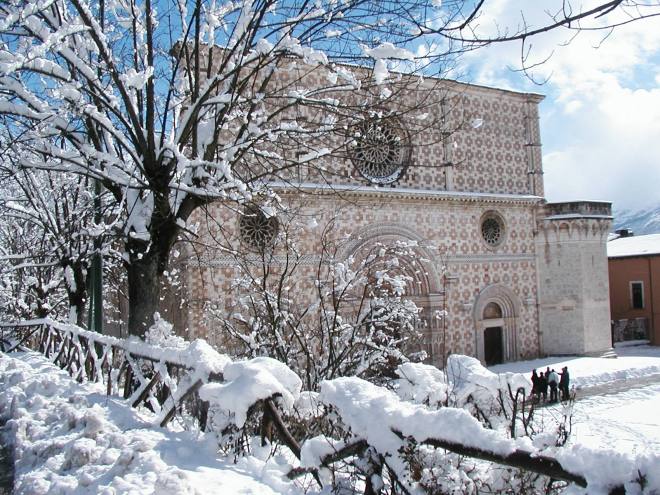
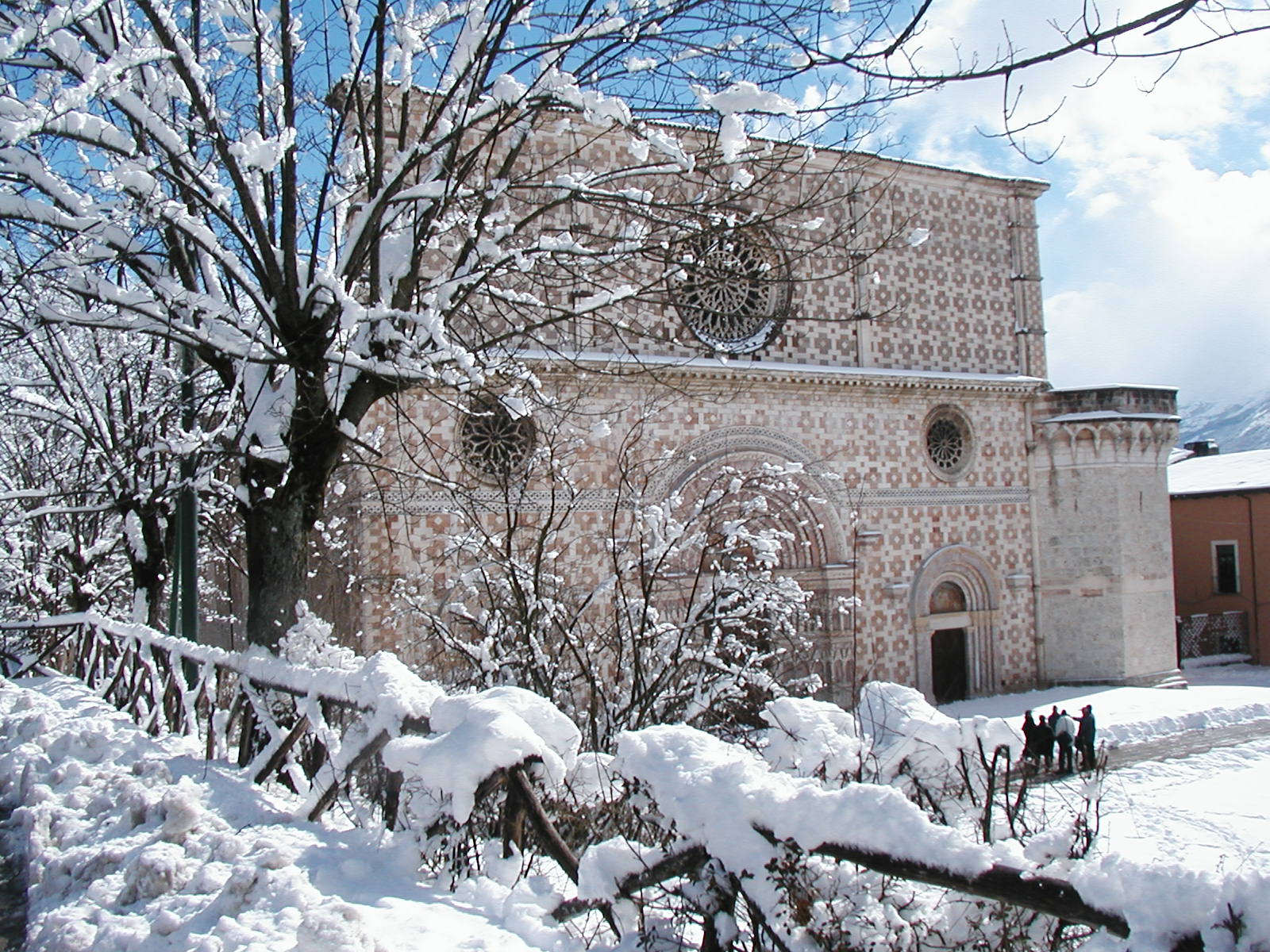
Basilica di Santa Maria di Collemaggio in the snow.

Our host family’s apartment, with its icy marble floors, was not heated to the level we Americans are accustomed to. My first purchase in Sorrento was a pair of black wool tights, which I wore almost every day, with my other clothes. With additional socks, and a sweater under my warm coat.

It’s one thing to bundle up when you go outside–after all, I grew up in Alaska, and I know what winter cold is like. But it seemed nearly as cold inside as out, and we were bundled up inside and out.

Granted, it was mid-winter. We had several very windy days in Sorrento, and a few with rain. We walked several blocks every day to our class, and on our free afternoons we walked all over the city. We walked a couple of miles each way to see the ruined villa at Capo di Sorrento, and took trips to Pompeii and Positano.

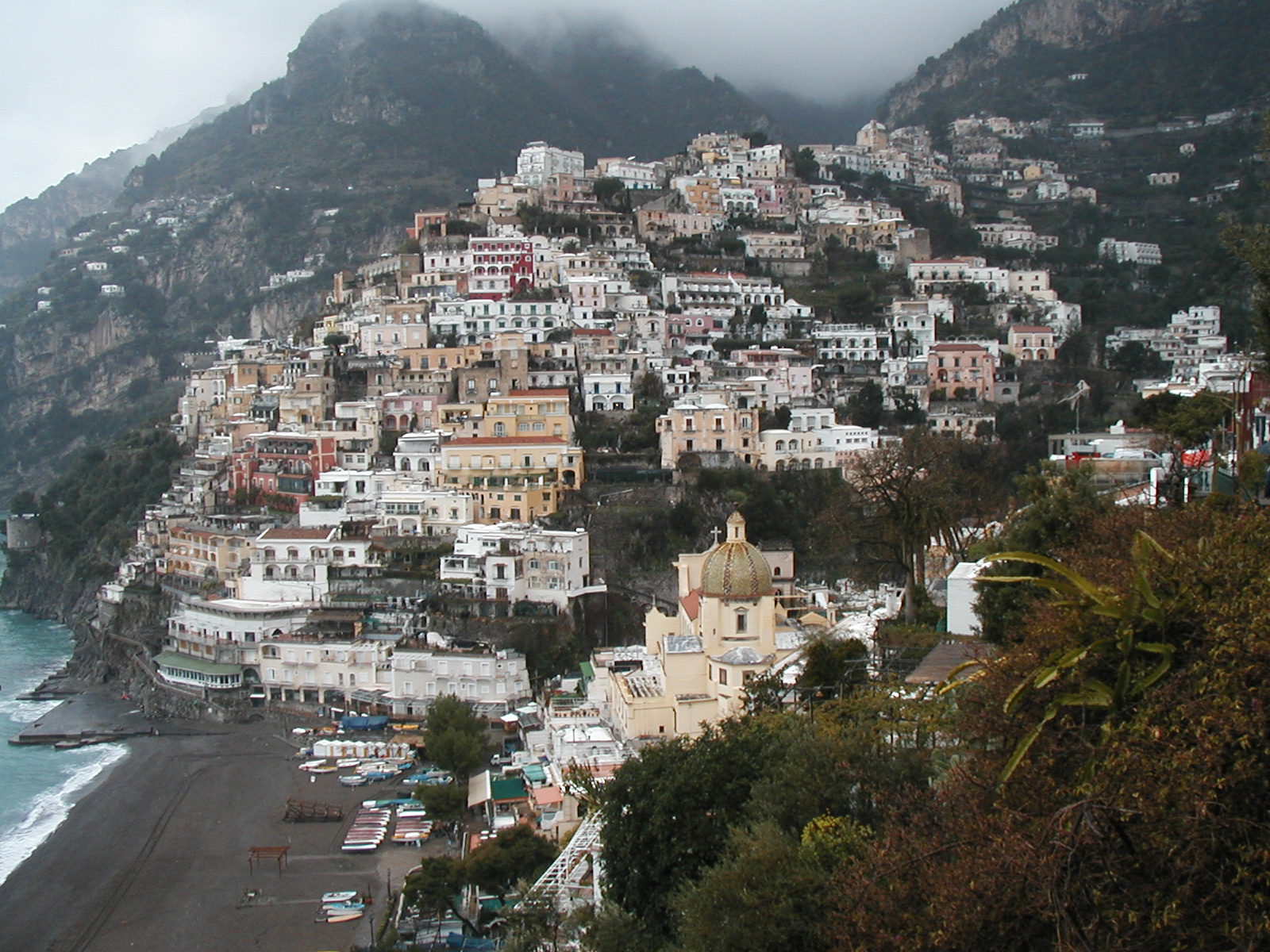
Clouds hanging low over Positano.
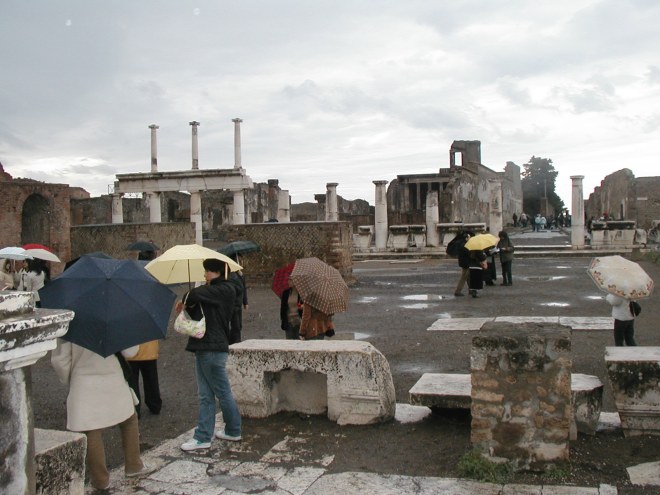
Umbrellas were the order of the day in Pompeii.

But I’m afraid in all my planning, in spite of knowing that we were traveling in winter, my brain retained the images of sunny Italy, warm Italy, cappuccino on the terrace Italy.

After two weeks in Sorrento–two weeks in those wool tights–we picked up a rental car and headed to L’Aquila. It’s farther north, yes, and a higher elevation, in the central Apennines. A beautiful, historic city (until April 6, 2009), one I was very eager to visit. Weathermen in military regalia on TV had forecast possible snow, so we insisted on getting chains with the rental car, and sure enough, snow began to fall by mid-afternoon as we climbed into the mountains.

But we Alaskans were not daunted by a little snow, and we carried on. As the snow accumulated to three, then four inches, with no sign of letting up, we pulled to the side of the road under an overpass to put on the chains while there was still some daylight.

The chains did not fit.

The thought of another couple of hours in failing light on curving mountain roads gave us pause. We had a lovely hotel room waiting in L’Aquila, and were eager to be in it. But how long would it take us if the snow continued?

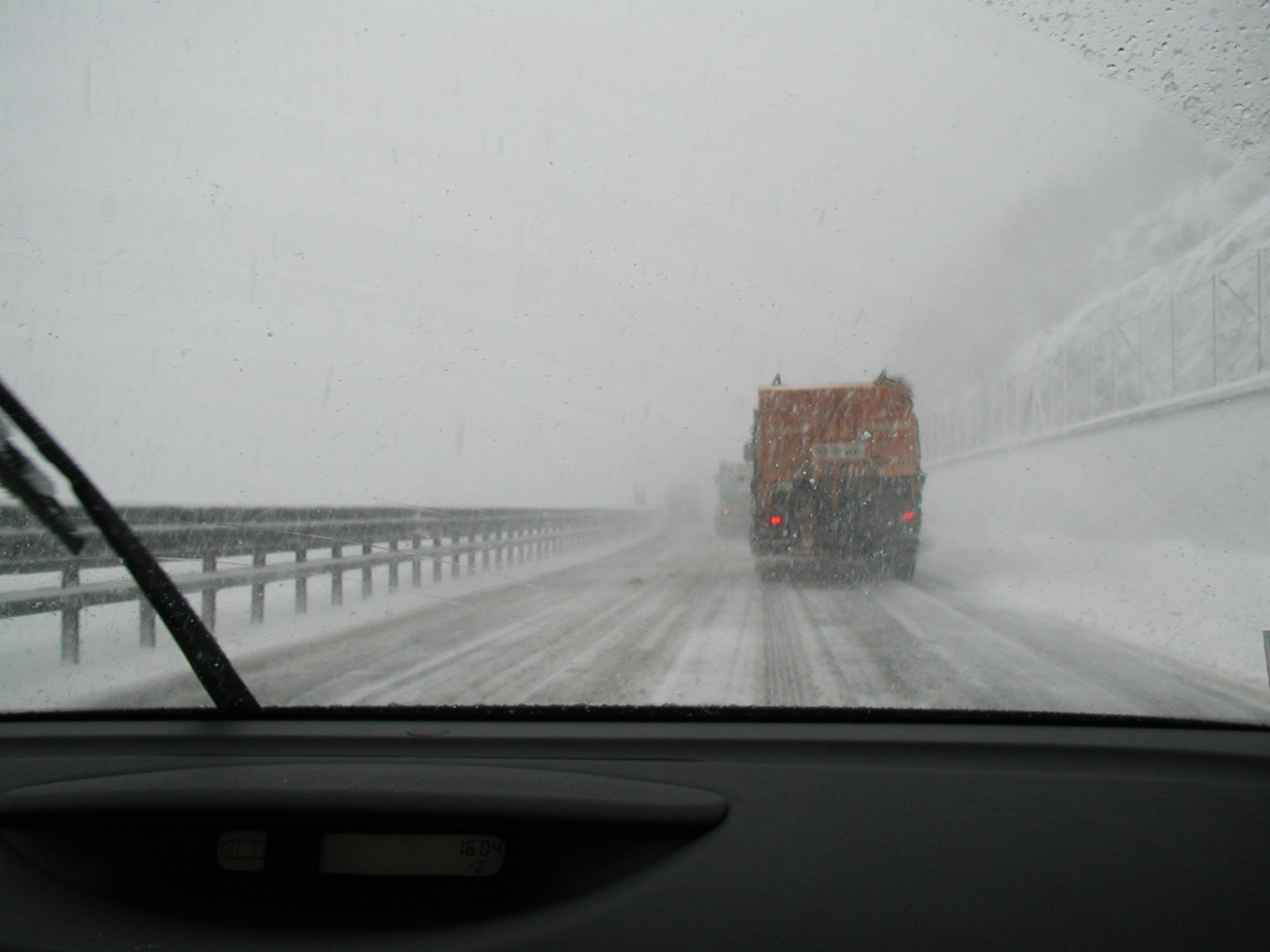
As we pondered this question, the rumble of a large vehicle on the overpass caught our attention. It slowed, and then appeared on the ramp and pulled onto the highway in front of us. A snowplow! As we folded our maps and prepared to pull out behind him, another plow came down the ramp. And another!

Following our caravan of snowplows.

With high hopes that one of them would go to L’Aquila, we pulled out into the thin slush in their wake, and followed them at about 40 mph all the way to our destination. Other cars passed us, but we simply followed. It was our first day of driving in Italy, and a memorable experience!

So for anyone planning a winter visit to Italy, I will say: By all means, go, see the sights, the pasta and wine are just as wonderful in winter, but take your black wool stockings! You are likely to need them.

How to make (and say) bruschetta

Various toppings for bruschetta at http://www.myrecipes.com.

I love a good bruschetta, but have to admit, I have been reluctant to prepare it myself. My biggest fear has been getting the bread wrong–not crispy enough, or too charred, or soggy from too wet a topping. Camille Parker of Camille’s Dish has given me a little confidence, and with tomatoes now growing in abundance, I am going to try it. Here’s a video lesson on making bruschetta–and I love that Camille pronounces it the Italian way. She’d probably get in trouble with her 92-year-old Sicilian grandfather if she said Broo-shet-a like most people do in America!

I had the best bruschetta I’ve ever tasted in America in the most unexpected place. Not in Little Italy somewhere, or even in my mom’s kitchen, which is a great place for Italian food. No, right in the heart of the midwest, at Johnny’s Italian Steakhouse next to the Radisson Hotel at Des Moines, Iowa’s airport. No kidding. My sister and I went back twice when we visited Iowa last year, and would have been happy to make that appetizer our entire meal. I didn’t get the recipe from them, but my sister recreated it at home with goat cheese, finely diced roma tomatoes, garlic, a little basil, olive oil. Yum. Okay, now I’m hungry!

Are there Italian foods you’ve been afraid to make yourself? Something you wish you’d tried cooking sooner? A great bruschetta combination you’ll share with us? That’s what the comments are for!

San Bartolomeo in Legio: An Italian hermitage

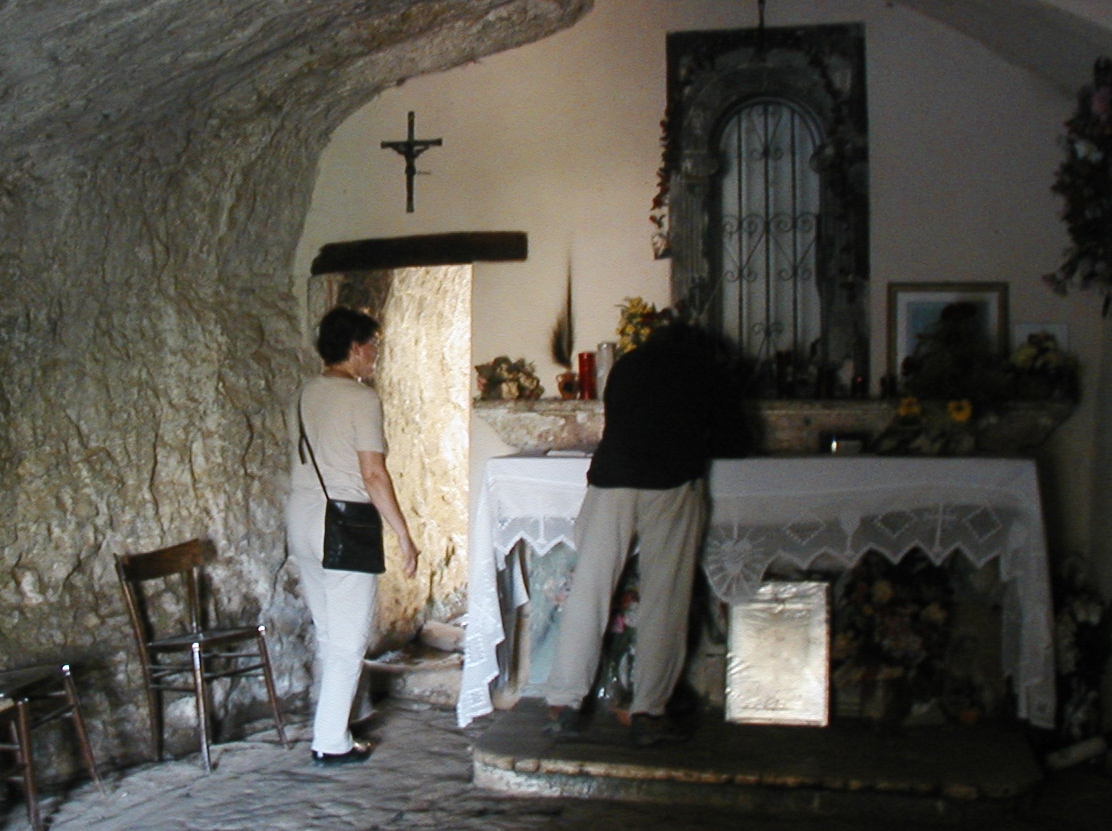
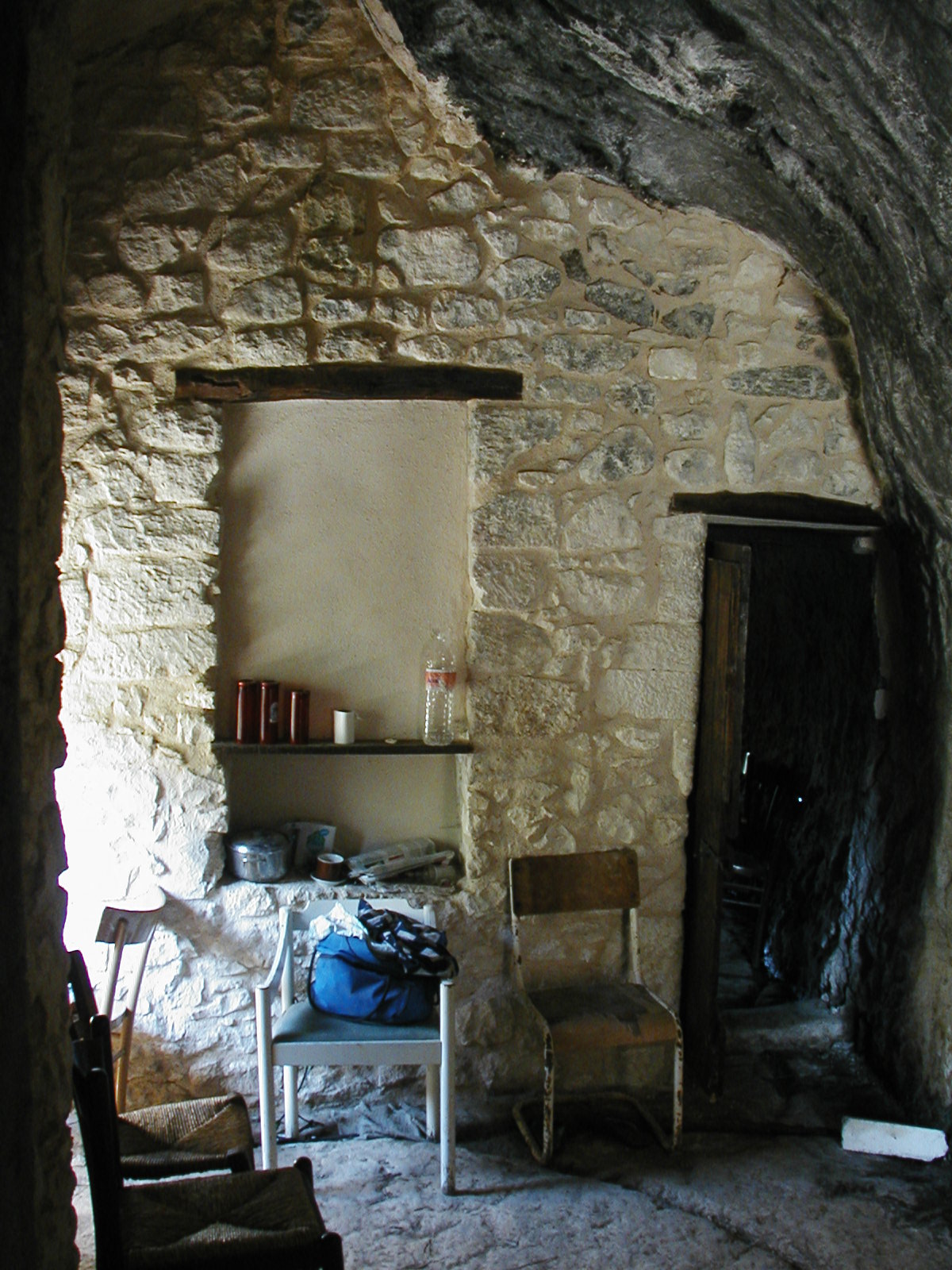
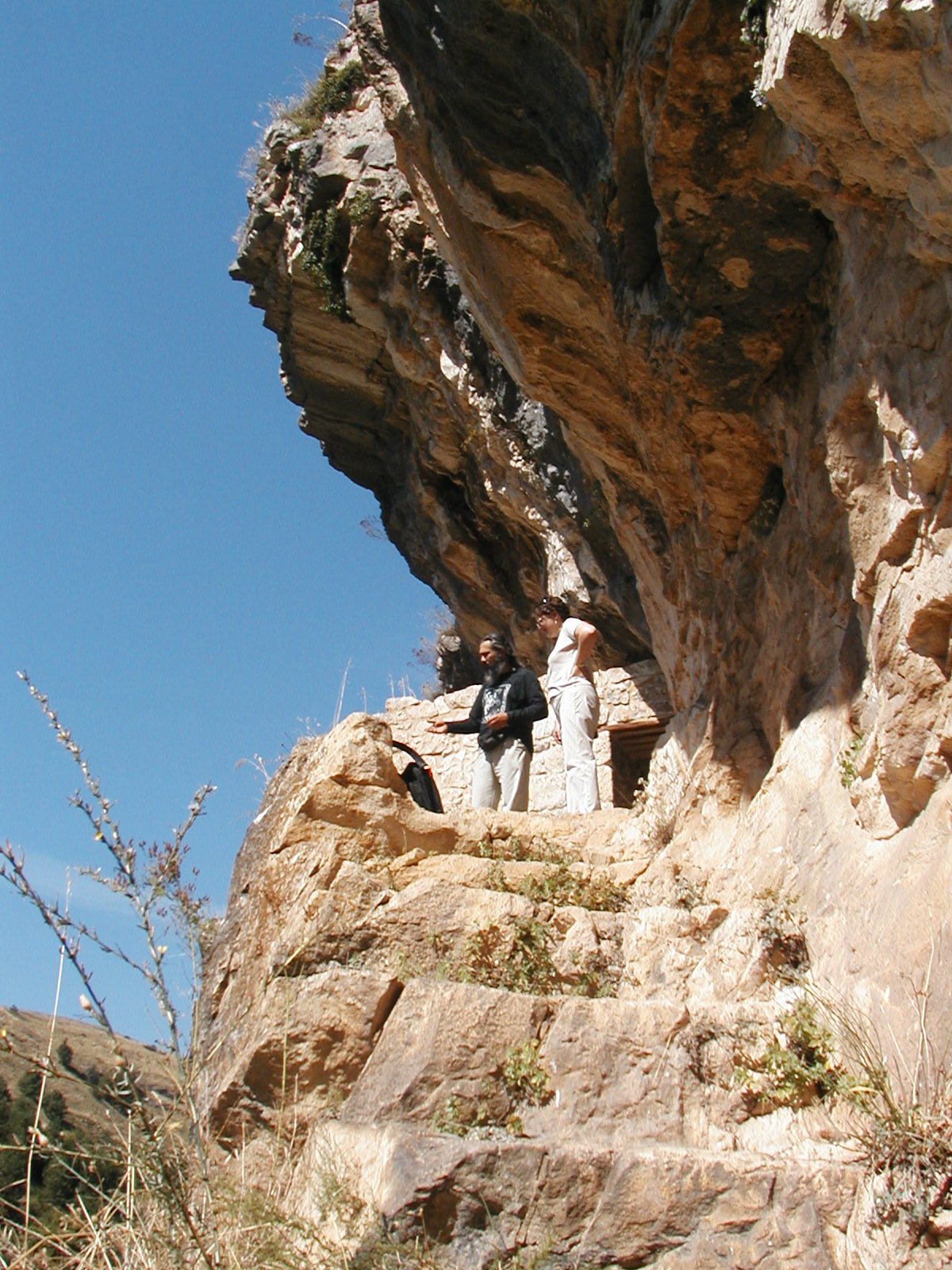
On a hot, clear September afternoon Vern and I followed our friend Cesare along a trail through dry grass on the slopes of Maiella. Our destination: one of the dozens of hermitages in the mountains of Abruzzo, San Bartolomeo in Legio. Pilgrims still visit the site, most commonly on August 25 each year. The narrow trail and ledge discourage crowds!

In the chapelChapel entry, and window on left

Little doorway to nowhere

No handrails on these stairs!

It is hard to imagine spending weeks or months in this isolated place, but there is a beauty in the surroundings, and it seems a good place to encounter God. Here you can read more about it.

Have you ever visited a hermitage? Where was it, and what did you think of it?

Book Review: Stumbling Through Italy

Niall Allsop and his wife Kay of Bath, England, began vacationing in Italy after making friends with Vittorio and Ivano Capetti, owners of an Italian restaurant in Bath. Their initial forays took them to Tuscany, but they came to their senses soon enough, and began to explore the Italian south.

I like the way these people travel: Not rushing from monument to museum, but making friends, meeting people. Many of these people happen to own or work in restaurants, because like most of us headed for Italy, they love the food. But their secret to successful travel in Italy is not just making friends with the waiters. It is also adapting to the rhythm of Italian life–which means taking the early afternoon ‘siesta’ along with the rest of the country. It’s learning to speak a bit of the language, at least. It’s driving like an Italian when driving in Italy.

I enjoyed wandering through Sicily, Sardinia, Naples, Apulia, and Calabria with them, and previewing some travel experiences I’d like to have myself. They found the trulli houses of Alberobello trulli disappointing, and delighted in the performance of Euripides’ play Ecuba in the classical Greek theatre in Siracusa. They discovered, from one of their hosts, a recipe for orange-coffee liquor, which they kindly included in the book. They were willing to be sidetracked from the usual travel highlights by people and places not found in the tourist guidebooks.

Especially helpful–a chapter on Italian language tips for the novice, and a chapter on driving in Italy for the brave, though some might say foolhardy.

Niall Allsop’s writing is more serviceable than brilliant, but he leads us on an enjoyable stroll, a passeggiata through southern Italy, which you might enjoy, as I did.