My mouth is watering for tiella!

This week I confirmed that I will visit Gaeta in August and have some of their famous tiella. The photo above, from a Flavor of Italy blog, shows a few of the widely varied fillings used in tiella.

I found a recipe for tiella on Lidia’s Italy website, and it looks yummy! The recipe calls for escarole–something use more often in salads than in cooked dishes, which makes this recipe all the more intriguing to me.

When I go to Gaeta, I’ll be meeting Nicola Tarallo (aka Nico Rosso), author of the ebook Mangia Tiella! We’ve corresponded on Facebook before, and I’m looking forward to learning more about Gaeta from him, as well as trying some tiella at last.

Have any of you readers made, or eaten, tiella before? Please share!!


Buona Pasqua, amichi!

Today I’m sharing the Sons of Italy blog post about the differences between Easter celebrations in Italy and the U.S.  I enjoyed it, and hope you will too.

And the illustration in that blog post, of the delighted child opening a Kinder Egg, prompts me to add this article about the recent decision to allow an ‘adapted’ form of Kinder Egg to be sold in America.

World Championship In-line skating: Sulmona 2004

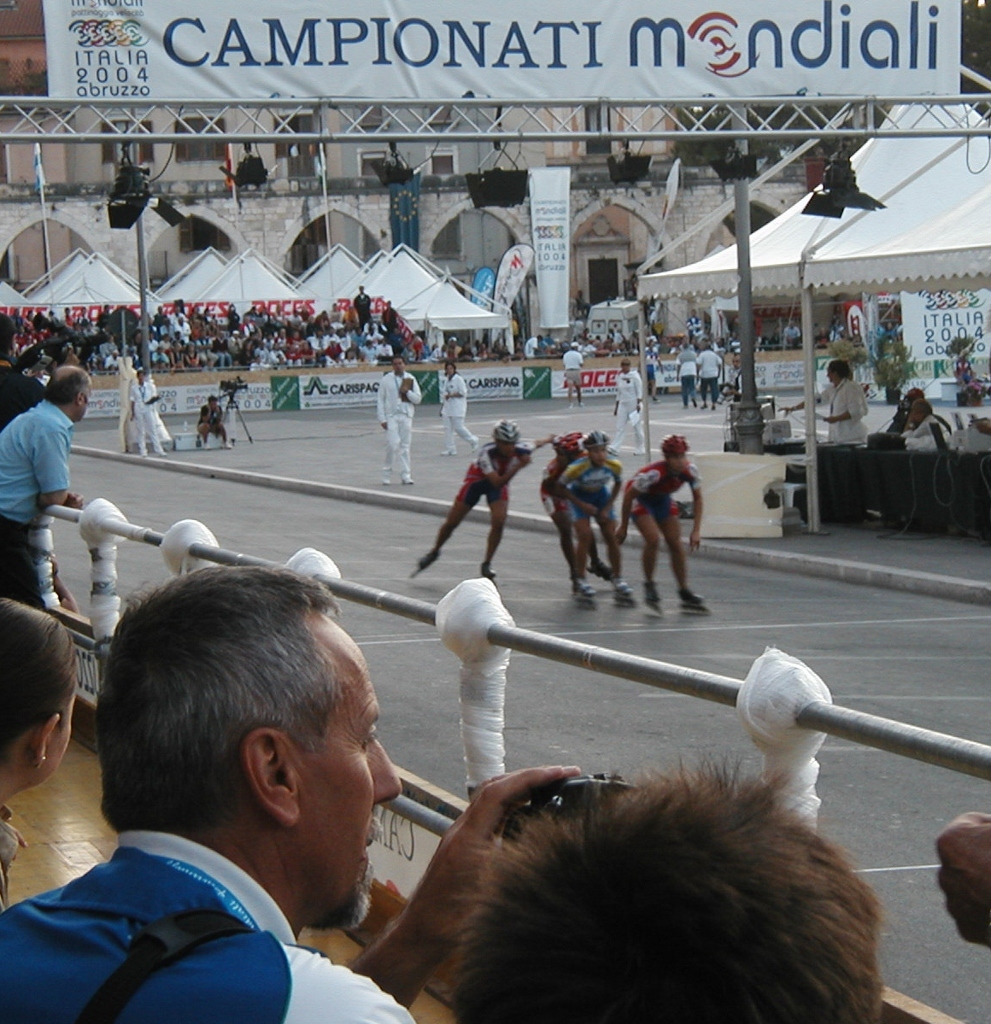
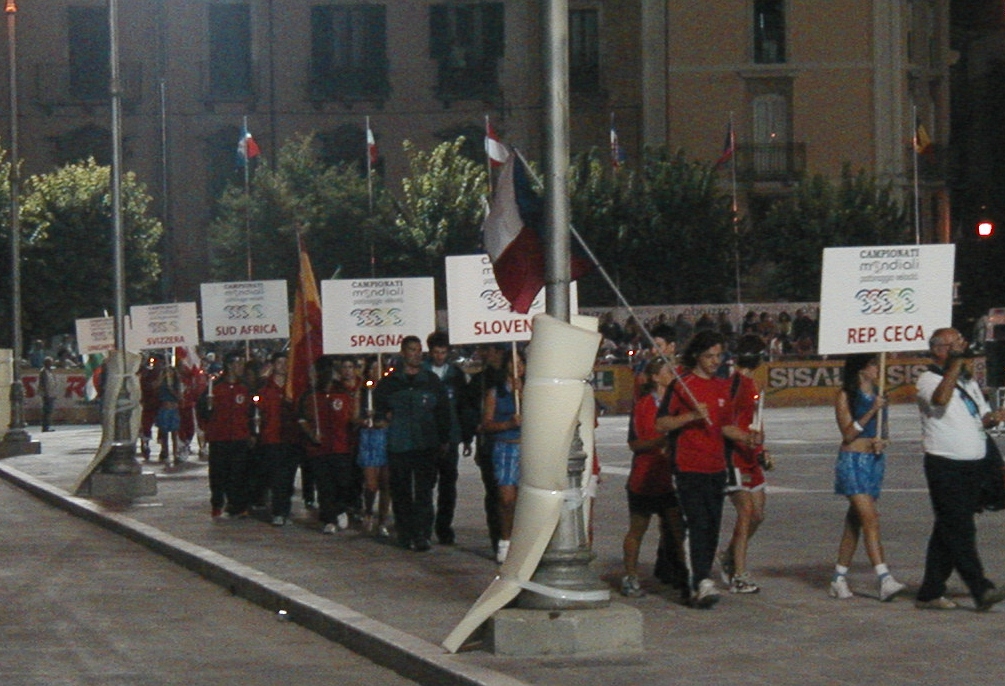
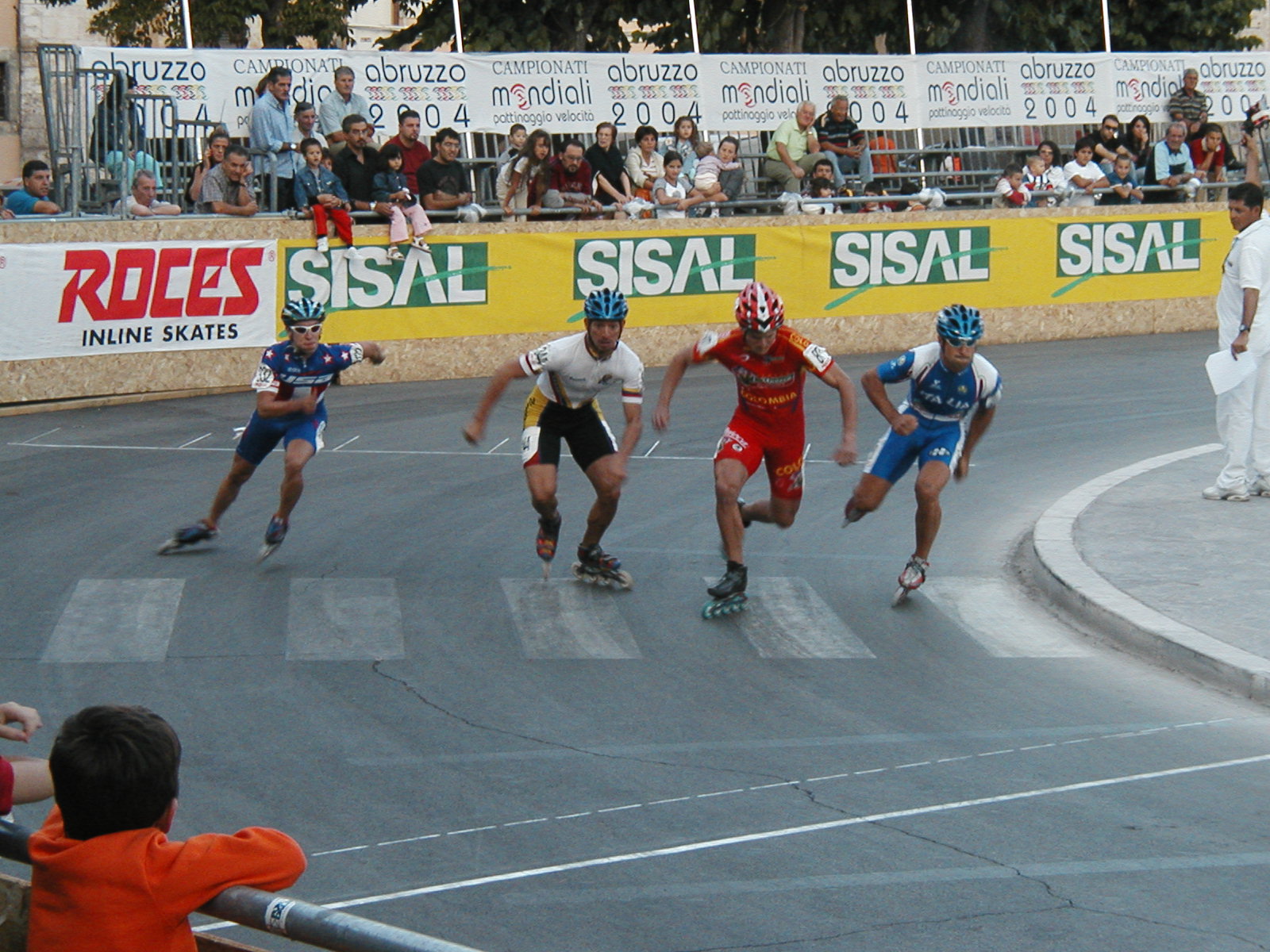
We arrived in Sulmona in the fall of 2004 to a scene of celebration. Teams of athletes from countries around the world were gathered there to compete in the summer version of speed-skating, with in-line skates, and we were there for opening night!

A banner announces "World Championships" with Sulmona's iconic medieval aqueduct in the background.

A banner announces “World Championships” with Sulmona’s iconic medieval aqueduct in the background.

We had no idea this event was happening when we planned our visit. Piazza Garibaldi, Sulmona’s enormous main square, was transformed into a racetrack surrounded by bleachers and vendors’ booths.

A parade of nations entering the arena.

A parade of nations entering the arena.

The teams paraded along Corso Ovidio and into the arena in alphabetical order by country (a little trickier in Italian!).

Team USA passing the fountain in Piazza Garibaldi.

Team USA passing the fountain in Piazza Garibaldi.

We found the American team and wished them well.

A young fan cheers his favorites.

A young fan cheers his favorites.

Here are a few photos we snapped while watching the events.

Medics help after a nasty fall.

Medics help after a nasty fall.

It wouldn't be Italy without fireworks!

It wouldn’t be Italy without fireworks!


Planning for (not just dreaming of) a visit to Italy. Please help!

DFRINLPLUAEUKpassportstampsI’m one of those travelers who likes to imagine traveling footloose, but really wants the security of reservations and an itinerary. Hubby is happy to let me make the plans without too much of his opinion, and fortunately our likes are alike enough for that. But I’m a bit overwhelmed with planning this trip–we have a lot going on the home front, soooo…

My readers, can you help me? We will be spending two weeks in Italy this August, with the first six days committed to Venice and surroundings. We will then fly to Rome or Naples, and rent a car. Any suggestions about car rental? We are hoping my brother will join us about this point, so need a car that will suit three adults with light to moderate luggage. And I’m not familiar with the European car types being offered for rent. Lancia? Fiat? Would it be easy to find diesel if we rented a Mercedes?

We will drive to Caserta to spend that night, and plan to visit the palace the next morning. Any recommendations for hotel or palace visit?Calabria-Gonfalone

After seeing the palace (is three hours enough time to allow?) we will drive to Cosenza for a night or two. The next morning we’ll look around Cosenza and the area. Is there a good hotel with car parking? And what sightseeing do you recommend in the area? Maybe we should just go to the beach! (But more of that later.)

We’re planning to spend August 13-16 in my ancestral village, Scigliano, so will celebrate Ferragosto there–hopefully with my Italian cugini. What kind of celebration might we expect for Ferragosto?

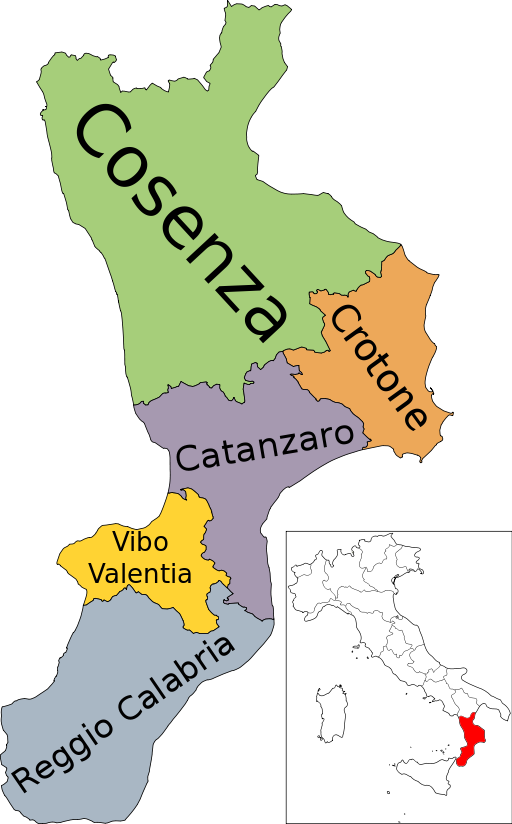
Map_of_region_of_Calabria,_Italy,_with_provinces-it.svgFor the next three days we will be “touring the toe”. If you had three days there, how would you spend it? I’d love to hear about your favorite beach, favorite museum, favorite castle–and not just tourist experiences. Is there a great place to hear  Calabrian music? Farm visits? Hiking? I doubt we will stay in a beachfront hotel–but who knows? We’d like to have a look at both coasts of the toe.

On August 19 we’ll turn in our car and fly out of Lamezia Terme to London, so will want to spend the night of the 18th close to there. Recommendations?

I am so looking forward to your suggestions. And hope you are looking forward to coming along via the blog later in the year.

*All images on this post are from Wikimedia Commons.

Remembering Salvatore: Part 3 of 3

OLYMPUS DIGITAL CAMERAOver the last two weeks, I introduced Salvatore, and shared some of his experience during World War II.

After hearing about the priest, we threaded our way through the streets of Piedimonte Matese, impressed at the pace Salvatore set for us, given he was older than we were by thirty years or more. As he was unlocking the door to his house, I noticed a piece of ancient history built right into the door frame. The lower two or three feet on the left hand door frame was made of a fluted stone column, broken off at an angle. The typical Italian house construction, thick walls with stucco finish, surrounded it.

“Where did you get this?” I asked.

“My father found that column in the river many years ago, and had it in our home. When we were rebuilding the house after the war, we put it in this wall.”

I don’t recall asking what his father was doing when he found it. Fishing, maybe? I’ll bet you’ve never gone fishing and found an ancient Roman marble column! I found a silver dime once when I was digging in the garden, but that marble column has it beat. It must have been found before modern antiquities laws were enacted in Italy, because items like that are no longer considered ‘yours for the taking’ even if found on your own property.

We entered a corridor and climbed to the second floor  balcony to enter his home. (This is called the first floor in Italy, being the first floor above the ground floor.) It was cool and spacious, with dark furniture and nicely framed paintings. Light filtered in from a courtyard filled with plants.OLYMPUS DIGITAL CAMERA
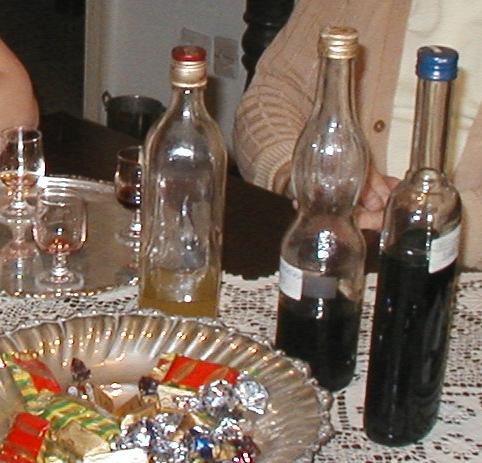
Salvatore introduced us to his wife, who spoke no English. She greeted us kindly, with a knowing resignation that led us to believe we were not the first strangers her husband had brought home for a visit. After a short time she brought a silver tray with small glasses, and three bottles of liqueur with hand-written labels taped to them. After that, she left us to visit, and we didn’t see her again except to say goodbye.

Salvatore told us about his sons. One had followed him into the teaching profession, and the other was handicapped in some way, and required special care.

“Please try the drinks I made,” he urged us, and poured dark liquid from a tall bottle. “It is made from hazelnuts,” he said of the first one. A small taste was enough of that. Next came cherry liqueur, burning a deep red path down our throats. Salvatore set that aside, clearly eager to get to his last offering.

“I make this from my own recipe. It’s like limoncello,” he said.
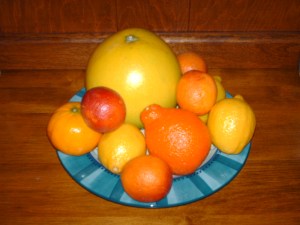
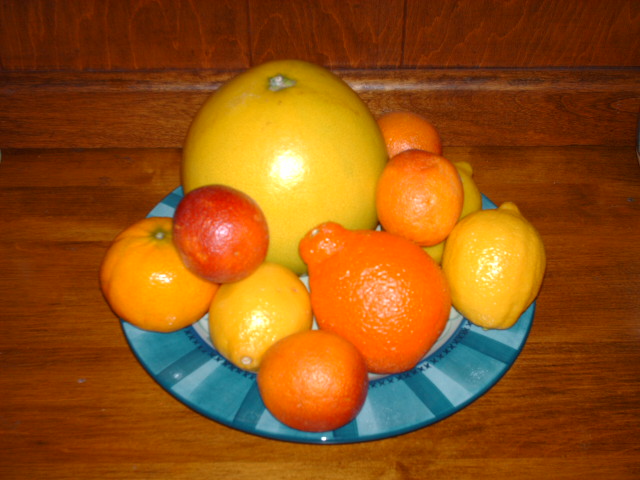
Mixed citrus--from Wikimedia Commons

Mixed citrus–from Wikimedia Commons

We knew limoncello, and enjoyed it, but his drink was more orange colored than any we had tried. And more delicious! He smiled with satisfaction at our response. “It has not only lemons. I make it with oranges, lemons, and tangerines. My own recipe.” He beamed as we sipped the golden nectar. “I grow the fruit right here,” he said, gesturing toward the verdant courtyard.

“Do you share your recipe?”

“Of course!”

As he went to get paper and pen, I thought to myself, of course he shares his recipe. He is a man who shares his whole life, openhanded and openhearted with friends and strangers alike. He scratched out the recipe, with careful instructions, and we visited some more, went out on the balcony to see the garden, looked at paintings on his walls and photos of his sons.

As the afternoon wore away, we reluctantly excused ourselves to go back to the hotel. Our heads swirled with the stories, but more than that—Salvatore’s life itself was vibrant with generosity, joy, patience.

More than eight years later we still think of him and marvel. Who would have thought that the strongest image of life we encountered in Italy was an elderly, nearly toothless man who earned his living teaching a ‘dead’ language? Salvatore—that name means ‘savior’ and Salvatore’s spirit of vibrant life seems just what the world needs. Someone willing to do good in the face of ridicule, to foster young lives (human as well as plants), to remember the past and look to the future, and to share generously with strangers.

Maybe you are as eager to have Salvatore’s limoncello recipe as I was. I’m sharing it here, just as he wrote it for us.

1. You must take two ripe lemons, two oranges, and two tangerines (six in all);

2. Peel them completely;

3. Clean all the peels from the so called “pane”, that is the “bread” which is the white material between the peel and the fruit;  with your left hand you maintain still the peel by means of a table fork while with your right hand you liberate the peel from the white part, that is the “bread”, till the peel becomes rather transparent;

4. Put all these peels in one liter of liquor-alcohol and leave in a well closed glass container for about one month or more, if you prefer.  The fruit must not be placed in the container:  you eat apart [eat that separately];

5. Dissolve 1 kilo of sugar in one liter of hot water and mix with the alcohol after having taken away the peels.  At last you fill and keep in a well closed bottle.  The liquor is good to drink after two or three months. [Could he have meant “for two or three months”?]

Salute!

Salvatore and the Priest (Part 2 of 3)

OLYMPUS DIGITAL CAMERALast week’s post introduced Salvatore and our serendipitous meeting.

So how did this 80-something retired Latin teacher from a remote town east of Naples learn English? “I learned from an American priest,” he told us. “The priest who saved Piedimonte Matese!”

We walked along a street that climbed one side of a valley. As we walked, he told us about the priest. As a young man in America, he converted to Roman Catholicism, and was rejected by his Protestant family because of it. They wanted nothing to do with him. But he felt called to the priesthood, and eventually studied in Rome. He was assigned to serve in Piedimonte Matese in the 1930s. His family in America cut him off completely, but he loved his life and work in Italy as a priest, and he taught English to those who wanted to learn, including Salvatore, who was a young teenager at the time.

Then the war came. Mussolini joined the Axis powers in 1937, and as war gradually engulfed Europe, life in Italy became more and more difficult. The German presence in Italy grew to an oppressive level, and life was further disrupted by food shortages and military conscription. With the potential of American involvement in the war, the church and community authorities urged the priest to return to America, but he refused. Italy was his home, and he had no family waiting for him.

Then came Pearl Harbor, and the United States entered the war.

Salvatore paused on the sidewalk and pointed across the valley to another section of the town. “Do you see the palazzo over there, the biggest building? That is where the priest stayed during the war.”

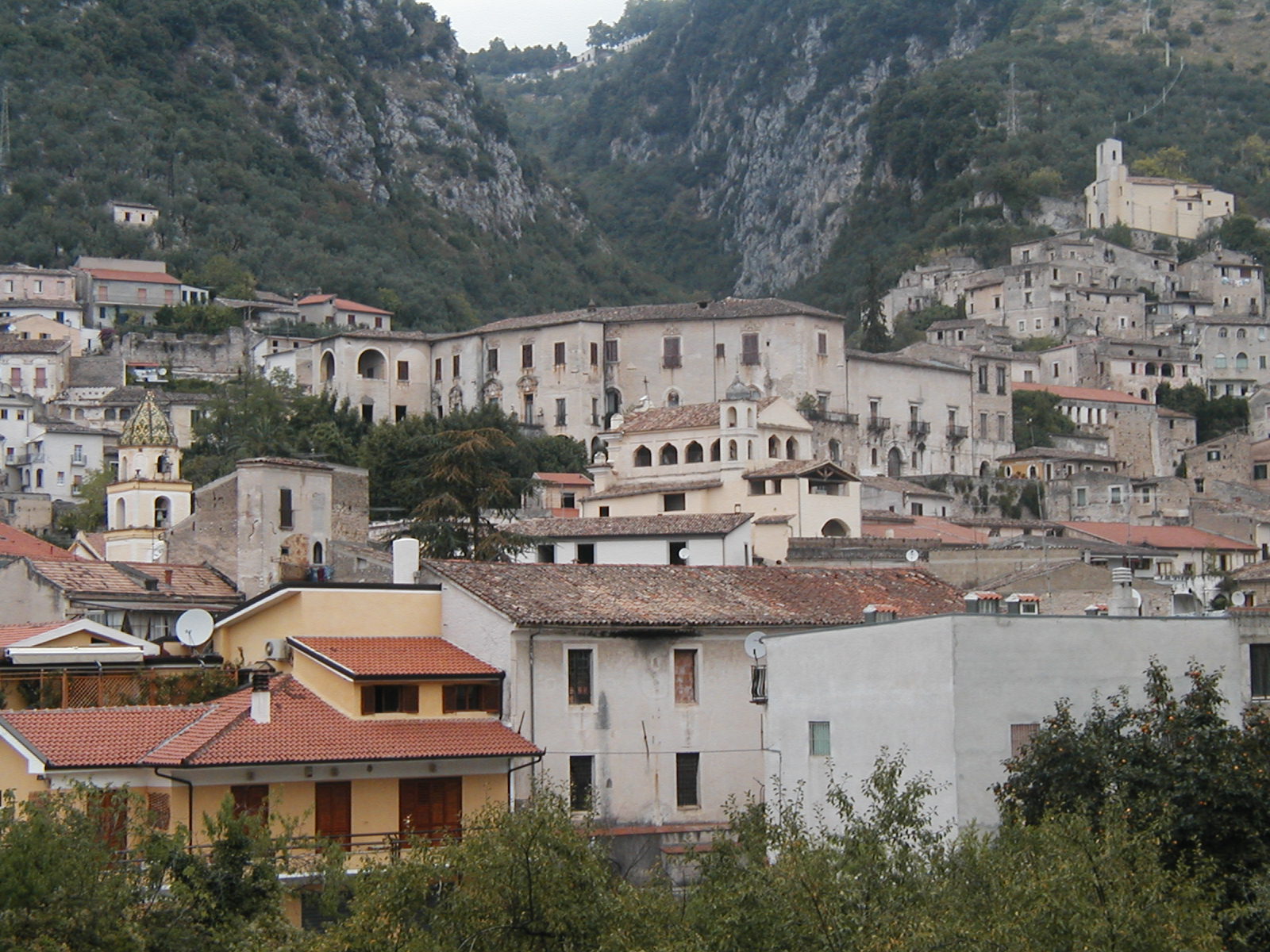
The ducal palace, highest building in this photo.

The ducal palace, largest building in this photo.

Because it wasn’t safe for him to continue his service, the authorities prevailed upon the local duke to take him under his protection. Within the Palazzo Ducale, the priest was safe, but he could not leave the palace without risk of capture and imprisonment as an enemy alien.

Almost two years later, in the fall of 1943, American and British forces began making their way north up the Italian peninsula. The Germans had established a camp west of Piedimonte Matesa, near the Volturno River, and as the Allied forces approached in October, the Germans began a slow retreat, destroying bridges, roads, and supplies in their wake.

American forces continued their approach, shelling locations the Germans had occupied, causing additional damage to the war-ravaged town. The citizens were caught in the crossfire.  The priest knew the Germans had all withdrawn from the town, and wanted to let the approaching Allied forces know.

He attached a white flag to a pole, and set out for the American line, over the protests of the local citizens. When they realized he would not be dissuaded, a couple of them joined him as he walked down the main road directly into the Allied attack, waving the white flag and calling out to them in English. Finally, the shooting stopped.

“He saved our town,” Salvatore told us with tears in his eyes. “He was a hero to us.”

The Allies set up a camp where the Germans had been, and helped restore some order to the area. They needed help communicating with the local officials and citizens, and the priest recommended his young student, Salvatore, as their translator. Each day an army jeep driver picked up Salvatore to help with translation, and he was granted permission to be out after curfew so he could give Italian language lessons to the soldiers in the evenings. His father’s house had been bombed, and the soldiers helped them begin rebuilding.

“You see,” Salvatore said, “we owe a lot to Americans.”

I took photos of the palazzo across the valley, and we started back down the road. “Now, I’d like you to come to my house. I have made some liqueur I would like you to try.”

Come back next week for Part 3!

Preparing to celebrate the New Year

While you still have the weekend to prepare, I’m allowing you enough time to enjoy New Year celebrations with some Italian flair.

First, you’ll need to dress for success. Prosperity, happiness, and virility in the coming year depend on wearing red undies. red undies Who knew?? So whether it’s Victoria’s Secret or Jockey, get some red ones–even if no one else knows you’re wearing them.

Food is a mainstay of all kinds of human celebration, and Italians have their own specialties associated with New Year’s Eve. Namely, lentils. Because they look (remotely, I’ll admit) like little coins, they are said to bring wealth in the coming year. And just for more financial success, eat those lentils with sausages that are sliced up into larger “coins”. How about a salad of dollar bills on the side? Just kidding!! Here’s a tasty recipe for your lentils and sausage. One tradition says to eat the lentils at midnight, one spoonful for eat tolling of the midnight bell. There is no midnight bell in my town, so I’ll just have to take my chances with the timing.

You’ve probably heard the expression “Out with the old, in with the new.” Traditionally in southern Italy, they’ve taken it to heart, and anything old and worn out was thrown out the window on New Year’s Eve. It has mostly died out now, but if you are walking around Naples that night, watch your head!

And while you are eating your lentils, wearing you red undies, you’ll likely be watching fireworks. Naples has one of the biggest fireworks displays, but they are popular throughout the country. Be careful, though. Illegal fireworks have been a problem (police seized more than 650,000 last year in late December) and injuries are not uncommon. Some cities have banned fireworks for various public safety reasons. You won’t have any trouble finding them in Naples, though. They’ll be welcoming 2013 with a bang, in fine Italian style.

"Fireworks in Naples", oil painting by Oswald Achenbach, 1875

“Fireworks in Naples”, oil painting by Oswald Achenbach, 1875