A modern day view of Vesuvius–what great photos!

Carl le Strange's avatarVolcanoCafé

Few cities on the planet can even start to compete with Naples in being ominously placed from a geological standpoint. The city has not only a tremendous historical background; it is also totally surrounded with active super volcanoes.

A few years ago I had the pleasure of having dinner in a villa on the slopes of Monte Vesuvius together with Italy’s car tycoon numero uno. After a tasty dinner together with nice wines we were sitting looking out at the ocean drinking a ridiculously old grappa (grappa tastes like a rotting hamster-cage smells) and I just had to ask if he never where worried about having a villa on one of the worlds more famous volcanoes. The answer was rather Italian; He turned around, raised all five fingers into the air in the general direction of Vesuvius and uttered the Italian immortal phrase “va’fan’culo”. I interpreted it as “who cares”…

View original post 317 more words

Anniversary Celebration and Amazon Gift Card Giveaway!

Naples to Ring in New Year with Financial Crisis Firework

Thanks to Italy Mag for this great photo! This week marks a year since I started blogging about the Italian south. I’ve had a surge of activity in the last three or four months, and I thank you for sharing the blog with others!

To celebrate, I’m giving away a $25 Amazon gift card! To enter, post a comment about what you like about the blog, or what you’d like to see on it. What have you learned from it? Has it helped you in some way? Motivated you to actually visit the Italian south? I’d love to know!

Earn an extra entry by posting about the giveaway on Facebook, Twitter, Google+ or wherever you network. *Be sure to post a comment with a link to your ‘share’ so I can put in your extra entry.* Entries will close at the end of the day May 4.

And thanks for making my first year of blogging so much fun.

Sandy

Book Review: Chewing Gum in Holy Water by Mario Valentini

Chewing Gum in Holy Water: A Childhood in the Heart of Italy

Mario Valentini shares engaging and nostalgic stories of his childhood in the mountain villages of Abruzzo during the lean years after World War II. At the age of four, Mario is given into the care of his uncle, a priest, while Mario’s father works in another country. His uncle can afford luxuries like shoes and education for Mario, and has the rare luxury of a car in the remote mountain villages he serves.

Mario recounts the misadventures that repeatedly land him in hot water with his “aunt”, a distant relation who serves as the priests housekeeper, and his early adventures in love and romance in his early teens. His child’s-eye-view of life in 1950s rural Italy is interesting and endearing, spiced with adventure–hunting wolves with a sling shot, discovering treasure in an abandoned castle’s well.

Valentini and his partner, Cheryl Hardacre, collaborated to write the book, presented as a first person account. The Italian words sprinkled through the text are translated in a glossary that appears at the end, along with a childhood photo of Mario with his beloved uncle.

The book was a pleasure to read, though I would like to have known more about Mario’s life after his childhood–even a brief summary. For many readers, this would be a good introduction to the rural Italy of their parents’ or grandparents’ time.

Chewing Gum in Holy Water was published by Arcade Publishing in 2006.


Little Italy in the Midwest: The Hill, St. Louis, MO

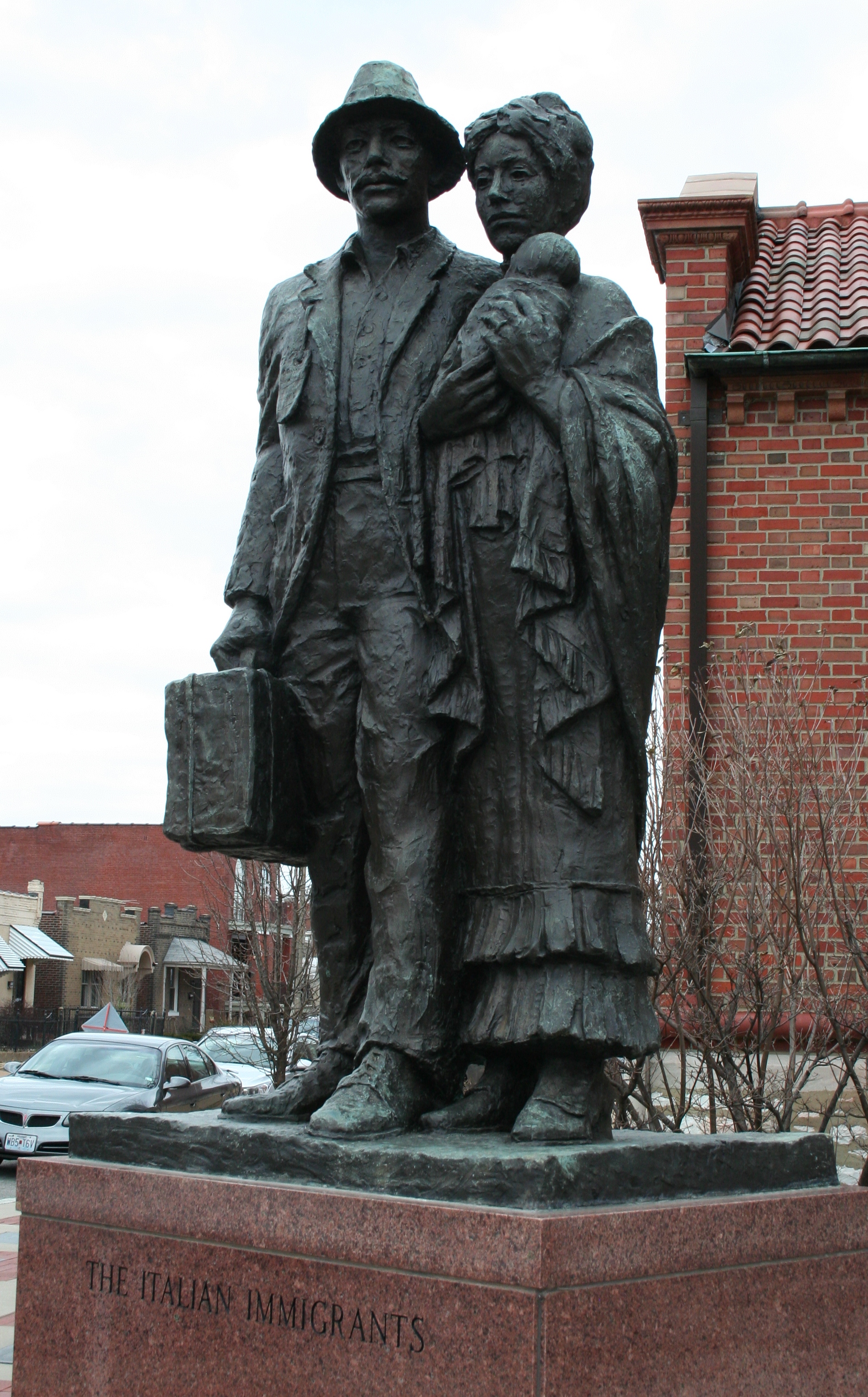
A statue honoring the Italian immigrants who settled in St. Louis.

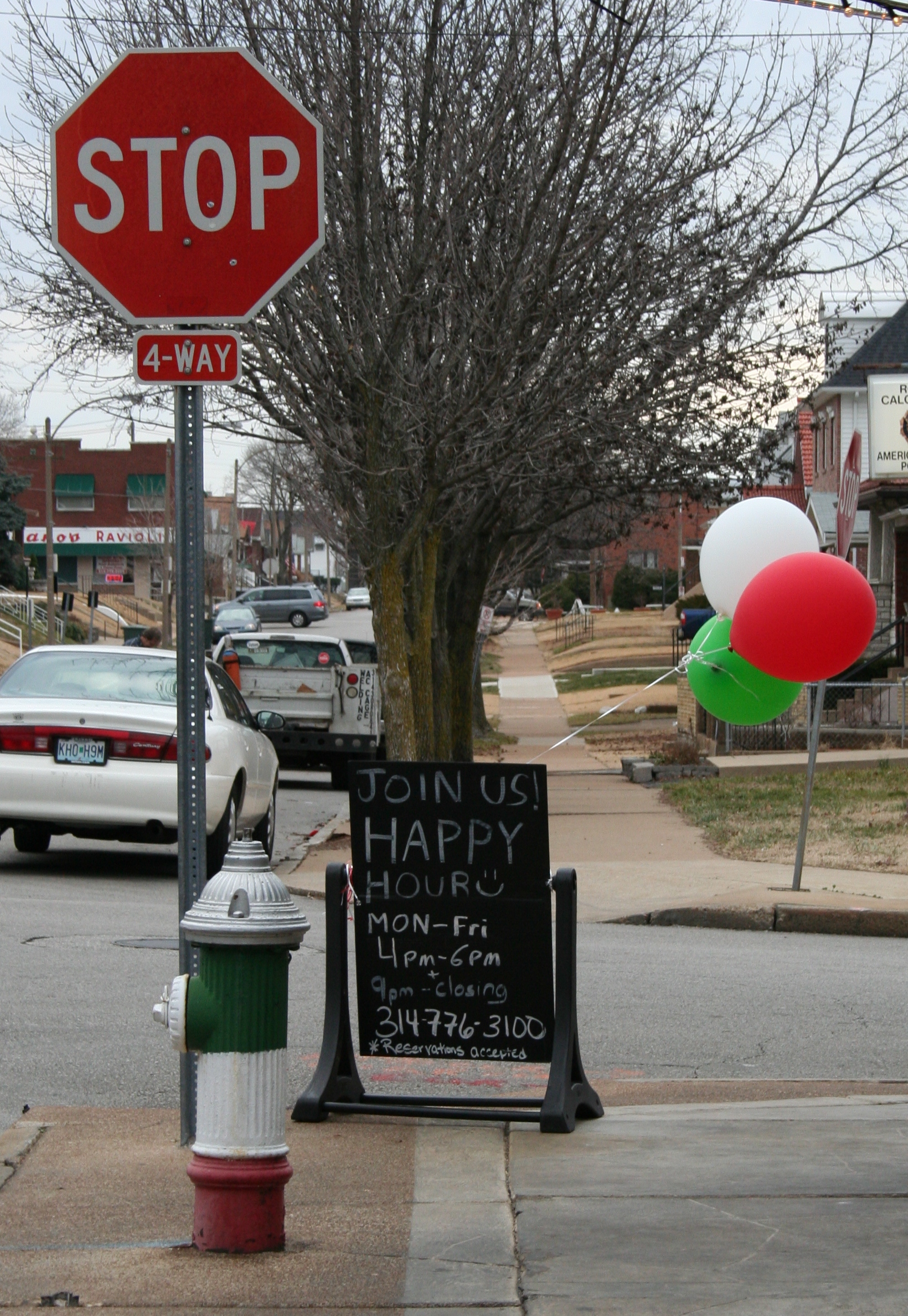
Four million Italians immigrated to America between 1880 and 1920, creating little pockets of Italian culture, neighborhoods all over the USA known as “Little Italy”. I visited one such neighborhood in January, and here are some photos from “The Hill” in St. Louis.

The Italian colors are popular, from fire hydrants to eye-catching balloons.

You can learn Italian in the neighborhood:

Real estate is sold with an Italian flair, a red-white-green sign:

If you are longing for a blast of Italian culture, food, and style in the midwest, check out The Hill.

Culinary Tourism: Taste the olive oil.

In my part of the world, wine tasting is popular, and when I lived in Texas, I participated in a chili cook-off. And chocolate tasting? I’m nibbling some right now.

But in the south of Italy, you find tours dedicated to tasting olive oils. I never gave much thought to variations in olive oil until I visited Italy in 2004. Then, it seemed quite a curiosity to me, the interest people took in their oils. Now, I’m eager to explore olive oils myself, and where better but Puglia?

According to The Olive Oil Times, about 40% of Italy’s olive oil grows on roughly 60 million trees in Puglia. You can read descriptions of different types of oil, and a great deal of olive knowledge.

How do you taste it? At Olive Oil Source, you can learn from professional olive oil taster Nancy Ash, owner of Strictly Olive Oil. You can learn the lingo and see what the pros are looking for in their oils.

For the more visual learners among us, here’s a video of Bill Sanders (called the evangelist of olive oil and wine) showing us all how to taste olive oil:

If you can’t make it to Italy, how about olive oil tasting in California? Yes, it’s available there too, so go out there and try a little EVOO! That’s Extra Virgin Olive Oil–soon you will be a pro in the tasting room.

Travels in Calabria: My top picks

History figures large in my travels, so you won’t be surprised that my top tourist picks are mostly historical–and pretty famous!

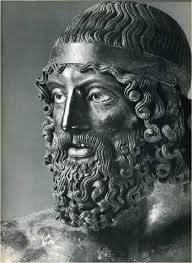
#1: The Riace Bronzes: Two 2,500 year old classical Greek statues, found by a scuba diver off the coast near Riace in 1972, and now housed in the Museo Nazionale della Magna Grecia in Reggo Calabria. The full collection on the Magna Grecia occupies two floors of the museum.

#2: The Roman bridge at Scigliano: Part of the ancient Via Popilia, the Roman road from Capua to Reggio Calabria, during the Punic Wars Hannibal is said to have crossed this bridge with his armies. Not sure if that included the elephants, which Hannibal brought up through Iberia and across the Alps. The bridge is a wonderful Roman era structure. Bed and Breakfast Calabria in Scigliano is a great place to stay nearby, and I found this photo on their website.

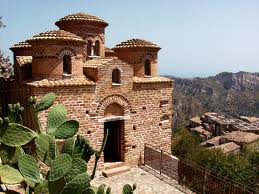
#3: The Cattolica di Stilo: Built in the 9th century, this church is considered one of the most important Byzantine structures, and is a national monument. I love to visit churches. Along with the frescoes and Christian interior, there are Arabic inscriptions in the church–the thought of it sends my mind spinning into all kinds of historical speculations!

#4: Le Castella: I couldn’t go to Italy without visiting a castle, and the history of this one is fascinating. And the Ionian beaches couldn’t be closer! I found this interior cutaway describing life in the castle–in Italian, but it gives some good additional detail.

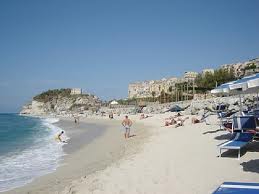
#5: Down time at some hot springs! There are several thermal bath options, and after visiting one in Tuscany a few years ago, I am eager to try one in Calabria. This or this should do–and then a couple of days at the beach in Tropea!

Book Excerpt: On the Spine of Italy

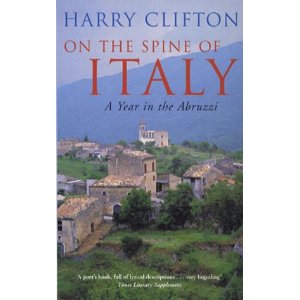
I knew my research in Italy would take me to Abruzzo, and Harry Clifton’s book “On the Spine of Italy: A Year in the Abruzzi” (Macmillan, 1999) fell into my hands at the right moment, to give me a taste of the region I was so eager to know better.

Clifton is an Irish poet. He and his wife went to a village in Abruzzo to spend a summer writing. In the end, they stayed a full year, and this book chronicles their experience of village life. I enjoyed reading it, and it stoked my interest in the region, although my visit of a few weeks would not compare to a year-long stay. I believe the book is now out of print, but it is available used from online booksellers.

Clifton describes the village at Christmas time:

“The village, in its small way, was preparing for Christmas. The shop had introduced a freezer, full of packaged vegetables, hamburgers, french fries, and fish fingers, to internationalize the local cuisine. It had a glass display case, containing cheeses and cold cuts of meat, clinically administered by the women in starched white. The co-operativa, as it stood now, would have done justice to a hospital.

“They had introduced a small stand of Christmas gifts and confectionery, a smaller and far poorer version of the extravaganzas we had witnessed in Perugia. There were bottles of Spumante and Amaro, the bitter digestivo favoured in the Abruzzo. There were sundry mechanical toys, times to autodestruct a week after they had been bought. And there was a big assortment of giftwrapped panettones, the soft fruity cakes filled with jam or chocolate that symbolize the Christmas season in Italy. We bought some for Silvio’s family, as a fence-mending gesture.

“In the bar, the men played cards obsessively. the lights were on until two in the morning, as they engaged in gigantic poker sessions. As it was Christmas, they were betting heavily and playing for real stakes. We knew villagers who had been literally ruined, dispossessed of their property and the shirts off their backs, by such sessions. The late night shouting and roaring across the road had plenty of reality behind it. But anything, especially in winter, was better than boredom, and cards were the one thing in the lives of the village men that lifted the burden of empty time off their backs.

“A week before Christmas, a truck arrived from the commune of Poggio, with a string of coloured lights. In the course of one dark afternoon, they were draped over the solitary pine in the piazza. In the evening, switched on, it became our communal Christmas tree. Meanwhile, in the church, Gegeto had constructed a huge elaborate crib out of moss and mountain rocks–a miniature landscape threaded with electric lights, through which wandered shepherds, wise kings and animals, in the direction of the Holy Family. Until Christmas night, this massive construction went unwitnessed by almost everyone in the village. After Christmas, it was almost immediately dismantled. It was a labour of love. The lights on the pine tree, which were the work of the state, were still there the following May.”

I enjoyed Clifton’s book, which doesn’t identify the specific village, but includes the highs and lows of village life in rural southern Italy.

Merry Christmas to all my readers!