I discovered a wonderful set of photos of the city of Lecce in Apulia on Kelly Britton’s blog, Slave to Taste. She has kindly given me permission to share it with my readers, and I hope you enjoy them as I did!
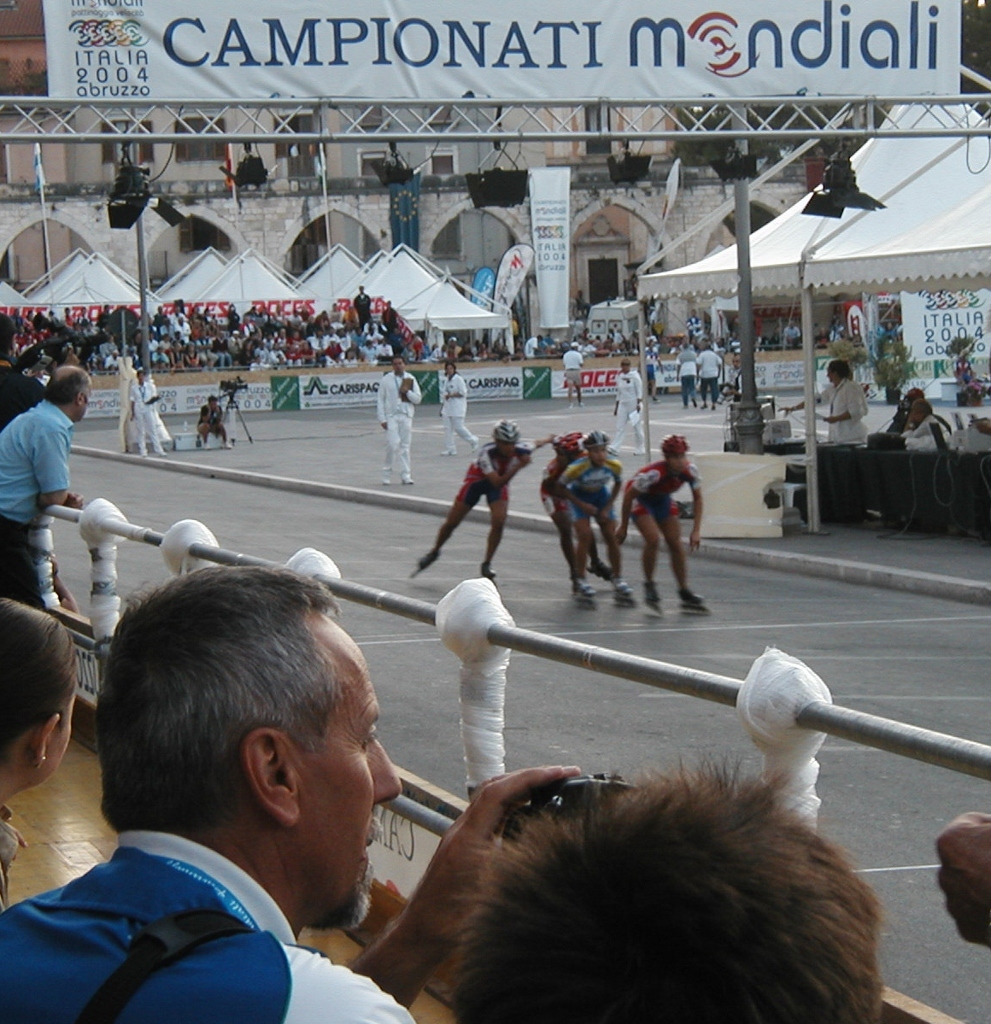
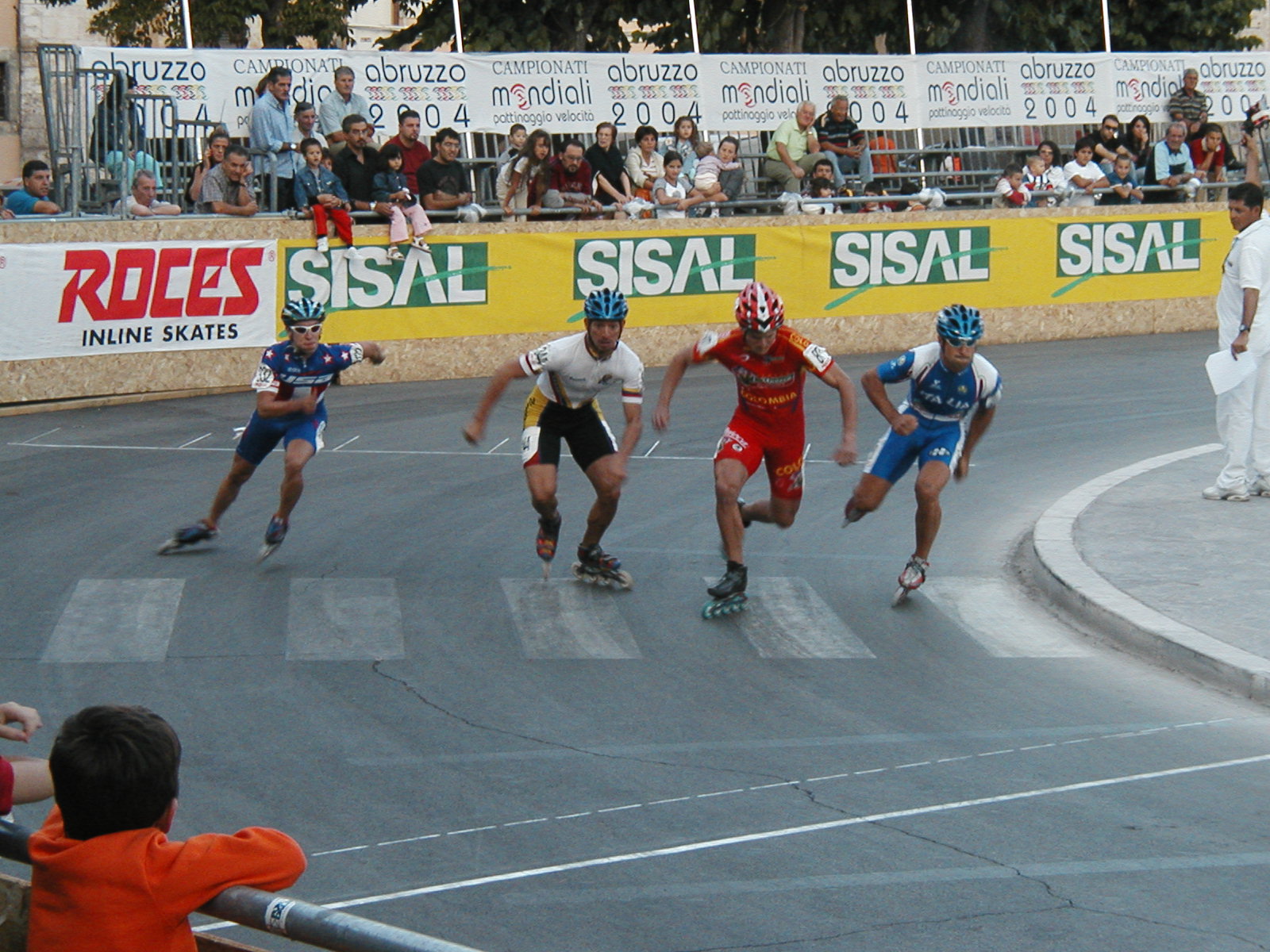
We arrived in Sulmona in the fall of 2004 to a scene of celebration. Teams of athletes from countries around the world were gathered there to compete in the summer version of speed-skating, with in-line skates, and we were there for opening night!
A banner announces “World Championships” with Sulmona’s iconic medieval aqueduct in the background.
We had no idea this event was happening when we planned our visit. Piazza Garibaldi, Sulmona’s enormous main square, was transformed into a racetrack surrounded by bleachers and vendors’ booths.
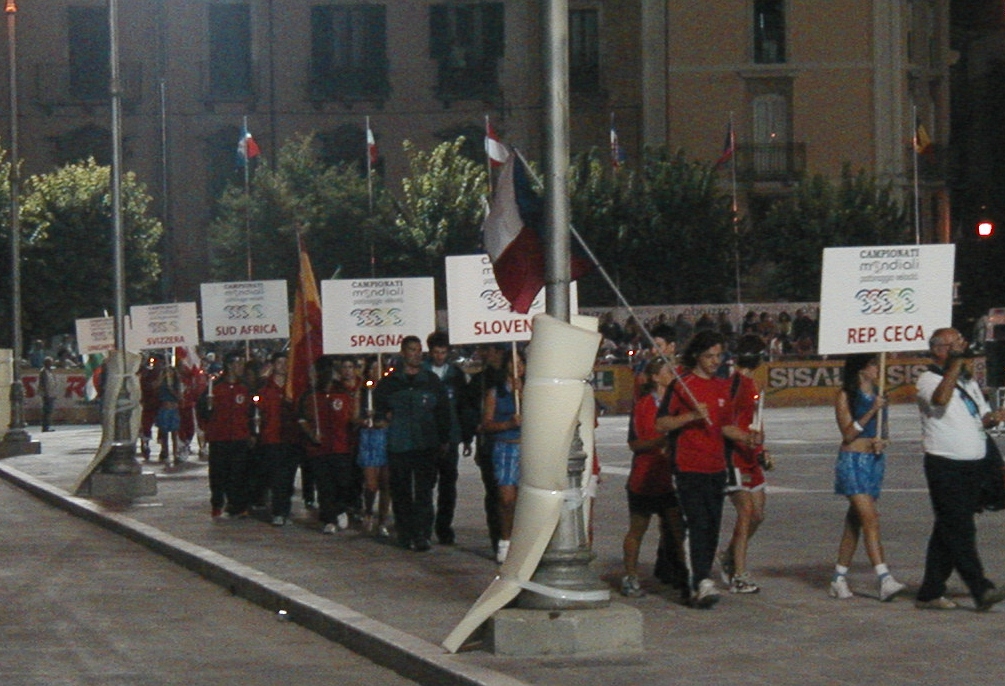
A parade of nations entering the arena.
The teams paraded along Corso Ovidio and into the arena in alphabetical order by country (a little trickier in Italian!).
Team USA passing the fountain in Piazza Garibaldi.
We found the American team and wished them well.
A young fan cheers his favorites.
Here are a few photos we snapped while watching the events.
I’m one of those travelers who likes to imagine traveling footloose, but really wants the security of reservations and an itinerary. Hubby is happy to let me make the plans without too much of his opinion, and fortunately our likes are alike enough for that. But I’m a bit overwhelmed with planning this trip–we have a lot going on the home front, soooo…
My readers, can you help me? We will be spending two weeks in Italy this August, with the first six days committed to Venice and surroundings. We will then fly to Rome or Naples, and rent a car. Any suggestions about car rental? We are hoping my brother will join us about this point, so need a car that will suit three adults with light to moderate luggage. And I’m not familiar with the European car types being offered for rent. Lancia? Fiat? Would it be easy to find diesel if we rented a Mercedes?
We will drive to Caserta to spend that night, and plan to visit the palace the next morning. Any recommendations for hotel or palace visit?
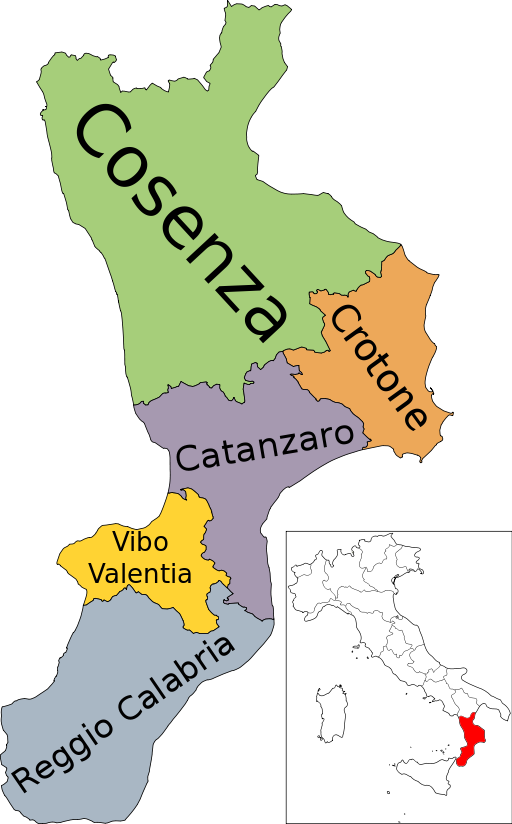
After seeing the palace (is three hours enough time to allow?) we will drive to Cosenza for a night or two. The next morning we’ll look around Cosenza and the area. Is there a good hotel with car parking? And what sightseeing do you recommend in the area? Maybe we should just go to the beach! (But more of that later.)
We’re planning to spend August 13-16 in my ancestral village, Scigliano, so will celebrate Ferragosto there–hopefully with my Italian cugini. What kind of celebration might we expect for Ferragosto?
For the next three days we will be “touring the toe”. If you had three days there, how would you spend it? I’d love to hear about your favorite beach, favorite museum, favorite castle–and not just tourist experiences. Is there a great place to hear Calabrian music? Farm visits? Hiking? I doubt we will stay in a beachfront hotel–but who knows? We’d like to have a look at both coasts of the toe.
On August 19 we’ll turn in our car and fly out of Lamezia Terme to London, so will want to spend the night of the 18th close to there. Recommendations?
I am so looking forward to your suggestions. And hope you are looking forward to coming along via the blog later in the year.
*All images on this post are from Wikimedia Commons.
After hearing about the priest, we threaded our way through the streets of Piedimonte Matese, impressed at the pace Salvatore set for us, given he was older than we were by thirty years or more. As he was unlocking the door to his house, I noticed a piece of ancient history built right into the door frame. The lower two or three feet on the left hand door frame was made of a fluted stone column, broken off at an angle. The typical Italian house construction, thick walls with stucco finish, surrounded it.
“Where did you get this?” I asked.
“My father found that column in the river many years ago, and had it in our home. When we were rebuilding the house after the war, we put it in this wall.”
I don’t recall asking what his father was doing when he found it. Fishing, maybe? I’ll bet you’ve never gone fishing and found an ancient Roman marble column! I found a silver dime once when I was digging in the garden, but that marble column has it beat. It must have been found before modern antiquities laws were enacted in Italy, because items like that are no longer considered ‘yours for the taking’ even if found on your own property.
We entered a corridor and climbed to the second floor balcony to enter his home. (This is called the first floor in Italy, being the first floor above the ground floor.) It was cool and spacious, with dark furniture and nicely framed paintings. Light filtered in from a courtyard filled with plants.
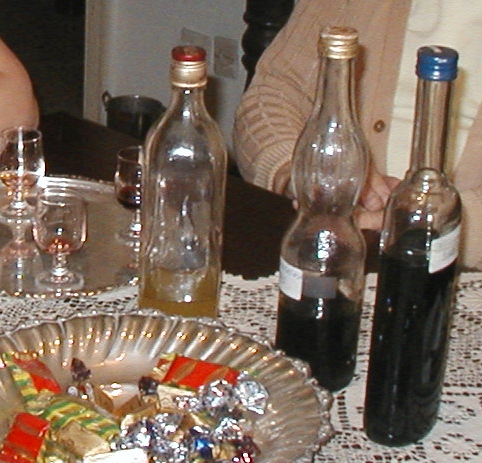
Salvatore introduced us to his wife, who spoke no English. She greeted us kindly, with a knowing resignation that led us to believe we were not the first strangers her husband had brought home for a visit. After a short time she brought a silver tray with small glasses, and three bottles of liqueur with hand-written labels taped to them. After that, she left us to visit, and we didn’t see her again except to say goodbye.
Salvatore told us about his sons. One had followed him into the teaching profession, and the other was handicapped in some way, and required special care.
“Please try the drinks I made,” he urged us, and poured dark liquid from a tall bottle. “It is made from hazelnuts,” he said of the first one. A small taste was enough of that. Next came cherry liqueur, burning a deep red path down our throats. Salvatore set that aside, clearly eager to get to his last offering.
“I make this from my own recipe. It’s like limoncello,” he said.
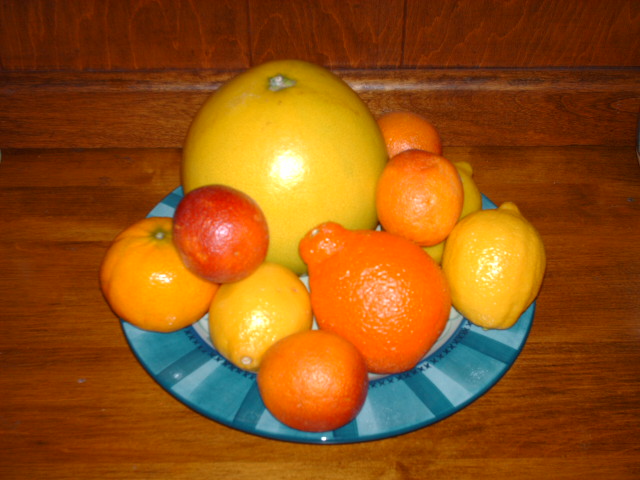
Mixed citrus–from Wikimedia Commons
We knew limoncello, and enjoyed it, but his drink was more orange colored than any we had tried. And more delicious! He smiled with satisfaction at our response. “It has not only lemons. I make it with oranges, lemons, and tangerines. My own recipe.” He beamed as we sipped the golden nectar. “I grow the fruit right here,” he said, gesturing toward the verdant courtyard.
“Do you share your recipe?”
“Of course!”
As he went to get paper and pen, I thought to myself, of course he shares his recipe. He is a man who shares his whole life, openhanded and openhearted with friends and strangers alike. He scratched out the recipe, with careful instructions, and we visited some more, went out on the balcony to see the garden, looked at paintings on his walls and photos of his sons.
As the afternoon wore away, we reluctantly excused ourselves to go back to the hotel. Our heads swirled with the stories, but more than that—Salvatore’s life itself was vibrant with generosity, joy, patience.
More than eight years later we still think of him and marvel. Who would have thought that the strongest image of life we encountered in Italy was an elderly, nearly toothless man who earned his living teaching a ‘dead’ language? Salvatore—that name means ‘savior’ and Salvatore’s spirit of vibrant life seems just what the world needs. Someone willing to do good in the face of ridicule, to foster young lives (human as well as plants), to remember the past and look to the future, and to share generously with strangers.
Maybe you are as eager to have Salvatore’s limoncello recipe as I was. I’m sharing it here, just as he wrote it for us.
1. You must take two ripe lemons, two oranges, and two tangerines (six in all);
2. Peel them completely;
3. Clean all the peels from the so called “pane”, that is the “bread” which is the white material between the peel and the fruit; with your left hand you maintain still the peel by means of a table fork while with your right hand you liberate the peel from the white part, that is the “bread”, till the peel becomes rather transparent;
4. Put all these peels in one liter of liquor-alcohol and leave in a well closed glass container for about one month or more, if you prefer. The fruit must not be placed in the container: you eat apart [eat that separately];
5. Dissolve 1 kilo of sugar in one liter of hot water and mix with the alcohol after having taken away the peels. At last you fill and keep in a well closed bottle. The liquor is good to drink after two or three months. [Could he have meant “for two or three months”?]
Last week’s post introduced Salvatore and our serendipitous meeting.
So how did this 80-something retired Latin teacher from a remote town east of Naples learn English? “I learned from an American priest,” he told us. “The priest who saved Piedimonte Matese!”
We walked along a street that climbed one side of a valley. As we walked, he told us about the priest. As a young man in America, he converted to Roman Catholicism, and was rejected by his Protestant family because of it. They wanted nothing to do with him. But he felt called to the priesthood, and eventually studied in Rome. He was assigned to serve in Piedimonte Matese in the 1930s. His family in America cut him off completely, but he loved his life and work in Italy as a priest, and he taught English to those who wanted to learn, including Salvatore, who was a young teenager at the time.
Then the war came. Mussolini joined the Axis powers in 1937, and as war gradually engulfed Europe, life in Italy became more and more difficult. The German presence in Italy grew to an oppressive level, and life was further disrupted by food shortages and military conscription. With the potential of American involvement in the war, the church and community authorities urged the priest to return to America, but he refused. Italy was his home, and he had no family waiting for him.
Then came Pearl Harbor, and the United States entered the war.
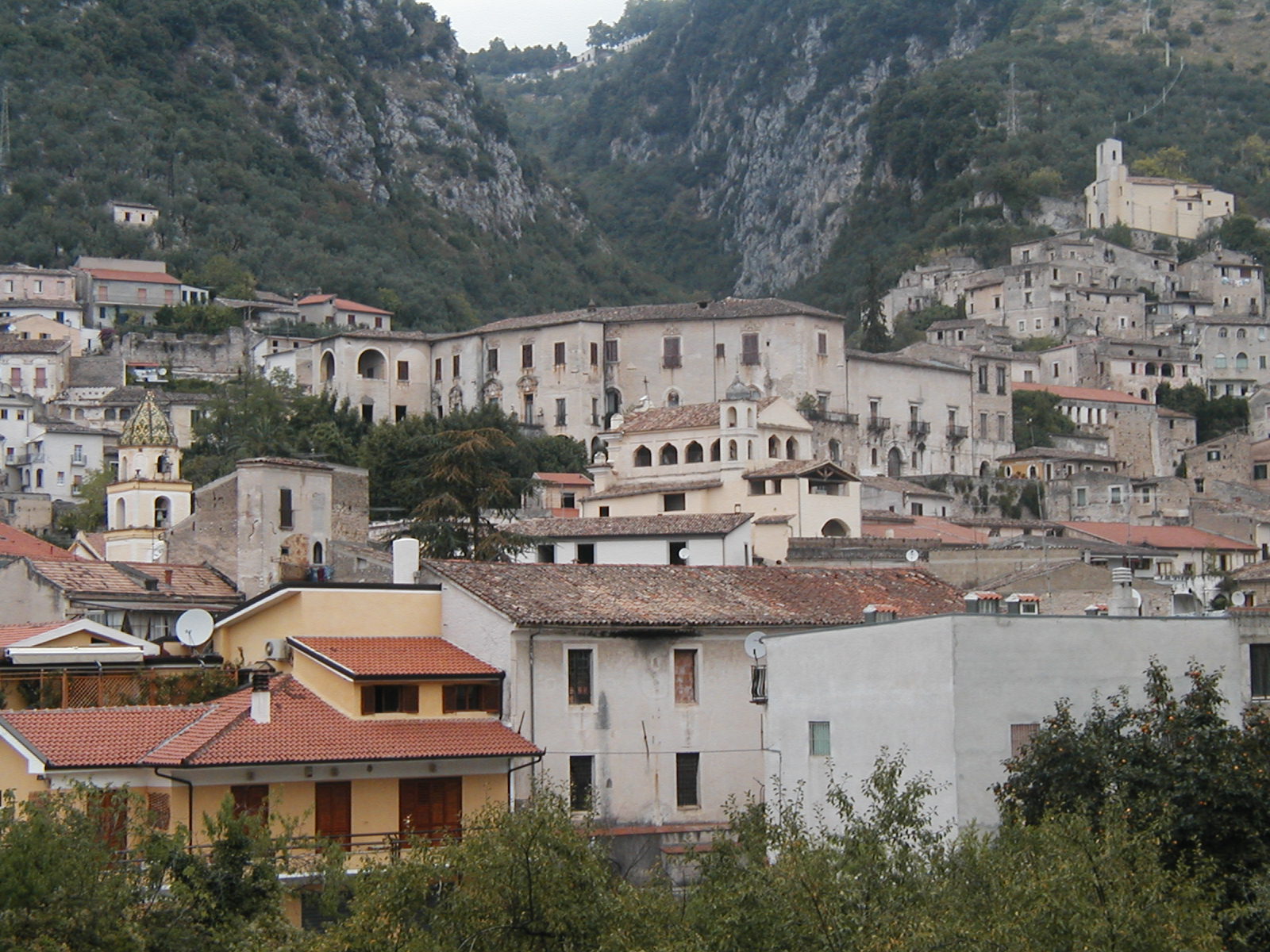
Salvatore paused on the sidewalk and pointed across the valley to another section of the town. “Do you see the palazzo over there, the biggest building? That is where the priest stayed during the war.”
The ducal palace, largest building in this photo.
Because it wasn’t safe for him to continue his service, the authorities prevailed upon the local duke to take him under his protection. Within the Palazzo Ducale, the priest was safe, but he could not leave the palace without risk of capture and imprisonment as an enemy alien.
Almost two years later, in the fall of 1943, American and British forces began making their way north up the Italian peninsula. The Germans had established a camp west of Piedimonte Matesa, near the Volturno River, and as the Allied forces approached in October, the Germans began a slow retreat, destroying bridges, roads, and supplies in their wake.
American forces continued their approach, shelling locations the Germans had occupied, causing additional damage to the war-ravaged town. The citizens were caught in the crossfire. The priest knew the Germans had all withdrawn from the town, and wanted to let the approaching Allied forces know.
He attached a white flag to a pole, and set out for the American line, over the protests of the local citizens. When they realized he would not be dissuaded, a couple of them joined him as he walked down the main road directly into the Allied attack, waving the white flag and calling out to them in English. Finally, the shooting stopped.
“He saved our town,” Salvatore told us with tears in his eyes. “He was a hero to us.”
The Allies set up a camp where the Germans had been, and helped restore some order to the area. They needed help communicating with the local officials and citizens, and the priest recommended his young student, Salvatore, as their translator. Each day an army jeep driver picked up Salvatore to help with translation, and he was granted permission to be out after curfew so he could give Italian language lessons to the soldiers in the evenings. His father’s house had been bombed, and the soldiers helped them begin rebuilding.
“You see,” Salvatore said, “we owe a lot to Americans.”
I took photos of the palazzo across the valley, and we started back down the road. “Now, I’d like you to come to my house. I have made some liqueur I would like you to try.”
I’d never expected to visit Piedimonte Matese, never even heard of it until a couple of days before going there in October of 2004 for a conference related to some research I was doing. On a Saturday afternoon, Vern and I caught the train in Naples, from a platform so far off to one side of the main lines, we thought it might be the railway repair yard. There we boarded a train that must have been retired from main line service years before. In a third class car with worn upholstery and faded paint, we headed east toward the foot of the mountains, Piedimonte.
Piedimonte Matese
Late in the evening, after the conference, we inquired about the return train, and learned there was no Sunday rail service. We had a day off, regardless of our plans. So on Sunday morning we wandered on foot into the streets and piazzas of Piedimonte Matese to explore. Leaving the main square, we rounded a corner and literally bumped into an elderly man.
“Excuse me!” Vern said, and the man’s eyes lit up.
“You speak English!?” A smile revealed three or four teeth. He stood a little over five feet tall, with his round belly wrapped in a cardigan, and a thinning frizz of gray hair crowned his head. He exuded the aura of a gnome or a hobbit. And he spoke English quite well.
We were surprised to meet an English speaker in this remote town, too, and after introductions he invited us to come to his home for a visit. Vern and I exchanged a glance and a shrug. Why not? We had nothing else on our schedule, and his enthusiasm charmed us.
“But first,” he said, “I have an errand. Will you walk along with me?” We agreed—after all, we had planned to walk around the city anyway, and with Salvatore, any questions we had could be answered. He showed us a two-liter soda bottle, now filled with water, and began to explain his errand, but changed his mind. “You’ll see. It’s just a short walk.”
Soon we came to a small park, a triangle of green in the dusty city. At one end a couple of small shrubs struggled through the turf. Salvatore opened the soda bottle, knelt, and poured water at the base of the shrubs. “I planted this,” he said, examining the main stalk of the plant, broken off a few inches from the ground. Then he looked across the park. From a bench about 30 yards away, several teenagers watched him, smirking as they talked among themselves. Salvatore sighed. “They laugh at me for taking care of this plant, for wanting something nice here in the park. They broke the stem. But look,” he said, pointing to the base of broken plant. New growth sprouted near the old stem. “It’s still growing.” He smiled, dismissing the attempted destruction, determined to nurture life, to bring the water and a hope to the broken plants.
Salvatore, surrounded by plants on his balcony.
In his eighties when we met, Salvatore had retired some years earlier from teaching Latin in the local school. He had lived in Piedimonte Matese his whole life. But his teaching years were not over. “I have one more small errand,” he told us, “if you don’t mind walking with me. It’s not far.” We walked through a residential area, and as we approached an apartment building he pulled a rolled up newspaper from under his sweater and opened it to reveal rose cuttings from his garden. “My students live here,” he said, “and their garden has some rose varieties I don’t have, so I am planting some of mine for them, and taking some of theirs for my garden at home.”
He rang a buzzer at the gated entry, and exchanged a few words on the intercom, too quick for my ears, with a woman. In just a moment, she appeared on a second floor balcony, a lovely stand-in for Sophia Loren, waving down to him and telling him something. “My students are on their way home,” he told us.
“Your students?”
“Yes, her daughter and another girl. I tutor them in Latin every week. I want them to meet you. We’ll wait a few minutes if you don’t mind.” He quickly dealt with his horticultural errand, and then stood with us in the fall sunshine, listening intently. “Here they come!” he said, and we heard the sound of a scooter approaching.
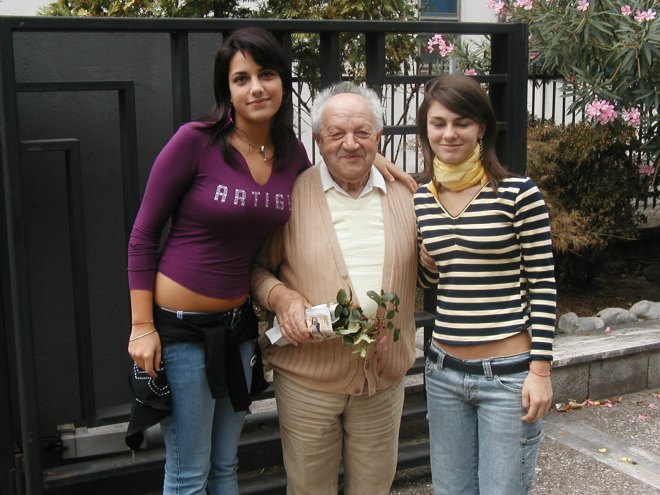
Two teenage girls zoomed into the driveway on a Vespa, giggling with delight as they recognized Salvatore. They met us with shy good manners, but with Salvatore, three generations older than they were, they chattered with excitement. No, these were not the geeks of their school. They were two blossoming Italian beauties in tight jeans and fashion jewelry.
Perhaps nothing could have intrigued us more about Salvatore than the affection these students had for him. We took photos and promised to mail them back when we got home. Eager to know more, as we left the girls behind, we asked him how he had learned English.
“I learned from an American, a priest,” he said. “I’ll tell you about him. Do you mind walking a little farther with me?”
While you still have the weekend to prepare, I’m allowing you enough time to enjoy New Year celebrations with some Italian flair.
First, you’ll need to dress for success. Prosperity, happiness, and virility in the coming year depend on wearing red undies. Who knew?? So whether it’s Victoria’s Secret or Jockey, get some red ones–even if no one else knows you’re wearing them.
Food is a mainstay of all kinds of human celebration, and Italians have their own specialties associated with New Year’s Eve. Namely, lentils. Because they look (remotely, I’ll admit) like little coins, they are said to bring wealth in the coming year. And just for more financial success, eat those lentils with sausages that are sliced up into larger “coins”. How about a salad of dollar bills on the side? Just kidding!! Here’s a tasty recipe for your lentils and sausage. One tradition says to eat the lentils at midnight, one spoonful for eat tolling of the midnight bell. There is no midnight bell in my town, so I’ll just have to take my chances with the timing.
You’ve probably heard the expression “Out with the old, in with the new.” Traditionally in southern Italy, they’ve taken it to heart, and anything old and worn out was thrown out the window on New Year’s Eve. It has mostly died out now, but if you are walking around Naples that night, watch your head!
And while you are eating your lentils, wearing you red undies, you’ll likely be watching fireworks. Naples has one of the biggest fireworks displays, but they are popular throughout the country. Be careful, though. Illegal fireworks have been a problem (police seized more than 650,000 last year in late December) and injuries are not uncommon. Some cities have banned fireworks for various public safety reasons. You won’t have any trouble finding them in Naples, though. They’ll be welcoming 2013 with a bang, in fine Italian style.
“Fireworks in Naples”, oil painting by Oswald Achenbach, 1875
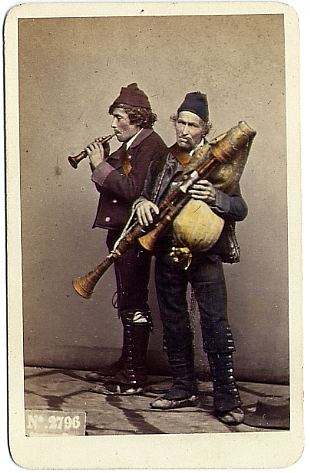
Who knew Italy had it’s own version of the bagpipes, and a Christmas tradition surrounding them? I’m referring you today to another article in the British magazine “Italy” online, which explains the history of the zampognari, shepherds who came down from the mountains to spend Christmas with their families, and stopped at shrines and nativity scenes to play their carols.
The instrument itself is strange looking, with the air bag sometimes shaped alarmingly like the lamb or sheep it was probably made from. And like Scottish bagpipe music, a little goes a long way for most people.
Are you ready for a visit from the zampognari? Play the video:
I’m delighted to welcome Tinney Heath to the blog today. Tinney is the author of A Thing Done, a novel set in 13th century Florence, and a fellow blogger at http://www.historicalfictionresearch.blogspot.com. Today, Tinney takes us to Sicily.
“We might have been in the Nuovo Cinema Paradiso, but instead of flickering images projected in black and white, we watched knights in shining armor stride across the stage, less than 3 feet tall, their colorful plumes bouncing and their shields clanking. Backstage a tenor sang out ‘Allarme, allarme, allarme,’ gruff voices challenged menacing Saracen warriors, and the puparo’s [puppeteer’s] wooden sandal stomped out a battle rhythm, as one by one the pupi [puppets] crossed swords with the infidel, lopping off heads and splitting torsos, or took a swipe at a passing dragon to rescue a damsel in distress.”
Charlemagne’s knights
That’s Mary Taylor Simeti, longtime resident of Sicily and the author of On Persephone’s Island and Travels with a Medieval Queen, describing a traditional puppet show in Palermo in 1964.
The show that night was one of 271 installments of the Paladini di Francia, a serialized story loosely based on the 11th century French epic poem “Chanson de Roland.” It tells of the adventures of Charlemagne and his knights as they battle against Saracens, sorcerers, dragons, devils, monsters, and occasionally each other. The Charlemagne tales are the mainstay of this art form, though other traditional stories can also be seen, including shows based on Shakespeare, Homer, and the Bible.
The Franks, ready for action.
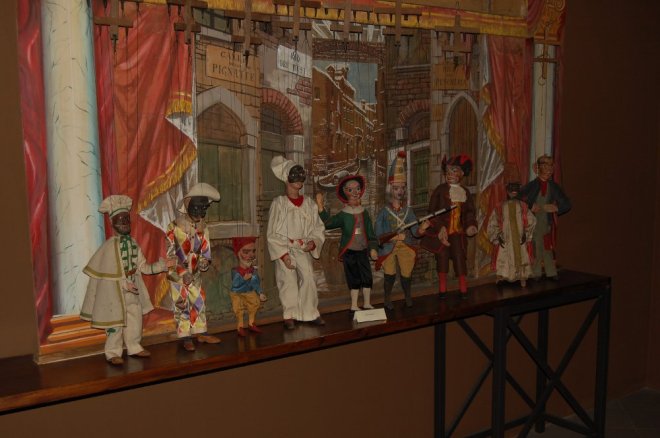
The handcarved puppets, of dense chestnut or cypress wood, have expressive painted faces and realistic glass eyes. Each puppet character has its unique clothing, armor, coat of arms, and a distinctive style of movement, making them easy to identify.
Shows are played against elaborately painted backdrops, and to the accompaniment of music, often from a barrel organ or a player piano. Dialogue is spoken by the puppeteers and usually improvised; certainly there were moments while watching a show in Palermo that I wished I could understand Sicilian dialect, because judging from the reaction of the locals in the audience, I had managed to miss something very funny.
Commedia d’arte, with puppets
Simeti observes that each show includes two things. One is a council, to show characters talking together and let the audience get to know each one and the values he or she personifies. Once we know who the good guys and the bad guys are, it’s on to the second element: the battle scenes, which occupy most of the show. Battles are vivid, colorful, and violent, and characters are slain, often spectacularly. Puppets doomed to this fate are constructed so as to lose limbs or a head in battle, or even to split completely in two.
Depending on which Sicilian tradition they come from, puppets can be around 3 feet high (Palermo) or closer to 5 feet (Catania). Palermo’s smaller puppets have articulated knee joints, which the Catanian marionettes don’t, and they are capable of sheathing and unsheathing a sword, thanks to an ingenious and intricate system of strings, rods, and wires. It can take years to learn to manipulate a marionette to its full potential.
A peek backstage.
Although Sicily’s tradition of marionette theater took on its present form in the 19th century, Sicilian puppetry actually goes much farther back. The chivalric legends may have been acted out by puppets as early as the 16th century, and in fact Simeti tells us that Sicilian puppeteers performed in Athens in Socrates’s day. Sicilian puppets are said to have fascinated Goethe, Anatole France, George Bernard Shaw, and Mario Puzo, and the great Italian semiotician and novelist Umberto Eco was appointed to serve on the board of Palermo’s Museo Internazionale delle Marionette (where all the photos in this post were taken). This traditional art form has a venerable past, but the question now seems to be, does it have a future?
It’s been pronounced dead before. First the cinema, then television, were said to herald its demise, and indeed, many theaters have closed over the years. Families boasting multiple generations of proud puppeteers have had to go into other lines of work. It is probably the tourist trade that keeps the remaining theaters in business. But in 2001, UNESCO declared Sicilian puppetry part of the “Oral and Intangible Heritage of Humanity,” and has set in motion training programs for puppeteers, festivals, and awards, in an effort to keep this rich tradition alive.
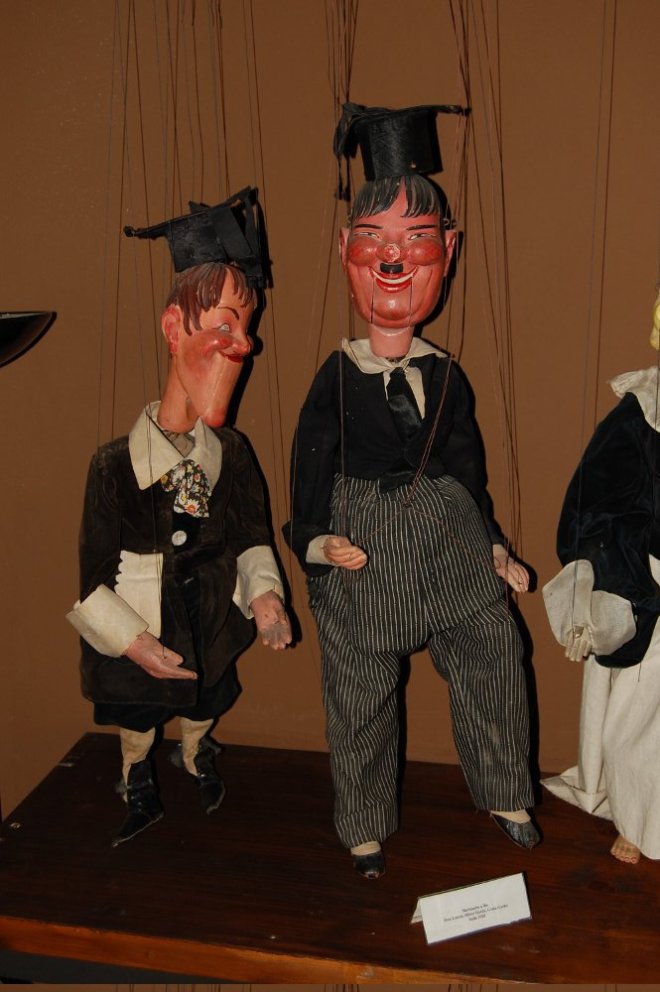
Laurel and Hardy in Palermo.
When my husband and I visited Palermo, our rented apartment was part of the magnificent palazzo that had been the final home of the great Sicilian novelist Giuseppe di Lampedusa, author of Il Gattopardo (The Leopard). The palazzo is now owned by the author’s adopted son, Gioacchino Tomasi, Duke of Palma and a well-known musicologist and theater director, and Tomasi’s wife, Duchess Nicoletta Polo, a renowned expert on Sicilian cuisine who teaches cooking to tourists and whose recipes appear in cookbooks and cooking magazines.
The Duchess told us that when her husband was in New York as a cultural attachė, they decided to import both puppets and puppeteers and produce an authentic Sicilian puppet show for a small New York audience made up mostly of diplomatic personnel from many different countries. Children were, of course, especially welcome. A Chinese diplomat who was unable to stay for the performance dropped off his small daughter, a tiny porcelain doll of a child, and anxiously asked Nicoletta to keep a close eye on the little girl in case she was frightened by the clamor of the swordfights. The child settled comfortably on the Duchess’s lap at first, but once the action began, within seconds the porcelain doll was bouncing up and down excitedly, screaming, “Kill him! Kill him!”
We saw another puppet-child interaction in Palermo that charmed us. After the show, members of the small audience – only seven or eight of us – were standing backstage watching while a puppeteer demonstrated his marionette for us. A little boy, maybe four or five, was utterly fascinated, and Puppet Orlando was just about his height. The puppeteer made Orlando draw his sword and wave it about wildly while the child giggled, and then suddenly Orlando dropped his martial posturing, lurched up to the boy, and gave him a big hug, to the delight of everyone.
You can find many videos of Sicilian puppet shows on YouTube. Some are quite slick and professional, with educational commentary. To give you a taste, though, I’ve chosen this one, taken from the audience, because it captures the feeling of being at one of these shows, and makes it clear how much the audience is enjoying it.
Tinney Heath’s historical interests can best be described as
Dantecentric: if Dante lived it, wrote about it, or consigned it to the
Inferno, it’s fair game. When not writing about Dante’s Florence, she
spends a lot of time playing medieval and early Renaissance music with
her husband on a variety of early instruments. She loves to travel to
Italy for research (not to mention art, music, and pasta). Her
background is in journalism. To learn more about her work, see her
website: www.tinneyheath.com
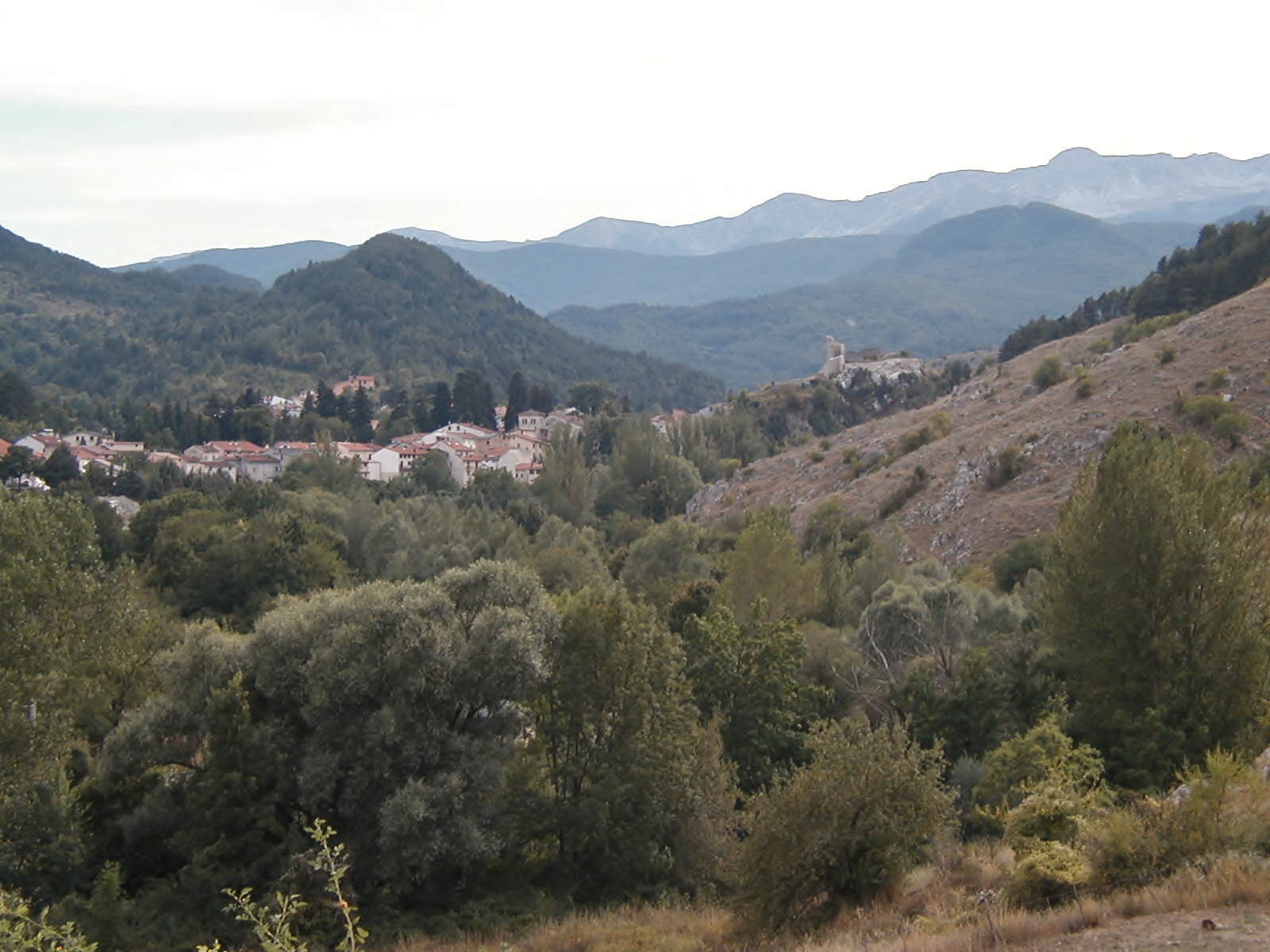
Italy has its share of tourist attractions, but don’t be fooled. Out in the countryside, in villages and hamlets, many unsung gems await discovery. Scontrone offered us such a discovery.
During one week of a two-month stay in Italy, my husband and I connected with my brother and his daughter in Abruzzo.
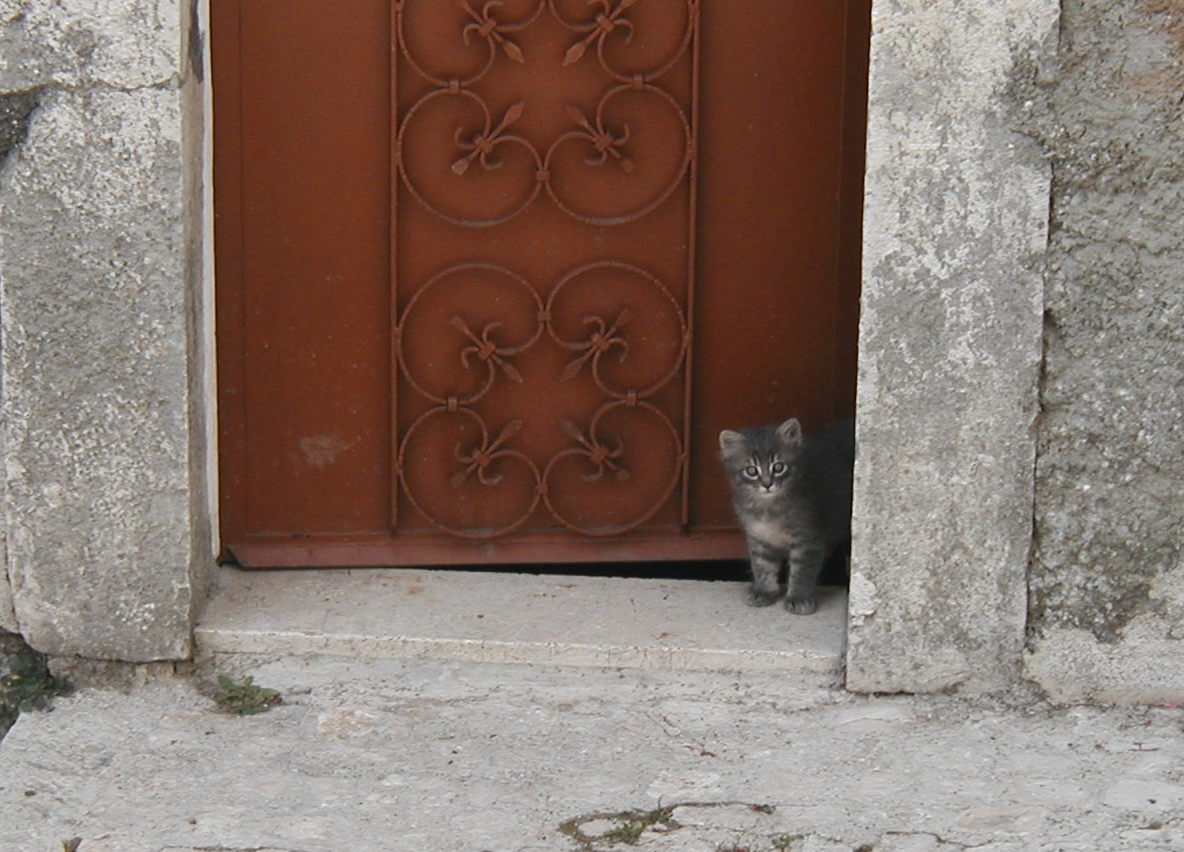
A trusting place–keys in the door!
And on one brilliant August day, we drove south from Sulmona in a loop that took us through Castel di Sangro, Scontrone, Barrea and a bit of the National Park of Abruzzo, then through Scanno and back to Sulmona.
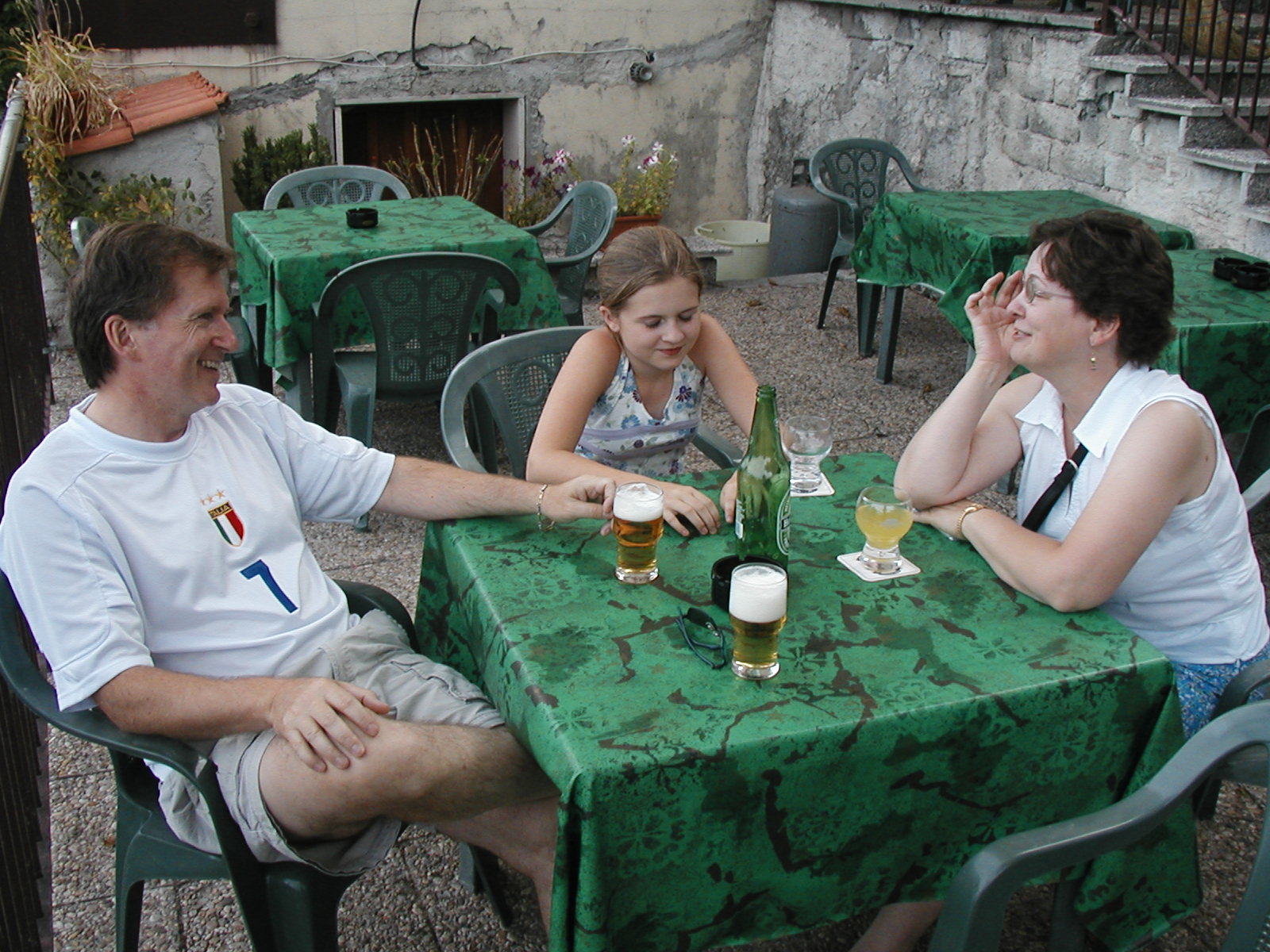
Another reason to stop: to have a cool one.
We stopped at Scontrone to have a look around, attracted mainly because of its connection with Pope Celestine V, who lived there briefly in his early twenties, seeking a place of solitude, and found it in a cave. We did not find the cave, but wandered around the quiet (nearly deserted) village, taking photos, which I share with you today.
We admired the “public art”.
And along with these, I encourage you, when you visit Italy, to leave the line to get into the museum, the stiff neck from staring at grand ceilings, leave all that behind at least for a while, and get off the beaten path, practice your “Buon giorno” in a village piazza or bar, and enjoy what you find there.







 “Yes, her daughter and another girl. I tutor them in Latin every week. I want them to meet you. We’ll wait a few minutes if you don’t mind.” He quickly dealt with his horticultural errand, and then stood with us in the fall sunshine, listening intently. “Here they come!” he said, and we heard the sound of a scooter approaching.
 Who knew?? So whether it’s Victoria’s Secret or Jockey, get some red ones–even if no one else knows you’re wearing them.
 I’m delighted to welcome Tinney Heath to the blog today. Tinney is the author of A Thing Done, a novel set in 13th century Florence, and a fellow blogger at




 The Italian South