Bocce: Italy’s own ball game

Has bocce ball ever been an Olympic sport? Maybe it should be! It started with the ancient Greeks, and came to southern Italy with them, where it has stuck fast. The French adopted it as boules–and could bocce be the distant ancestor of the bowling alley across town?

The Italian tradition of bocce is kept alive in St. Louis. Milo’s Bocce Garden is a tavern in The Hill, the Little Italy of St. Louis, which bills itself as the “sports center of The Hill” in neon lights. Milo’s installed bocce courts in the 1980s and maintains an active tournament schedule. But bocce was alive and well on the Hill long before that, as the following video reveals.

The ancient sacred olive, in modern times

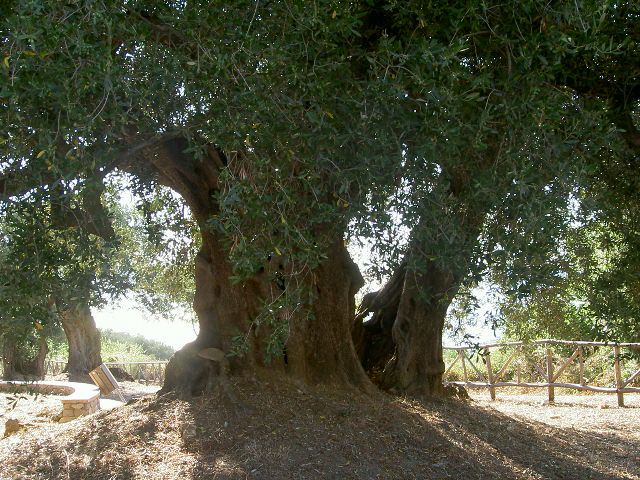
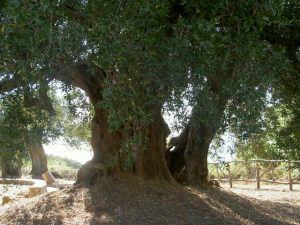
An olive tree in the Cilento region.

This tree was planted before the nation of Italy was born, when the Italian south was a kingdom apart. It could well have been producing olives when Naples was at the height of glory, one of the leading cities on the continent, and a must-see stop on the Grand Tour of the eighteenth century.

The olive is mentioned in ancient literature, including thirty times in the Bible. Its oil fueled the original Olympic flame. Kings were anointed with olive oil, and it is still used in religious ceremonies.
Theophrastus, a student of both Plato and Aristotle, wrote about olive husbandry. “The olive tree grows, one may say, in more ways than any other plant; it grows from a piece of the trunk or of the stock, from the root, from a twig, and from a stake…” He warns that olives grown from seed produce a wild olive, of poor quality. He also quotes Androtion in saying that olives require heavy pruning for the best production, and also need “the most pungent manure and the heaviest watering.” He describes the damage they suffer from hot winds or freezing temperatures. Though he wrote this in Greece in the third century B.C., these classical methods were carried into the Magna Graecia and applied to olive culture there.
I find fascinating the common knowledge of the natural world in earlier times. A statement of Theophrastus illustrates this, in regards to the summer solstice. How do I know when the solstice is? I check a calender, reference book, or (more likely) find it online. But two thousand years ago, people checked their olive trees for that information: “There is a peculiarity special to the olive, lime, elm, and abele: their leaves appear to invert the upper surface after the summer solstice, and by this men know that the solstice is past.”
In Roman times, a garden was not considered complete without some olive trees, and olive oil served as liquid money. It is still highly prized, with Italy consuming about 30% of the world’s olive oil, most of which is grown in the Mediterranean region.
Next time you break open a rustic loaf of bread, pour a little olive oil in a dish, add some balsamic vinegar, and think about the ancient origins of your small feast as you enjoy it.

Katoitaliotika, Italy’s Greek dialect

Greeks began to settle the Italian south almost 3,000 years ago, and were the prominant culture there for almost 2,000 years. I tend to think of the culture of the “Magna Graecia” as something buried deep in history, like the Riace bronzes I posted about last week.

But now I find out about the Griko–a surviving culture speaking a Greek dialect, which Greek speakers call Katoitaliotika, or Southern Italian!

This very interesting video (thanks to Agora Productions) provides a lot of history and many great photos reflecting the Greek history of the Italian south.

A new (old) painting on my wall


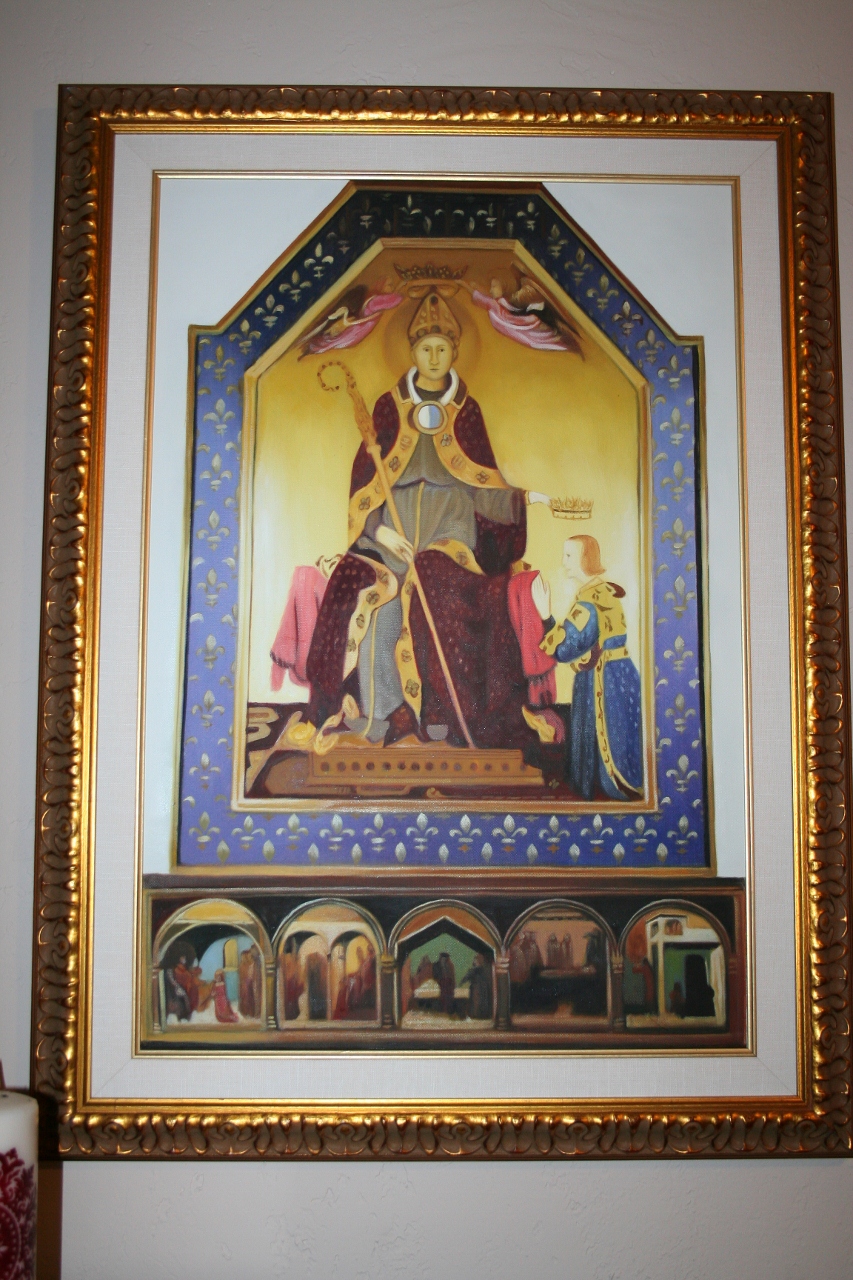
I have to thank my daughter and son-in-law for an amazing gift they presented to me not long ago. They listened (ever-so-patiently) as I waxed lyrical about Simone Martini’s painting, St. Louis of Toulouse crowning Robert of Anjou, which hangs in the Museo di Capodimonte at Naples. They heard (again, I’m afraid) the story of those two brothers, my favorites of the Angevins of Naples, about their long imprisonment from youth to young adulthood, how Louis was called to the Franciscan order and defied his father to answer that call, how his charismatic brother Robert, a third son, became heir to the throne of Naples because of Louis’s decision, and how Martini’s painting contains many symbols of the brothers’ complex relationship and history.

It was a gift that they listened so attentively to the story that has fascinated me, and charged my imagination, for decades.

But a few weeks later, they showed up at my house… with the painting!! Of course, not the one from Naples–the original is not for sale. Mine is a reproduction, a knock-off from one of those websites that will make you a copy of any oil painting you like, in any size you want.

I have it framed, now, and hanging in my bedroom. The saint (Louis of Toulouse) and the king (Robert the Wise) watch over me as I sleep.

Christmas year-round: Nativities of Naples

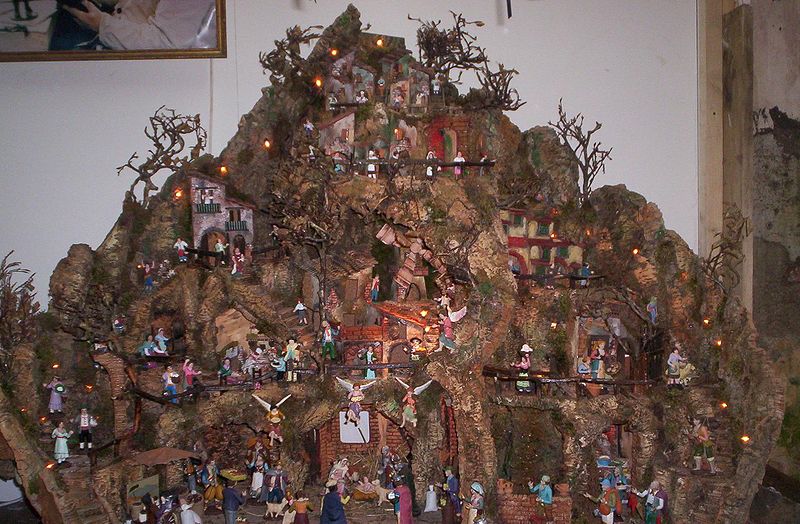
Nativity scenes are part of the Christmas tradition for many of us, and they range from gilt-trimmed masterpieces to naked trolls. In the historic center of Naples, Via San Gregorio Armeno is home to workshops and storefronts selling an array of elaborate creches, or presepi in Italian.

The narrow pedestrian street is Nativity Central in Italy, carrying on a tradition established some four hundred years ago, in the Baroque era. From individual figurines and furnishings to elaborate full-village scenes, from finely crafted and expensive pieces to the very inexpensive–the array is fascinating. They go far beyond the typical scene of the holy family with wise men and shepherds. These scenes include the whole town–the innkeeper, the greengrocer, the mayor, homemakers and housekeepers, in lively scenes where you can imagine them sharing the story they’ve heard from the shepherds. “Did you hear about the baby? Did you hear about the angels? Can you believe it? Let’s go take a look!”

Christmas is a year-round affair on Via San Gregorio Armeno, so enjoy it whenever your visit to Naples comes along. At the end of the street is San Lorenzo Maggiore, a historic church that contains a museum focusing on the historic center of Naples. This neighborhood oozes history from every seam, so plan to spend some time exploring.

A selection of nativity scene characters for sale.

And whether you call it a creche, crib, presepi, or nativity, browse the workshops and enjoy the tradition of Christmas, celebrating the birth of Christ in a thousand variations on the theme.

(Remember those naked trolls I mentioned? Check out Nativity Scenes Gone Horribly Awry at a blog called “List of the Day”.)

Book Review: The Stones of Naples

Sometimes I think that only a nerd like me would be fascinated by a book subtitled “Church Building in Angevin Italy, 1266-1343”. But I’m glad to know there are enough nerds like me around that the author, Caroline Bruzelius, and the publisher, Yale University Press, decided to produce it.

The Stones of Naples is filled with stories of why and how various churches were built in Naples during the first three generations of Angevin rule there, 1266 to 1343. The social history is tied to the architectural history to answer questions I didn’t even know I had! And I have plenty of questions about these Angevins–for some reason their story resonates with me.

The book is academic, filled with minutiae about builders and stone, about bishops and their political persuasions, about monastic influences on the royal family members, and their influence on one another. There are several appendices, and pages of end notes, a lengthy bibliography, and detailed index.

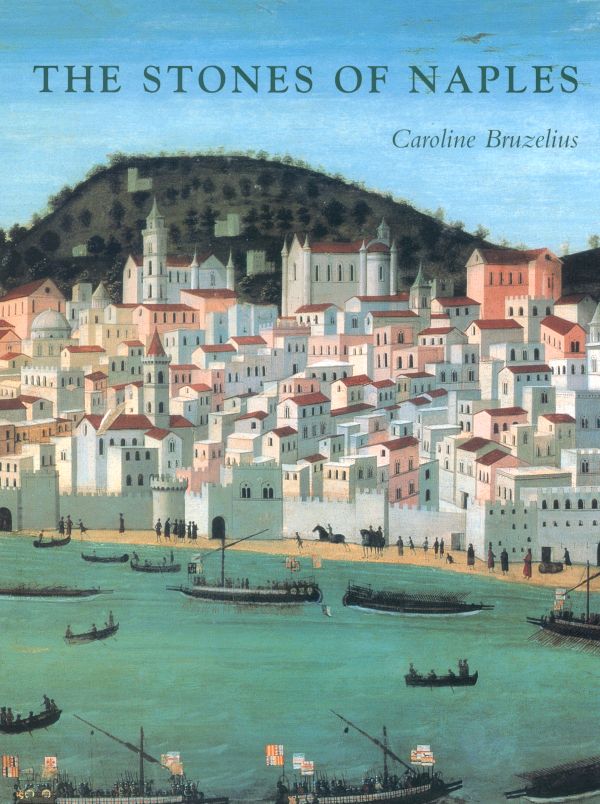
But the academic burden (which it might seem to some readers) is lightened by a few other inclusions. Right up front there are maps, a city plan of Naples, and a genealogical chart of the Angevins. The large-format book contains many photos (too few in color, but there are many) and illustrations of church floor plans, construction elements, and decor. And the cover is beautiful, featuring detail from the Tavola Strozzi, showing a view of Naples in 1465 commemorating the Aragonese victory.

Although Naples itself figures heavily in the Angevin church construction, locations throughout southern Italy are mentioned or discussed.

I would recommend this book to anyone with an interest in southern Italy of the thirteenth and fourteenth centuries. It helps me understand the events and the atmosphere of the period, and develop a clearer picture of medieval Naples.

Bari’s colorful past

I once mentioned to a friend that I would love to visit Bari. His brows shot up. “No you don’t,” he assured me.

He had been to Bari some years earlier, and found it less than enchanting.

But it isn’t Bari today that attracts me, as much as Bari’s history. When I mentioned Bari to my friend, I was thinking of the port where thousands of crusaders launched their sea journey to the Holy Land. Nearly 2,000 years ago the Emperor Trajan rerouted the Appian Way to Bari, bringing it to prominence as a Roman port and commercial city. Today it is southern Italy’s second most important city, with a university, two modern harbors, and a metropolitan population of more than a million people.

Statue of Saint Nicholas in Bari's basilicaThe relics of Saint Nicholas rest in Bari, secreted out of his native city of Myra (part of modern-day Turkey) in 1087 in the midst of an invasion. Accounts of the event vary, but ultimately the saint’s relics were brought to Bari, where a basilica built in his honor is considered by some to be Bari’s most important building, built in the 12th century. A festival held each May celebrates the arrival of the relics. This is the fourth century saint who has morphed over the ages into Santa Claus.

Bari’s port also saw a significant slave trade in the early Middle Ages durin Byzantine rule, when slavic captives were sold to the Turks and others in the eastern Mediterranean. About five hundred years of Byzantine rule gave way to Norman rule in the late 11th century.

Bari Vecchia, or Old Bari, was for many years a good place to avoid due to rampant petty crime. Perhaps this was my friend’s experience in Bari. But this review on Slow Travel Italy describes the old city in very appealing terms.

One day I will go and see for myself!

Naples from another perspective

Here’s a view of the Gulf of Naples that most visitors will never see, a view that takes in thousands of years. See what the eels and seahorses enjoy every day. I love the way this video combines past and present. It leaves me even more curious about the history of southern Italy.

Thanks to my friend Laura Vinti, who made me aware of Another Naples!

BOOKS: Must have this book!

For people like me, with a freakish interest in the medieval Angevin Kingdom of Naples, there are some books we must have. Only recently I learned that a Bible has surfaced, after mouldering for half a millennium in the Low Countries somewhere, a Bible which was created at the court of Robert the Wise in Naples, and presented to his granddaughter Joanna, who would succeed him to the throne of Naples and rule for more than forty years.

The Anjou Bible: A Royal Manuscript Revealed was published last year by Peeters Publishers. At 350 pages, it weighs 4-1/2 pounds and costs about $100.

I don’t care. I want it.

All the illuminated folios are reproduced in the book, as well as information about the illuminator who signed the work in the early 1300s. Historical information about the Angevin dynasty in Naples–a family I have researched for more than 25 years–sounds as beautiful to me as the illuminations.

The fourteenth century Bible is now owned by the University of Leuven in Belgium, the oldest existing Catholic university in the world. The manuscript was disassembled, cleaned, digitized, and displayed for twelve weeks  in 2010 before being rebound and returned to the vaults for long-term storage.

This book is definitely on my Christmas list!!

Pompeii: Just do it!

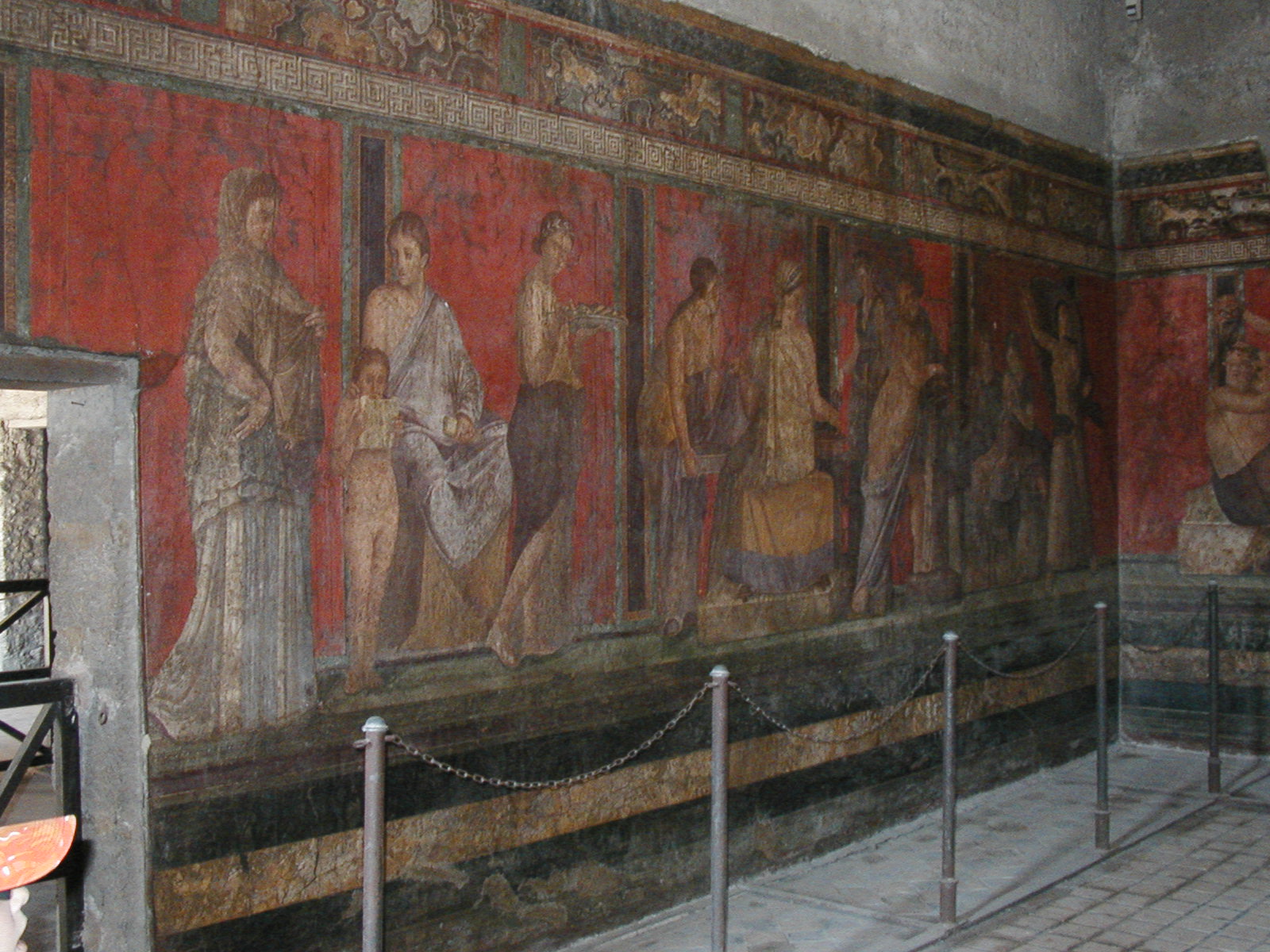
Frescoes in the Villa of Mysteries, Pompeii

Ancient history doesn’t turn my crank like medieval history does, but Pompeii is not to be missed regardless of your historical interests. Buried by an eruption of Mt. Vesuvius in 79 AD, Pompeii disappeared until its rediscovery in 1748.

Large sections of the city have since been unearthed–and I do mean large! The size of the city shocked me. Public buildings, retail shops, bakeries, a large theatre, public baths, even a brothel, and many homes now give mute testimony to the vibrant city that once was.

Bird mosaic at PompeiiA first-hand account of the eruption was written by Pliny the Younger, twenty-five years after the eruption in which his beloved uncle, Pliny the Elder perished attempting to rescue survivors. In two brief letters, he describes the earthquakes and ash, shooting flames and raining cinders, which brought terror to the entire Bay of Naples.

While Pompeii provides a fascinating view of life in a Roman era city, I was intrigued by the unexcavated areas. Ten or twelve feet above the level of the Roman streets, grassy fields bloom with daffodils in the spring, intrusions into the outline of the greater city. When I asked the staff about these areas, I was assured that they were excavating all the “important” areas, implying that nothing of significance lay in those intrusions.

How could they know?