Agriturismo: Farmstays in southern Italy

Olives awaiting harvest in Abruzzo

To enjoy the atmosphere of a working farm, the rural setting and fresh foods, try a farm stay. WARNING: There are many listings at www.agriturismo.net but not all are working farms. They have a wide variety of amenities, so read carefully and search for the kind of place you want to visit. Some have spa facilities, some are country bed and breakfast properties with limited agricultural production. Others offer cooking classes, boating excursions, swimming pools, or children’s programs.

As I browse the various listings, a question comes to mind: How difficult is it to find a native (or at least fluent) English speaker to review the content of a website? The market appears to be wide open for this kind of service. It’s easy to find listings like these:

(Various kinds of spas therapies) “are the ingredients of our relax.” “It is possibile to have breakfast, lunch, or supposer in the farmhouse.” “As of 1754, the owner’s family give birth to the ancient farm building where oil and wine have been produced with their own traditional tools.”

Of course, I did appreciate the full disclosure of this description: “This place is not recommended to those who want to enjoy only the ocean or only the mountain, or are unable to live without the new technolgies, or are scared of farm bugs, or are unable to handle the fireplace or the wood-burning stove.”

Here are links to a couple of olive farms that appealed to me: First, the Agriturismo Madonna Incoronata, named for a 17th century church on the property. Located on the south side of the Gargano peninsula, they offer cooking classes, boat trips to private beaches, and an ancient olive mill and museum highlighting the history of olive production–which continues on the property today.

Near Matera, L’Orto di Lucania offers a varied farm stay. They grow and process organic wheat, olives, artichokes, eggplant, and tomatoes. They also have a beautiful swimming pool, as well as cooking classes, and bicycles for rent. Guests can take part in farm activities, or simply observe. And unique historical sites like the city of Matera (an ancient cave dwelling site), Castel del Monte built by Emperor Frederick II, and the trulli houses of Alberobello, are all easy day trips from the farm.

Have you stayed on a farm in southern Italy? Share your experience in the comments!
Culinary Tourism: Taste the olive oil.

In my part of the world, wine tasting is popular, and when I lived in Texas, I participated in a chili cook-off. And chocolate tasting? I’m nibbling some right now.

But in the south of Italy, you find tours dedicated to tasting olive oils. I never gave much thought to variations in olive oil until I visited Italy in 2004. Then, it seemed quite a curiosity to me, the interest people took in their oils. Now, I’m eager to explore olive oils myself, and where better but Puglia?

According to The Olive Oil Times, about 40% of Italy’s olive oil grows on roughly 60 million trees in Puglia. You can read descriptions of different types of oil, and a great deal of olive knowledge.

How do you taste it? At Olive Oil Source, you can learn from professional olive oil taster Nancy Ash, owner of Strictly Olive Oil. You can learn the lingo and see what the pros are looking for in their oils.

For the more visual learners among us, here’s a video of Bill Sanders (called the evangelist of olive oil and wine) showing us all how to taste olive oil:

If you can’t make it to Italy, how about olive oil tasting in California? Yes, it’s available there too, so go out there and try a little EVOO! That’s Extra Virgin Olive Oil–soon you will be a pro in the tasting room.

Bergamot oranges from Calabria

“This precious product delights the senses and often inebriates the brain with iridescent images which make life beautiful and dreamlike and floods the soul with romantic sweetness.” Sound like a recreational drug, something you can take to help you leave your troubles behind?

No. Giuseppe Sergi, an Italian anthropologist, wrote this statement in his 1925 monograph on the bergamot oranges grown around the southern coastline of Calabria.

Bergamot oil gives Earl Grey tea its distinctive flavor–the tea that reportedly became a sensation in London when Lady Grey (wife of Charles Grey, 2nd Earl Grey, who was Prime Minister of the United Kingdom from 1830 to 1834) served it. There are many stories about the origin of the tea, but the Grey family claim that a Chinese mandarin (a bureaucrat in imperial China) formulated the tea for them to offset lime in the water at their estate in Northumberland.

A more common use of bergamot oil is in perfumes. The Consortium of Bergamot in Reggio Calabria has a website (available in English) packed with information about the oranges. They claim health benefits and a wide variety of uses for the oil, and provide a recipe for cologne. Bergamot is also used in pastries and confections.

The Canadian newspaper The Globe and Mail published an article in 2010 about bergamots, the “green gold” of Calabria.

Now, I have finished my cup of Earl Grey tea, which I enjoy for the flavor of bergamot and the reminder of southern Italy.

Good Luck for 2012: Lentils and grapes

Many regions and cultures have symbolic foods for holidays, including the celebration of the new year, or “capo d’anno” as Italians say. I was happy to discover that lentils are a traditional Italian food for the new year, because I like lentils a little better than black-eyed peas, which are eaten in the southern U.S.

Lentils symbolize coins, and are eaten in hopes of a prosperous new year. Grapes symbolize good health, and are eaten at midnight, just as the new year begins.

I found an interesting article with a couple of recipes from famous foodie Nigella Lawson, a food writer with a terrific website. The recipes sound delicious, and I plan to make one of them for my own New Year celebrations.

I hope you enjoy the article, and wish you the very best for 2012. Felice Anno Nuovo!

My most Italian Christmas tradition: Torcetti

Mary (Arcuri) Sanders, at age 77

My Italian grandma, born Mary Nancy Arcuri, was a great cook. She lived into her 90s, and now her many dozens of descendants like to share “Gram’s recipe” for various foods we associate with her. Somehow, though, each of her seven kids has a different version of “Gram’s recipe” for spaghetti sauce, each claiming to be authentic, and the rest charlatans.

At Christmas, Gram always made torcetti (tor-chet-ee). The lightly sweetened pastry was rolled in powdered sugar, shaped in figure 8s or candy canes, or folded into little half-moon turnovers filled with mince or cherry pie filling. I always imagine her learning to make it at her mother’s side, in Italian–the only language her mother spoke. Gram came from a big family, and it is a big recipe–I have penciled in on my recipe card a smaller version, one-fourth of the original recipe. But for you, readers, I am providing the full meal deal, the recipe for 12 dozen torcetti. Enough to share with lots of friends!

Ingredients:

1 lb. butter or margerine

1 lb. vegetable shortning

10 cups sifted flour

1 cup warm milk

1 T. granulated sugar

1 T. vanilla

2 pkgs. yeast

4 eggs, beaten

2 lbs. powdered sugar

Cut shortning and butter into flour until it is like corn meal. Combine milk, granulated sugar, vanilla, and stir in yeast. Add liquid to flour mixture. Add eggs and beat. Add more flour if sticky. Knead slightly. Put in a greased bowl, cover in a warm place, and let rise until double in bulk, about one hour. {I must tell you, this is a heavy dough, and has rarely doubled its bulk for me!}

Cover a bread board with some of the powdered sugar. Break off egg-size pieces of the dough, roll in powdered sugar into one long piece, and shape into figures–pretzel, figure 8, knots, candy canes. Bake on a greased sheet 12-15 minutes at 375 degrees. For filled turnovers, roll out dough, sprinking with powdered sugar if sticky, and use a cookie cutter or water glass to make 3″ circles. Fill with a spoonful of your favorite fruit pie filling, fold in half, and seal by pressing a fork along the edge.

If you try Torcetti from Gram’s recipe, I’d love to hear from you. And do you have an Italian Christmas food you love? Let’s hear about it!

Food: Caciocavallo and other cheesy delights

I paused in front of the cheese display at a little market in Scigliano. “Look!” I said to Vern. A herd of little horses, shaped from ivory strands of caciocavallo cheese, were lined up in the window to amuse me, and that they did!

Those Italians really know what to do with cheese! Going to the cheese-and-sausage stores was one of my favorite shopping delights in Italy. We always found interesting cheeses, and succumbed to many temptations there. The volume of cheese alone is enough to amaze someone used to the typical American cheese shopping experience. Giant wheels of cheese cut into thick wedges, balls and chunks, fresh and aged, cheese to try with figs, meats, pasta, bread, cold or melted. I salivate at the many tasty memories.

Caciocavallo was a special delight. It normally comes in double balls, something like a snowman, with a cord around the ‘neck’ where it has hung to dry. Someday I’d love to see the process of making some of the cheese into little horses (cavalli). I really wanted to buy little caciocavallo horses as souvenirs to take home, but they were a little too perishable for that.

If you visit Italy, even if the trip is short and your time tightly scheduled, take a few minutes to find a cheese shop, and explore the abundance. Choose something intriguing, and buy a few ounces. Savor the flavor. The experience might become your favorite memory of Italy.

English Soup? Save it for dessert!

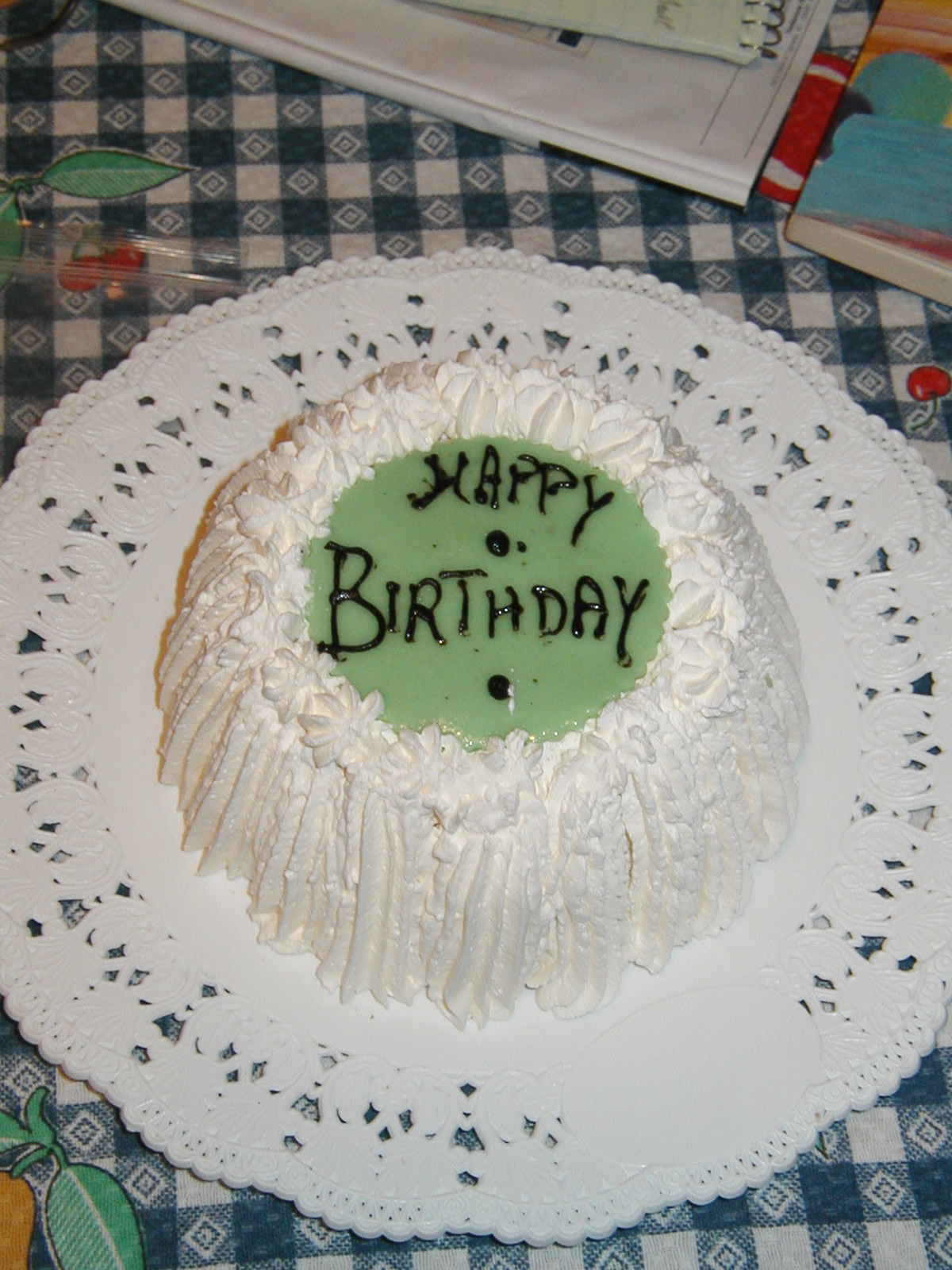
As Vern and I walked from our lodging to the language school in Sorrento, we passed a small bakery, often succumbing to temptation and buying a treat. The owner bantered with us, switching between our limited Italian and his limited English as he described the various pastries on display. One day a large rounded cake caught our eye, a little like the one pictured here which we bought later for Vern’s birthday.

“Zuppa Inglese,” he said when we pointed. He offered us a taste, and we fell in love.

Zuppa Inglese is described this way in the glossary of www.lacucinaitalianamagazine.com:

“TZOO-pah een-GLAY-zay

As the name suggests, zuppa inglese (“English soup”) is of English origin, and is derived from the trifle, a popular British dessert. To make zuppa inglese, wedges of sponge cake or delicate cookies such as ladyfingers are dipped in sweet wine or light liqueur, then layered with whipped cream, diced candied fruit, and chopped bittersweet chocolate.”

There are several stories about the origin of this dessert. The first we heard was that Admiral Nelson’s fleet made an unexpected call at Naples, and the king’s cooks were rushed to prepare something suitable for him. Zuppa Inglese was the result—a kind of hybrid between English trifle and tiramisu.

The internet abounds with recipes for Zuppa Inglese, from complicated (sponge cake
and custard made from scratch, hand shaved bittersweet chocolate, and so forth) to very simple (store-bought ladyfingers, instant pudding, chocolate chips). Find one you like the looks of, and adjust it to your cooking style. The basics are: a light cake of some kind in the bottom of the serving dish (clear glass looks pretty) sprinkled with a liquor such as rum or marsala; a custard or pudding with fruit of your choice mixed in, some form of chocolate as a highlight (not so much it overwhelms), and whipped cream. It can also be formed in a bowl or pan, layered and chilled, then inverted onto a platter and decorated with meringue or  whipped cream, the way we first encountered it in Sorrento.

Here’s a video demonstration featuring chef Jeff Michaud from Osteria Restaurant in
Philadelphia with a professional’s version of Zuppa Inglese.

And here is another video, definitely the home style version, with two sisters describing mamma’s shortcut recipe.

Whichever recipe you choose, this is a delicious dessert, and fun for a special occasion. Like, tonight!

Food festivals: Enjoy the feast!

My mother can’t stop talking about it! She visited Calabria five years ago, and when friends took her out to dinner in one of the villages near Scigliano, she ordered a mushroom dish. I still haven’t heard the end of it.

Sadly for all of us, we do not have the recipe. But the season for mushrooms is approaching, and they will be celebrated in the Italian south.

In the Sila, the mountains of Calabria, the village of Camigliatello Silano celebrates a wild mushroom festival each year. In Diamante, the chili pepper takes center stage. Chestnut festivals are common throughout Italy, but the village of Zafferana Etnea in Sicily goes one better, celebrating a Chestnut and Wine Festival. Eggplant, pasta, sausage, chocolate–it seems like most any food in the cupboard has a festival in its honor.

But we were talking about mushrooms. In Marcella Hazan’s “Essentials of Classic Italian Cooking” I found this recipe that pays homage to the mushroom.

Fresh Mushrooms with Porcini, Rosemary, and Tomatoes

1 lb. fresh, firm white button OR cremini mushrooms

1/3 cup extra virgin olive oil

1 teaspoon chopped garlic

1 teaspoon fresh chopped rosemary leaves

About 1 ounce dried porcini mushrooms

Filtered water from soaking the mushrooms (see instructions)

Salt, Fresh ground black pepper

1/2 cup canned imported Italian plum tomatoes, with their juice

To prepare the dried porcini mushrooms, soak in two cups of barely warm water for at least 30 minutes. Lift the mushrooms by hand, squeezing out as much water as possible, and let the water flow back into the container in which it has been soaking. Retain the water, and rinse the mushrooms in fresh water, scraping any spots where soil is embedded. Pat dry with paper towels , and chop.

Filter the soaking water through a paper towel or coffee filter, and retain until called for.

Trim, wash, and towel dry the fresh mushrooms and cut in half  or quarters lengthwise, keeping the caps attached to stems.

Choose a saute pan that will contain all the ingredients loosely. Start with oil and garlic heated to medium high until the garlic becomes pale gold. Add rosemary and the reconstituted porcini. Stir once or twice to coat well, then add the filtered water from soaking the mushrooms. Turn up the heat and cook at a lively pace until all the water has simmered away.

Add the cut up fresh mushrooms to the pan, together with salt and pepper, turn the heat to high, and cook, stirring frequently, until the liquid shed by the fresh mushrooms has simmered away.

Add the tomatoes with their juice, toss thoroughly to coat well, cover the pan, and turn the heat to low. Cook about ten minutes. If needed to prevent sticking, add one or two tablespoons of water to the pan. When done, serve immediately.

Salute!

Gift of the Goths: Mozzarella di Bufala

The water buffaloes surprised me. Like something in a photo from Cambodia or China, but not in the countryside of Campania.

But there they are, and have been for centuries. One theory says they came to Italy with Goth invaders about 1,500 years ago. Others suggest Arabs brought them to Sicily, and the Normans spread them to the southern mainland. And some think they are native to the area. However they got there, I’m glad they did.

Initially used as draft animals, there are some references to cheese products from the buffalo’s rich milk as early as the twelfth century. The mozzarella di bufala we know today came to prominence in southern Italy 200 to 300 years ago. When I spent a few weeks in Sorrento, I was told that only cheese made from buffalo milk can be labeled ‘mozzarella’ in that part of Italy.

Fresh mozzarella, those soft bright white balls, must be kept in a ‘broth’ and is very perishable, so should be used quickly. While mozzarella can be made from cows’ milk (and unless it is labeled ‘di bufala’, it probably is), the buffalo version is much richer and more flavorful.

The most familiar use of mozzarella di bufala, for tourists in Italy, is the ubiquitous Caprese salad: Alternating slices of fresh tomatoes and creamy cheese, interlaced with fresh leaves of basil, and drizzled with olive oil and balsamic vinegar. Perfetto!

Though both are called mozzarella, the fresh version seems to have no relationship to the shredded dry cheese melted on pizza all over America. For a real treat, use some thinly sliced fresh mozzarella next time you make a pizza, or top your next baked pasta dish with it during the last few minutes of cooking.

If you make the mistake I did in Italy, and call it mozzarella di “bufalo” the Italians will laugh. Everyone knows it is “di bufala” and if you try to get milk from a “bufalo” you’ll be in trouble.

Ready to try cooking with fresh mozzarella? In 2009, Alanna Kellogg (www.blogher.com) posted ten recipes here: http://www.blogher.com/ten-summer-recipes-fresh-mozzeralla.  Put one together today, and as you eat it, imagine you are in the Italian south, eating lunch on your terrace with a warm breeze carrying the fragrance of basil and oregano. Salute!

Who hunts the wild boar?

One food I enjoyed in Italy, but seldom see in America, is wild boar. When we were staying in Sulmona, our friend Cesare took us through several mountain villages to see various monasteries and hermitages connected to Pope Celestine V (the subject of my research in central Italy).

We stopped for lunch in a village in the mountains of Majella National Park, and went to a restaurant called Belvedere, which hung on the edge of a precipice overlooking the wild hinterlands of Abruzzo. Vern was intrigued to find wild boar on the menu—cinghiale in Italian—and decided to try it. His curiosity was rewarded: the waiter soon delivered a huge bowl of savory chunky stew. The meat was similar to pork, and very tasty.

As we ate, I asked Cesare who hunts the wild boar they serve in the restaurant. At first he seemed not to understand the question, but I persisted. “Nobody hunts them,” he finally said.  “Where do they come from then?” I asked. “Una fattoria.”

Yes, it seems the ‘wild’ boar was raised on a farm! Quite a disappointment, as a boar hunt was fully formed in my imagination already.

Truly wild boars have proliferated in some areas of rural Italy, because their natural enemy, the wolf, has declined in population. According to some sources they now produce more offspring due to mating with domesticated pigs. They damage farms and gardens, and can be a traffic hazard.

My son and I found wild boar on the menu of La Dolce Vita restaurant in Seattle a couple of years ago, and like his dad, he had to try it. I don’t see it on their online menu now. I haven’t found any to try cooking myself, but I found a recipe online at http://italianfood.about.com/od/furredgameetc/r/blr1082.htm that looks pretty good. If you want to try it using pork, and just pretend it’s wild boar, go ahead—I won’t tell!