An Italian in old Seattle: Joe Desimone

From vegetable farm to international airport!

You never know where the Italian South will crop up! I made my first visit to Seattle’s Museum of Flight last weekend, with some friends from out of town. It’s a beautiful facility directly adjacent to Boeing Field, Seattle’s first international airport. In the photo, the museum buildings are nearest to the airfield, and some of Boeing’s buildings are in the foreground.

Turns out, in the late 1920s when the Boeing company was in its early stages, William Boeing was looking around the country for another location because Seattle did not have a suitable airport to meet the company’s needs. When news of the search got around, immigrant farmer Giuseppe “Joe” Desimone made Boeing an offer he couldn’t refuse–a big tract of land south of downtown Seattle, for one dollar, to keep the company in Seattle. Today the airport is bordered by dozens of Boeing facilities, and both the company and the airport continue to play significant roles in the life of Seattle.

Very cool!I thought, and made note of his name to learn more about him for a blog post. We finished our tour, and continued sightseeing, including lunch and a wander through Pike Place Market. And guess what!? Joe Desimone was one of the earliest participants in the Market, gradually buying shares until he owned the place. His family remained in ownership after Joe’s death in 1946, until the Market became publicly owned in the 1970s.

Joe Desimone taking vegetables to market.

Joe immigrated from the Naples area at the age of 18 in 1898, and by 1910 was a thriving farmer in King County. His stall features prominently in this historic video footage of Pike Place Market–you can see his name on the sign at about the one-minute point, and again at three minutes into it, but I don’t know which of the men in the movie is him.

Stracciatella Soup: What could be easier?

My mom ordered the stracciatella soup at her birthday lunch last week. I wasn’t very familiar with it, so looked it up and found a couple of videos showing how simple it is to make–amazing! Have a look, and let me know if you try it and what you think. Is it a keeper?

Book Review: That Summer in Sicily

In this atmospheric, evocative memoir, Marlena de Blasi draws us into a mysterious Sicilian villa, a world apart and a world with its own secrets. Ultimately, its own love story.

De Blasi went to Sicily with an assignment in the summer of 1995: Write an article about Sicily’s interior, for a scholarly magazine. She and her Italian husband venture forth, with appointments and plans in place, for several weeks in the south. There, they hit a wall of silence. She was stood up for every appointment. In the heat of summer, baking in the Sicilian highlands, the assignment was abandoned. They decided to seek a couple of days’ refuge, an inn or pensione, and rest befor returning to Venice.

A policeman directs them to Tosca, the owner of the Villa Donnafugata, the house of the fleeing women. A world apart, where black-garbed women chant while washing their laundry against stones. Where crenillated towers and juliet balconies stand guard over wheatfields and goatpens that would have looked the same a hundred or a thousand years ago.

And there, intending to leave nearly every day, but drawn or induced or wooed to stay for weeks, de Blasi hears Tosca’s story. You should hear it too, and I can only urge you to read this book.

I read it during the first couple of days of a vacation to the tropics, and I’m glad I did not have a work schedule to maintain, as it would have gone by the wayside for the higher priority of Tosca’s story. Her transformation from nine-year-old starving peasant girl to mistress of a villa supporting dozens of laborers who are her closest friends is a journey worth taking.

Italian Roots: Some ideas for finding them

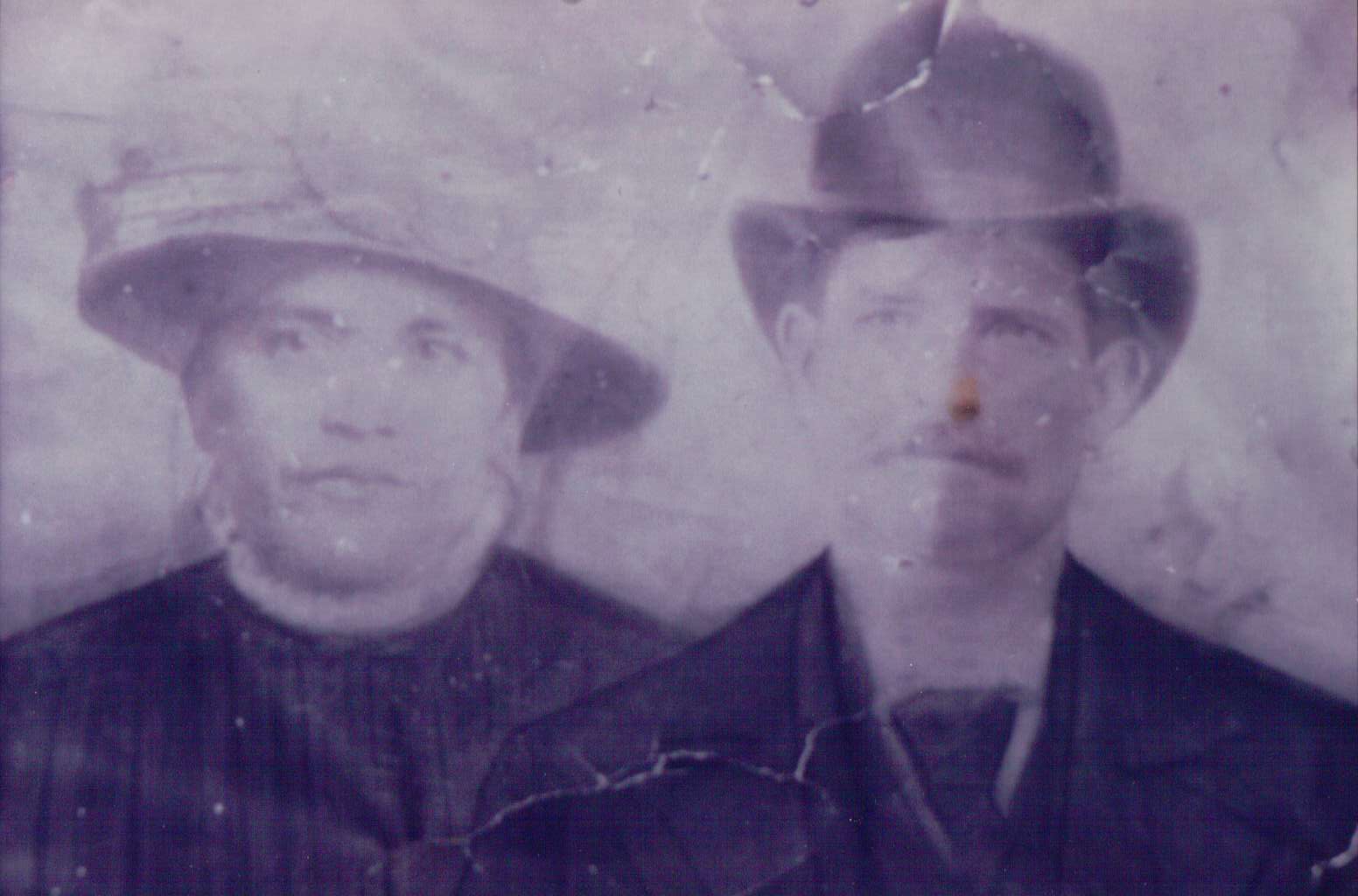
Josephine and Francesco Arcuri, my great-grandparents from Calabria

Tracing Italian ancestry can be a challenge, and records online for genealogy in the Italian South are sparce. The subscription research website Ancestry.com recently added new records for Italian genealogy in America: records from the Sons of Italy (Order of the Sons of Italy in America, or OSIA). These new records are added to others already on Ancestry, which include civil registrations (birth, marriage, death) from several cities in Sicily, and a few southern cities on the mainland.

An internet search turns up thousands of references to Italian genealogy, and connecting online is a great way to pool research efforts with distant family members. I’ve recently been corresponding with a distant cousin across the country who is digging into our Italian roots. I’ve been able to share results of my past research, even though I am not actively researching at this time.

Who would have imagined a few years ago that today we would have a television series dedicated to genealogy? A couple of episodes of “Who Do You Think You Are?” may set your own genealogical wheels in motion to learn more of your heritage–whether it is Italian or not. And this week PBS launches a new series by Henry Louis Gates called Finding Your Roots. His previous shows, African-American Lives and Faces of America are available for viewing online at PBS, and might stoke the fires of your own search for your roots.

Bocce: Italy’s own ball game

Has bocce ball ever been an Olympic sport? Maybe it should be! It started with the ancient Greeks, and came to southern Italy with them, where it has stuck fast. The French adopted it as boules–and could bocce be the distant ancestor of the bowling alley across town?

The Italian tradition of bocce is kept alive in St. Louis. Milo’s Bocce Garden is a tavern in The Hill, the Little Italy of St. Louis, which bills itself as the “sports center of The Hill” in neon lights. Milo’s installed bocce courts in the 1980s and maintains an active tournament schedule. But bocce was alive and well on the Hill long before that, as the following video reveals.

Little Italy in the Midwest: The Hill, St. Louis, MO

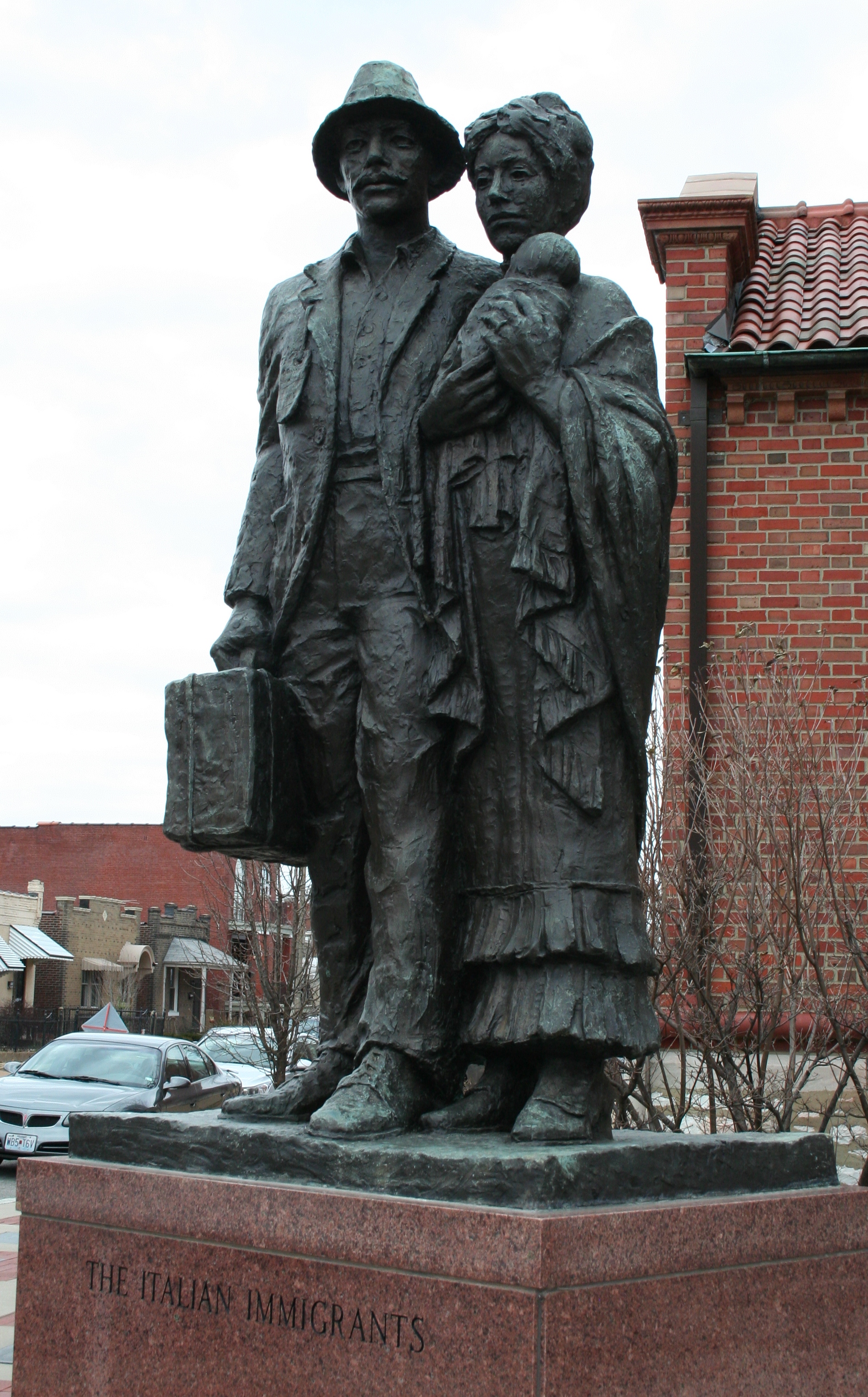
A statue honoring the Italian immigrants who settled in St. Louis.

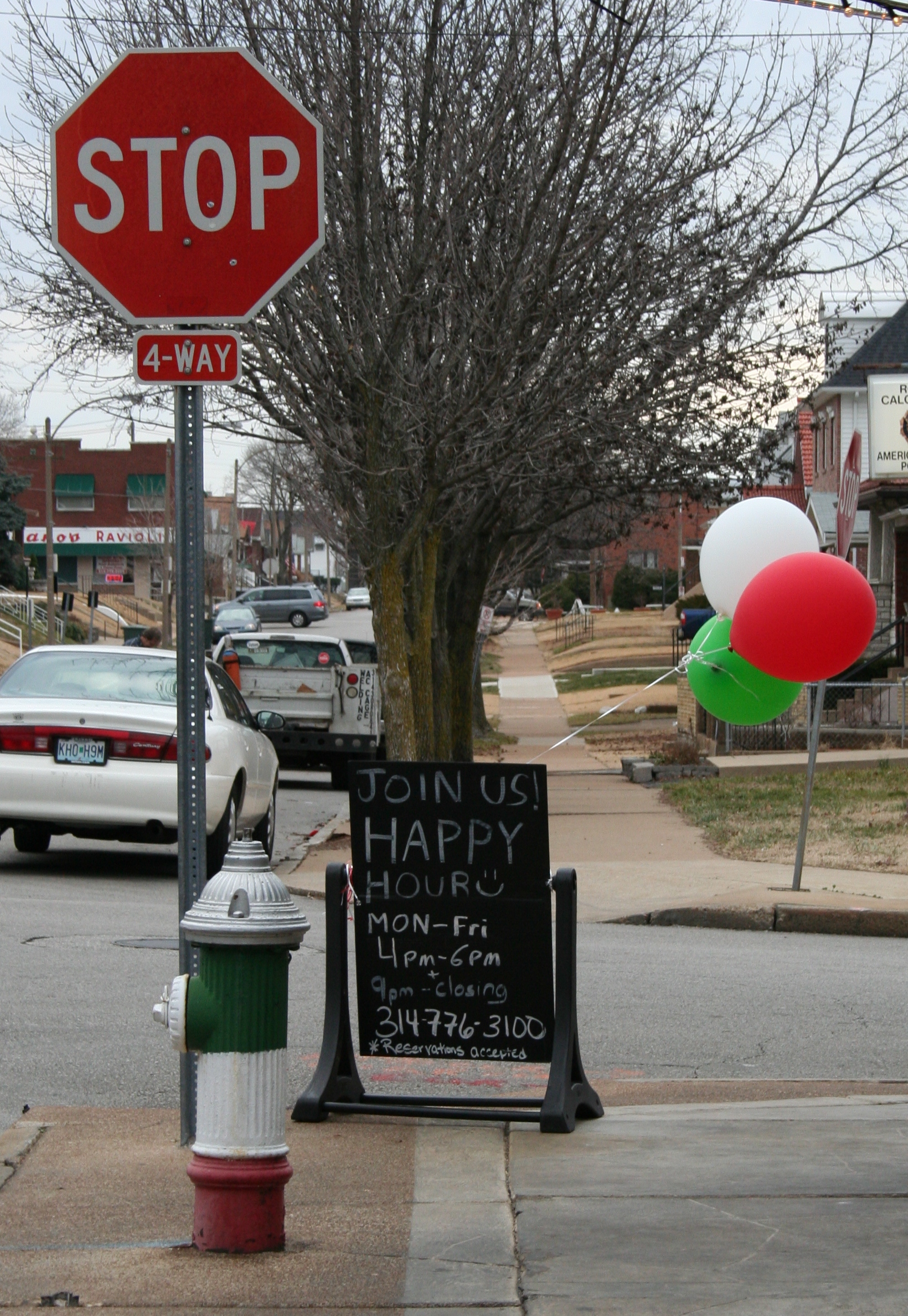
Four million Italians immigrated to America between 1880 and 1920, creating little pockets of Italian culture, neighborhoods all over the USA known as “Little Italy”. I visited one such neighborhood in January, and here are some photos from “The Hill” in St. Louis.

The Italian colors are popular, from fire hydrants to eye-catching balloons.

You can learn Italian in the neighborhood:

Real estate is sold with an Italian flair, a red-white-green sign:

If you are longing for a blast of Italian culture, food, and style in the midwest, check out The Hill.

Ravioli Tostati–St. Louis Italian Food

My daughter and her husband moved to St. Louis, Missouri in early January, and three weeks later, we visited them, eager to see “The Hill”, St. Louis’ Little Italy. They took us out to dinner at Gian-Tony’s Ristorante, where I had my first taste of Ravioli Tostati.

This deep-fried ravioli is a tradition of St. Louis–but perhaps somewhere in Italy too, the cook accidentally knocked a raviolo into hot oil instead of water, inventing a crispy appetizer. I was told that several chefs on The Hill have claimed that fortunate mistake, sometime in the 1930s or ’40s. The popular dish is available in many parts of the Mid-west now, and some East Coast restaurants too.

So we enjoyed a plate of Ravioli Tostati before our dinner at Gian-Tony’s, dipping the crunchy squares in marinara sauce as we visited. I have to say, the cooks of St. Louis are on to something! Since coming home, I’ve looked for recipes, and am sharing links to a couple of them with you. Here’s a fast-food version from All-Recipes website. Charlie Gitto’s, one of the restaurants that claims the invention, provided this recipe on the Food Network website.

Reading about olives

Can I suggest some reading about olives? I’m offering a smorgasbord.

Here is a link to an online piece called “Graft and Corruption: On Olives and Olive Growing in the Pre-Modern Mediterranean” about the history and practices of olive growing. From the website of the Maxwell Institute of Brigham Young University, this is the introduction to a larger work, but covers lots of interesting history of olive cultivation.

A search on Amazon for “olives” turns up thousands of books (including those by authors named Olive, of course), with a lot of interesting titles. Many, like Olive Oil: Cooking, Exploring, Enjoying,  deal with using olives and olive oil in cooking. Others, like the Olive Production Manual, are practical guides to growing olives. One particularly caught my eye, because I enjoy reading memoirs. Olives, by Mort Rosenblum, has positive reviews and looks like fun to me. Have you read it? If so, throw in your two cents in the comments!

Happy reading!

The ancient sacred olive, in modern times

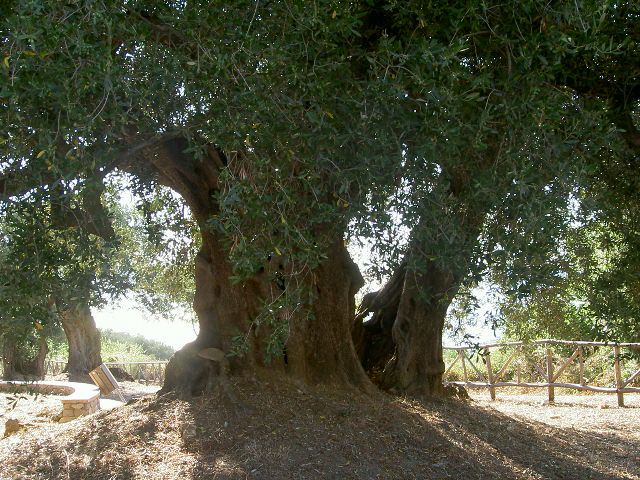
An olive tree in the Cilento region.

This tree was planted before the nation of Italy was born, when the Italian south was a kingdom apart. It could well have been producing olives when Naples was at the height of glory, one of the leading cities on the continent, and a must-see stop on the Grand Tour of the eighteenth century.

The olive is mentioned in ancient literature, including thirty times in the Bible. Its oil fueled the original Olympic flame. Kings were anointed with olive oil, and it is still used in religious ceremonies.
Theophrastus, a student of both Plato and Aristotle, wrote about olive husbandry. “The olive tree grows, one may say, in more ways than any other plant; it grows from a piece of the trunk or of the stock, from the root, from a twig, and from a stake…” He warns that olives grown from seed produce a wild olive, of poor quality. He also quotes Androtion in saying that olives require heavy pruning for the best production, and also need “the most pungent manure and the heaviest watering.” He describes the damage they suffer from hot winds or freezing temperatures. Though he wrote this in Greece in the third century B.C., these classical methods were carried into the Magna Graecia and applied to olive culture there.
I find fascinating the common knowledge of the natural world in earlier times. A statement of Theophrastus illustrates this, in regards to the summer solstice. How do I know when the solstice is? I check a calender, reference book, or (more likely) find it online. But two thousand years ago, people checked their olive trees for that information: “There is a peculiarity special to the olive, lime, elm, and abele: their leaves appear to invert the upper surface after the summer solstice, and by this men know that the solstice is past.”
In Roman times, a garden was not considered complete without some olive trees, and olive oil served as liquid money. It is still highly prized, with Italy consuming about 30% of the world’s olive oil, most of which is grown in the Mediterranean region.
Next time you break open a rustic loaf of bread, pour a little olive oil in a dish, add some balsamic vinegar, and think about the ancient origins of your small feast as you enjoy it.

Agriturismo: Farmstays in southern Italy

Olives awaiting harvest in Abruzzo

To enjoy the atmosphere of a working farm, the rural setting and fresh foods, try a farm stay. WARNING: There are many listings at www.agriturismo.net but not all are working farms. They have a wide variety of amenities, so read carefully and search for the kind of place you want to visit. Some have spa facilities, some are country bed and breakfast properties with limited agricultural production. Others offer cooking classes, boating excursions, swimming pools, or children’s programs.

As I browse the various listings, a question comes to mind: How difficult is it to find a native (or at least fluent) English speaker to review the content of a website? The market appears to be wide open for this kind of service. It’s easy to find listings like these:

(Various kinds of spas therapies) “are the ingredients of our relax.” “It is possibile to have breakfast, lunch, or supposer in the farmhouse.” “As of 1754, the owner’s family give birth to the ancient farm building where oil and wine have been produced with their own traditional tools.”

Of course, I did appreciate the full disclosure of this description: “This place is not recommended to those who want to enjoy only the ocean or only the mountain, or are unable to live without the new technolgies, or are scared of farm bugs, or are unable to handle the fireplace or the wood-burning stove.”

Here are links to a couple of olive farms that appealed to me: First, the Agriturismo Madonna Incoronata, named for a 17th century church on the property. Located on the south side of the Gargano peninsula, they offer cooking classes, boat trips to private beaches, and an ancient olive mill and museum highlighting the history of olive production–which continues on the property today.

Near Matera, L’Orto di Lucania offers a varied farm stay. They grow and process organic wheat, olives, artichokes, eggplant, and tomatoes. They also have a beautiful swimming pool, as well as cooking classes, and bicycles for rent. Guests can take part in farm activities, or simply observe. And unique historical sites like the city of Matera (an ancient cave dwelling site), Castel del Monte built by Emperor Frederick II, and the trulli houses of Alberobello, are all easy day trips from the farm.

Have you stayed on a farm in southern Italy? Share your experience in the comments!