Book Review: That Summer in Sicily

In this atmospheric, evocative memoir, Marlena de Blasi draws us into a mysterious Sicilian villa, a world apart and a world with its own secrets. Ultimately, its own love story.

De Blasi went to Sicily with an assignment in the summer of 1995: Write an article about Sicily’s interior, for a scholarly magazine. She and her Italian husband venture forth, with appointments and plans in place, for several weeks in the south. There, they hit a wall of silence. She was stood up for every appointment. In the heat of summer, baking in the Sicilian highlands, the assignment was abandoned. They decided to seek a couple of days’ refuge, an inn or pensione, and rest befor returning to Venice.

A policeman directs them to Tosca, the owner of the Villa Donnafugata, the house of the fleeing women. A world apart, where black-garbed women chant while washing their laundry against stones. Where crenillated towers and juliet balconies stand guard over wheatfields and goatpens that would have looked the same a hundred or a thousand years ago.

And there, intending to leave nearly every day, but drawn or induced or wooed to stay for weeks, de Blasi hears Tosca’s story. You should hear it too, and I can only urge you to read this book.

I read it during the first couple of days of a vacation to the tropics, and I’m glad I did not have a work schedule to maintain, as it would have gone by the wayside for the higher priority of Tosca’s story. Her transformation from nine-year-old starving peasant girl to mistress of a villa supporting dozens of laborers who are her closest friends is a journey worth taking.
Italian Roots: Some ideas for finding them

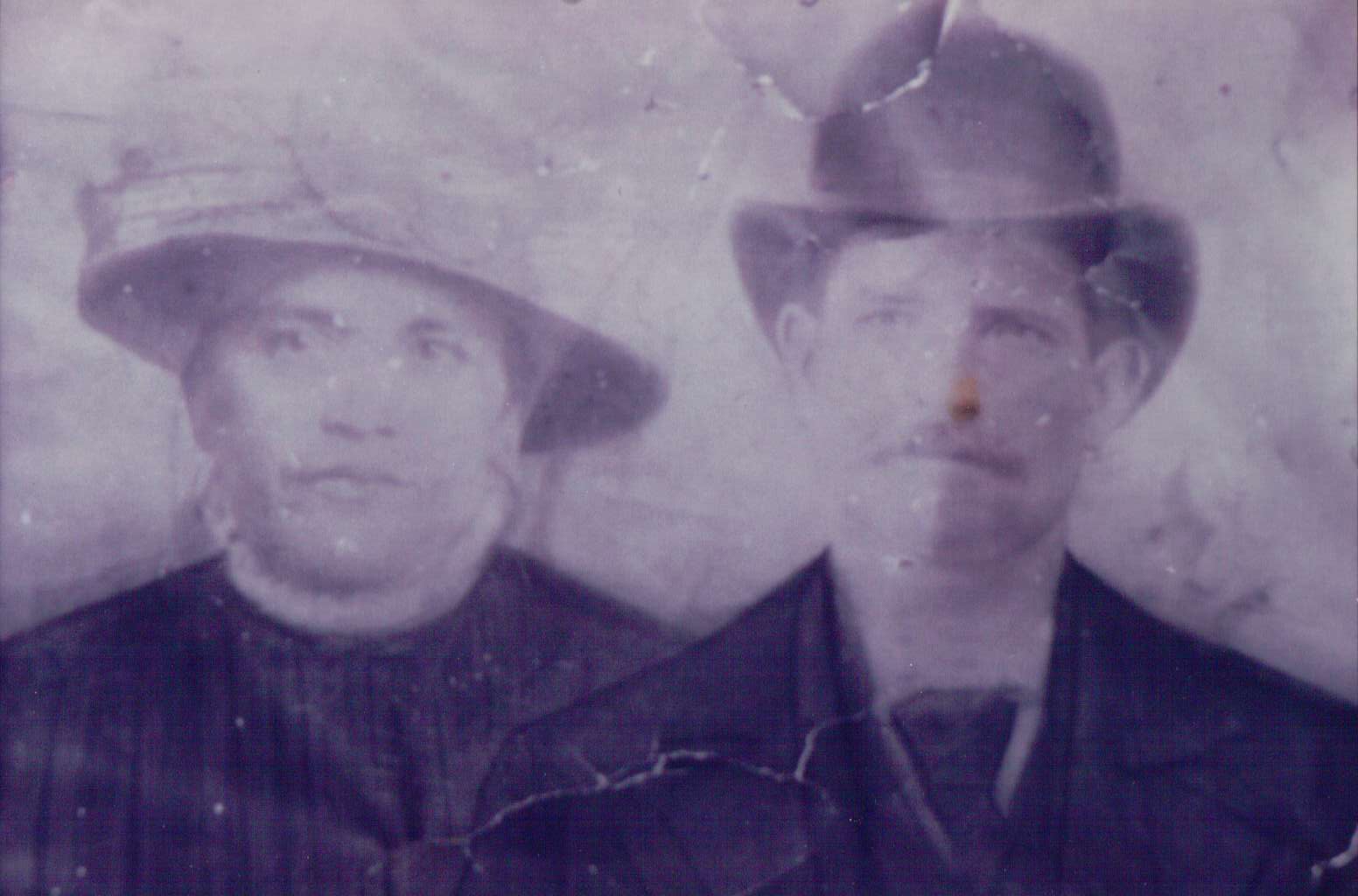
Josephine and Francesco Arcuri, my great-grandparents from Calabria

Tracing Italian ancestry can be a challenge, and records online for genealogy in the Italian South are sparce. The subscription research website Ancestry.com recently added new records for Italian genealogy in America: records from the Sons of Italy (Order of the Sons of Italy in America, or OSIA). These new records are added to others already on Ancestry, which include civil registrations (birth, marriage, death) from several cities in Sicily, and a few southern cities on the mainland.

An internet search turns up thousands of references to Italian genealogy, and connecting online is a great way to pool research efforts with distant family members. I’ve recently been corresponding with a distant cousin across the country who is digging into our Italian roots. I’ve been able to share results of my past research, even though I am not actively researching at this time.

Who would have imagined a few years ago that today we would have a television series dedicated to genealogy? A couple of episodes of “Who Do You Think You Are?” may set your own genealogical wheels in motion to learn more of your heritage–whether it is Italian or not. And this week PBS launches a new series by Henry Louis Gates called Finding Your Roots. His previous shows, African-American Lives and Faces of America are available for viewing online at PBS, and might stoke the fires of your own search for your roots.

Bocce: Italy’s own ball game

Has bocce ball ever been an Olympic sport? Maybe it should be! It started with the ancient Greeks, and came to southern Italy with them, where it has stuck fast. The French adopted it as boules–and could bocce be the distant ancestor of the bowling alley across town?

The Italian tradition of bocce is kept alive in St. Louis. Milo’s Bocce Garden is a tavern in The Hill, the Little Italy of St. Louis, which bills itself as the “sports center of The Hill” in neon lights. Milo’s installed bocce courts in the 1980s and maintains an active tournament schedule. But bocce was alive and well on the Hill long before that, as the following video reveals.

Little Italy in the Midwest: The Hill, St. Louis, MO

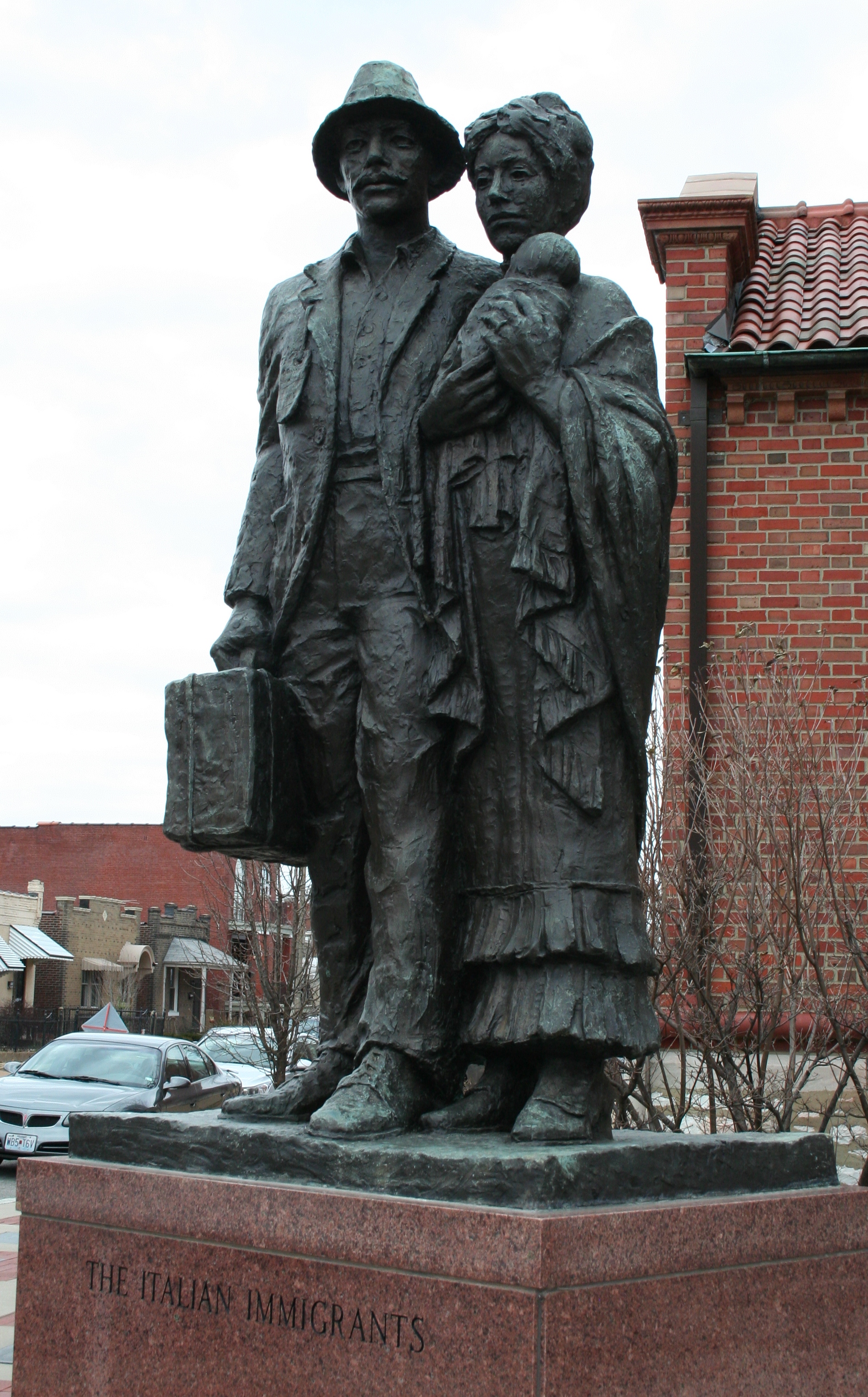
A statue honoring the Italian immigrants who settled in St. Louis.

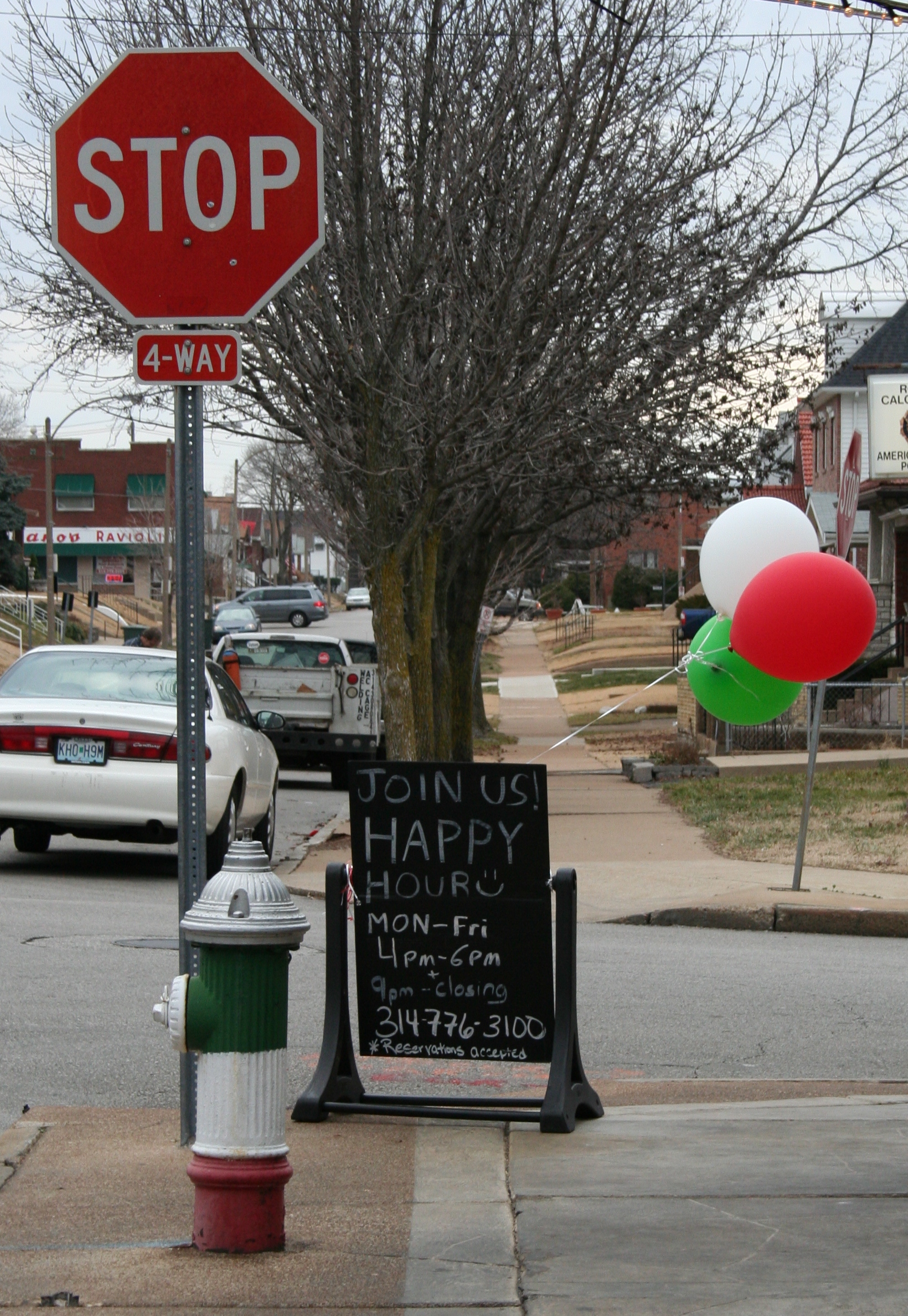
Four million Italians immigrated to America between 1880 and 1920, creating little pockets of Italian culture, neighborhoods all over the USA known as “Little Italy”. I visited one such neighborhood in January, and here are some photos from “The Hill” in St. Louis.

The Italian colors are popular, from fire hydrants to eye-catching balloons.

You can learn Italian in the neighborhood:

Real estate is sold with an Italian flair, a red-white-green sign:

If you are longing for a blast of Italian culture, food, and style in the midwest, check out The Hill.

Ravioli Tostati–St. Louis Italian Food

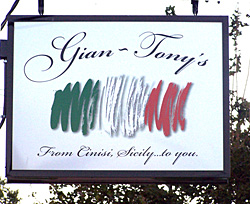
My daughter and her husband moved to St. Louis, Missouri in early January, and three weeks later, we visited them, eager to see “The Hill”, St. Louis’ Little Italy. They took us out to dinner at Gian-Tony’s Ristorante, where I had my first taste of Ravioli Tostati.

This deep-fried ravioli is a tradition of St. Louis–but perhaps somewhere in Italy too, the cook accidentally knocked a raviolo into hot oil instead of water, inventing a crispy appetizer. I was told that several chefs on The Hill have claimed that fortunate mistake, sometime in the 1930s or ’40s. The popular dish is available in many parts of the Mid-west now, and some East Coast restaurants too.

So we enjoyed a plate of Ravioli Tostati before our dinner at Gian-Tony’s, dipping the crunchy squares in marinara sauce as we visited. I have to say, the cooks of St. Louis are on to something! Since coming home, I’ve looked for recipes, and am sharing links to a couple of them with you. Here’s a fast-food version from All-Recipes website. Charlie Gitto’s, one of the restaurants that claims the invention, provided this recipe on the Food Network website.