BOOK REVIEW: Stolen Figs

Have you ever wanted to visit the ‘old country’, wherever that may be for you–the land where your parents, or grandparents, or great-grandparents, spent their childhood?

So did author Mark Rotella. After years of listening to his family’s stories of life in Calabria, he convinced his reluctant father to accompany him to the village of Gimigliano, for just a day. When they unexpectedly connect with distant relatives, Rotella becomes immersed in the life he previously only heard about, returning to Calabria again and again.

A memoir and travel story combined, Stolen Figs lets us share Rotella’s discoveries in clear, inviting language. He shares the flavor of his experiences–the aroma of homemade soprasetta, the taste of fresh artichokes on pizza, the tingling fear of driving unfamiliar backroads that seem hostile.

Rotella had the advantage of speaking Italian as he ventured through Calabria, but still ran into communication issues with the Calabrian dialect. He also describes a visit to a Greek-speaking village, an area mentioned in last week’s post.

I enjoyed his adventures, and recommend his book–a mini-escape to Calabra.
Katoitaliotika, Italy’s Greek dialect

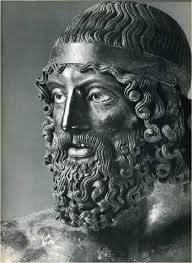
Greeks began to settle the Italian south almost 3,000 years ago, and were the prominant culture there for almost 2,000 years. I tend to think of the culture of the “Magna Graecia” as something buried deep in history, like the Riace bronzes I posted about last week.

But now I find out about the Griko–a surviving culture speaking a Greek dialect, which Greek speakers call Katoitaliotika, or Southern Italian!

This very interesting video (thanks to Agora Productions) provides a lot of history and many great photos reflecting the Greek history of the Italian south.

Travels in Calabria: My top picks

History figures large in my travels, so you won’t be surprised that my top tourist picks are mostly historical–and pretty famous!

#1: The Riace Bronzes: Two 2,500 year old classical Greek statues, found by a scuba diver off the coast near Riace in 1972, and now housed in the Museo Nazionale della Magna Grecia in Reggo Calabria. The full collection on the Magna Grecia occupies two floors of the museum.

#2: The Roman bridge at Scigliano: Part of the ancient Via Popilia, the Roman road from Capua to Reggio Calabria, during the Punic Wars Hannibal is said to have crossed this bridge with his armies. Not sure if that included the elephants, which Hannibal brought up through Iberia and across the Alps. The bridge is a wonderful Roman era structure. Bed and Breakfast Calabria in Scigliano is a great place to stay nearby, and I found this photo on their website.

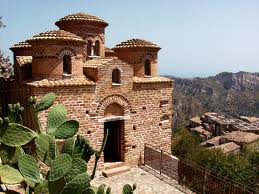
#3: The Cattolica di Stilo: Built in the 9th century, this church is considered one of the most important Byzantine structures, and is a national monument. I love to visit churches. Along with the frescoes and Christian interior, there are Arabic inscriptions in the church–the thought of it sends my mind spinning into all kinds of historical speculations!

#4: Le Castella: I couldn’t go to Italy without visiting a castle, and the history of this one is fascinating. And the Ionian beaches couldn’t be closer! I found this interior cutaway describing life in the castle–in Italian, but it gives some good additional detail.

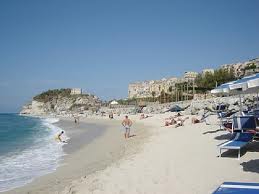
#5: Down time at some hot springs! There are several thermal bath options, and after visiting one in Tuscany a few years ago, I am eager to try one in Calabria. This or this should do–and then a couple of days at the beach in Tropea!

Bergamot oranges from Calabria

“This precious product delights the senses and often inebriates the brain with iridescent images which make life beautiful and dreamlike and floods the soul with romantic sweetness.” Sound like a recreational drug, something you can take to help you leave your troubles behind?

No. Giuseppe Sergi, an Italian anthropologist, wrote this statement in his 1925 monograph on the bergamot oranges grown around the southern coastline of Calabria.

Bergamot oil gives Earl Grey tea its distinctive flavor–the tea that reportedly became a sensation in London when Lady Grey (wife of Charles Grey, 2nd Earl Grey, who was Prime Minister of the United Kingdom from 1830 to 1834) served it. There are many stories about the origin of the tea, but the Grey family claim that a Chinese mandarin (a bureaucrat in imperial China) formulated the tea for them to offset lime in the water at their estate in Northumberland.

A more common use of bergamot oil is in perfumes. The Consortium of Bergamot in Reggio Calabria has a website (available in English) packed with information about the oranges. They claim health benefits and a wide variety of uses for the oil, and provide a recipe for cologne. Bergamot is also used in pastries and confections.

The Canadian newspaper The Globe and Mail published an article in 2010 about bergamots, the “green gold” of Calabria.

Now, I have finished my cup of Earl Grey tea, which I enjoy for the flavor of bergamot and the reminder of southern Italy.