The Link of Lampedusa

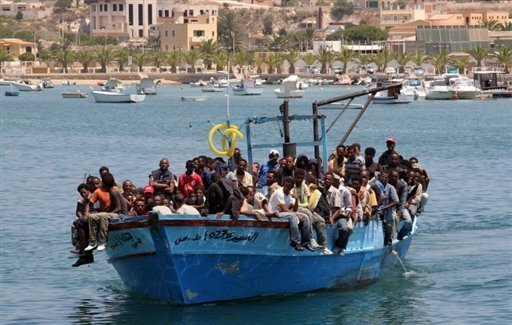
North African refugees flee to Lampedusa, photo from http://www.english-online.at

Americans are likely to think of “boat people” as coming from Cuba or Vietnam, desperately clinging to life and hope in a rusting, listing, failure of a boat.

In Italy, the boat people come from Libya and Tunisia. Their landing place is Lampedusa, a dry rock in the Mediterranean, closer to Africa than to Sicily.

Tens of thousands have fled Africa for Lampedusa in the past decade, overwhelming the island whose Italian population is about 5,000. More than 50,000 migrants have arrived this year, escaping upheaval in North Africa, looking for some safe haven, a link on the way to a new life.

Last January the BBC reported on the feel-good story of a Calabrian village whose mayor turned immigration to advantage, keeping the town of Riace alive. Mayor Domenico Lucano was nominated for the World Mayor award for his efforts to reverse population loss by welcoming immigrants. But Lampedusa has not been so welcoming.

News reports over the past year tell of refugees being turned away by island
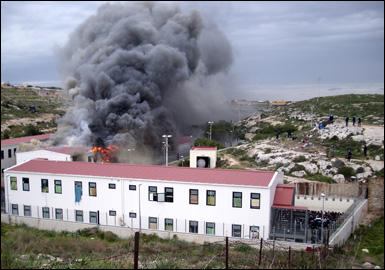
Refugees set fire to immigration center in Lampedusa, from http://www.morningstaronline.co.uk

residents, Italian premier Berlusconi promising a clean sweep of the illegal immigrants, and in recent weeks violence has broken out when Italy announced a decision to repatriate the boat people.

Now, an Italian film on the subject, called Terraferma, has been selected to represent Italy in the Academy Awards. Perhaps this is where most North Americans will learn of the struggles on Lampedusa. I hope a better solution is found than the one pictured here.

BOOKS: Must have this book!

For people like me, with a freakish interest in the medieval Angevin Kingdom of Naples, there are some books we must have. Only recently I learned that a Bible has surfaced, after mouldering for half a millennium in the Low Countries somewhere, a Bible which was created at the court of Robert the Wise in Naples, and presented to his granddaughter Joanna, who would succeed him to the throne of Naples and rule for more than forty years.

The Anjou Bible: A Royal Manuscript Revealed was published last year by Peeters Publishers. At 350 pages, it weighs 4-1/2 pounds and costs about $100.

I don’t care. I want it.

All the illuminated folios are reproduced in the book, as well as information about the illuminator who signed the work in the early 1300s. Historical information about the Angevin dynasty in Naples–a family I have researched for more than 25 years–sounds as beautiful to me as the illuminations.

The fourteenth century Bible is now owned by the University of Leuven in Belgium, the oldest existing Catholic university in the world. The manuscript was disassembled, cleaned, digitized, and displayed for twelve weeks  in 2010 before being rebound and returned to the vaults for long-term storage.

This book is definitely on my Christmas list!!

Pompeii: Just do it!

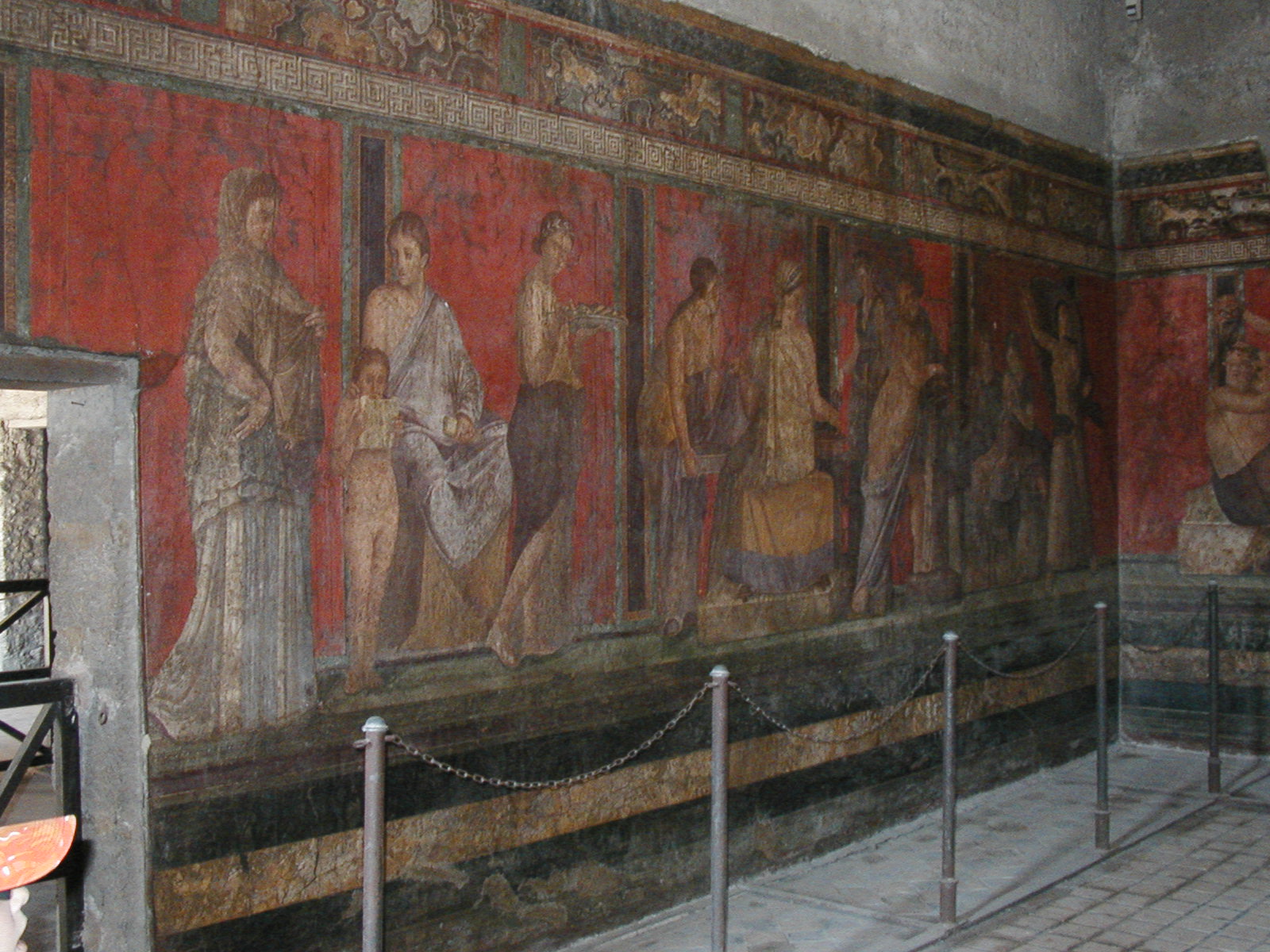
Frescoes in the Villa of Mysteries, Pompeii

Ancient history doesn’t turn my crank like medieval history does, but Pompeii is not to be missed regardless of your historical interests. Buried by an eruption of Mt. Vesuvius in 79 AD, Pompeii disappeared until its rediscovery in 1748.

Large sections of the city have since been unearthed–and I do mean large! The size of the city shocked me. Public buildings, retail shops, bakeries, a large theatre, public baths, even a brothel, and many homes now give mute testimony to the vibrant city that once was.

Bird mosaic at PompeiiA first-hand account of the eruption was written by Pliny the Younger, twenty-five years after the eruption in which his beloved uncle, Pliny the Elder perished attempting to rescue survivors. In two brief letters, he describes the earthquakes and ash, shooting flames and raining cinders, which brought terror to the entire Bay of Naples.

While Pompeii provides a fascinating view of life in a Roman era city, I was intrigued by the unexcavated areas. Ten or twelve feet above the level of the Roman streets, grassy fields bloom with daffodils in the spring, intrusions into the outline of the greater city. When I asked the staff about these areas, I was assured that they were excavating all the “important” areas, implying that nothing of significance lay in those intrusions.

How could they know?

If I were in Italy today…

An Adriatic beach in late summer, Abruzzo.

Crowds have thinned out at the beaches, but it’s still warm enough to enjoy! Grapes are beginning to ripen, and the market is filled with produce–tomatoes, lemons, tasty greens, eggplant, and the fragrance of basil. Blooming flowers cascade over walls and burst from their pots. A delightful season to enjoy the Italian south!

Even the calendar becomes a garden in Naples!

Food festivals: Enjoy the feast!

My mother can’t stop talking about it! She visited Calabria five years ago, and when friends took her out to dinner in one of the villages near Scigliano, she ordered a mushroom dish. I still haven’t heard the end of it.

Sadly for all of us, we do not have the recipe. But the season for mushrooms is approaching, and they will be celebrated in the Italian south.

In the Sila, the mountains of Calabria, the village of Camigliatello Silano celebrates a wild mushroom festival each year. In Diamante, the chili pepper takes center stage. Chestnut festivals are common throughout Italy, but the village of Zafferana Etnea in Sicily goes one better, celebrating a Chestnut and Wine Festival. Eggplant, pasta, sausage, chocolate–it seems like most any food in the cupboard has a festival in its honor.

But we were talking about mushrooms. In Marcella Hazan’s “Essentials of Classic Italian Cooking” I found this recipe that pays homage to the mushroom.

Fresh Mushrooms with Porcini, Rosemary, and Tomatoes

1 lb. fresh, firm white button OR cremini mushrooms

1/3 cup extra virgin olive oil

1 teaspoon chopped garlic

1 teaspoon fresh chopped rosemary leaves

About 1 ounce dried porcini mushrooms

Filtered water from soaking the mushrooms (see instructions)

Salt, Fresh ground black pepper

1/2 cup canned imported Italian plum tomatoes, with their juice

To prepare the dried porcini mushrooms, soak in two cups of barely warm water for at least 30 minutes. Lift the mushrooms by hand, squeezing out as much water as possible, and let the water flow back into the container in which it has been soaking. Retain the water, and rinse the mushrooms in fresh water, scraping any spots where soil is embedded. Pat dry with paper towels , and chop.

Filter the soaking water through a paper towel or coffee filter, and retain until called for.

Trim, wash, and towel dry the fresh mushrooms and cut in half  or quarters lengthwise, keeping the caps attached to stems.

Choose a saute pan that will contain all the ingredients loosely. Start with oil and garlic heated to medium high until the garlic becomes pale gold. Add rosemary and the reconstituted porcini. Stir once or twice to coat well, then add the filtered water from soaking the mushrooms. Turn up the heat and cook at a lively pace until all the water has simmered away.

Add the cut up fresh mushrooms to the pan, together with salt and pepper, turn the heat to high, and cook, stirring frequently, until the liquid shed by the fresh mushrooms has simmered away.

Add the tomatoes with their juice, toss thoroughly to coat well, cover the pan, and turn the heat to low. Cook about ten minutes. If needed to prevent sticking, add one or two tablespoons of water to the pan. When done, serve immediately.

Salute!